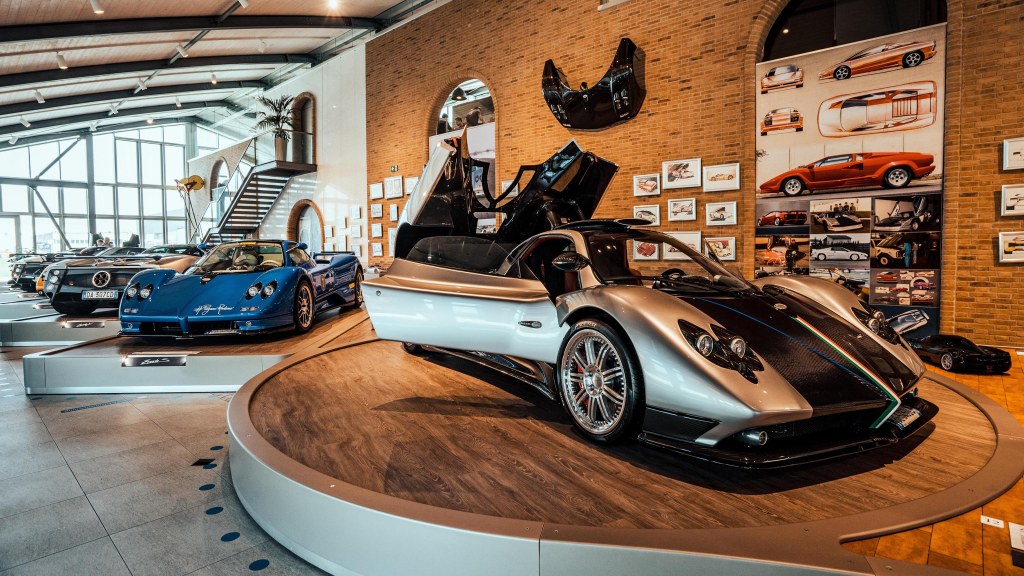
In an era of automated megafactories, Pagani still builds hypercars in a workshop that feels closer to a watchmaker’s studio than a modern car plant.
The modern car factory is a spectacular thing. Thousands of cars glide along conveyor belts while robotic arms weld panels together with alarming enthusiasm. It’s efficient, fast and — from a purely industrial perspective — extremely impressive.
Pagani does not do any of that.
If you walk into the Pagani factory in San Cesario sul Panaro, near Modena, expecting something resembling a typical automotive production line, you’ll be disappointed. There are no roaring assembly halls producing hundreds of cars per day.
Instead you’ll find a quiet building called Atelier Pagani, where fewer than 50 cars are built each year.
And the entire process looks less like manufacturing and more like craftsmanship.
A Factory Designed Like a Studio
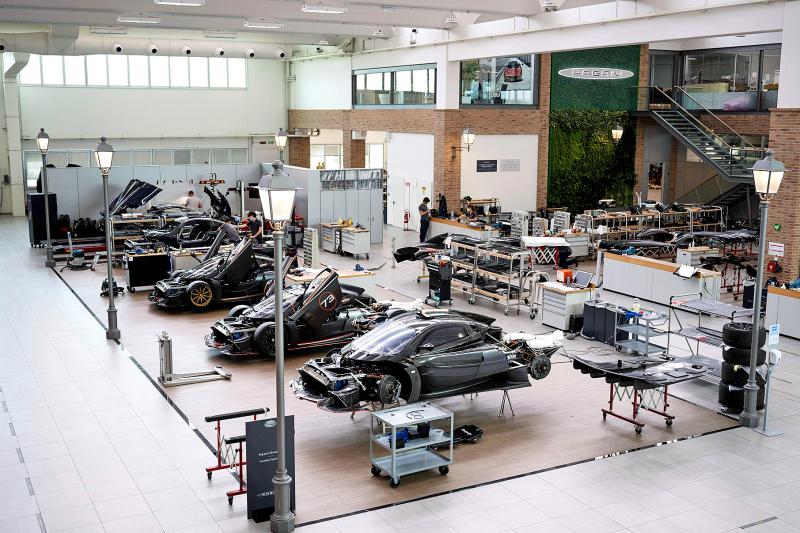
Pagani’s main production facility sits in the heart of Italy’s so-called Motor Valley, surrounded by names like Ferrari, Lamborghini and Maserati.
But the building itself feels very different.
The Pagani Atelier, opened in 2016, combines several things under one roof:
- the production workshop
- the Pagani museum
- the company headquarters
- customer design studios
Instead of endless production lines, the workshop floor contains a small number of workstations where cars are assembled slowly and carefully.
The company employs roughly 150–180 people, and many of them are specialists — engineers, carbon fibre technicians, leather craftsmen and machinists.
Production is deliberately limited.
A typical Pagani model program might total 100 units or fewer, and individual cars often take several months to complete.
That changes the entire philosophy of the factory.
Speed is not the priority.
Precision is.
Carbon Fibre: Pagani’s Obsession
One of the most important parts of the factory is the composites department.
Horacio Pagani built his reputation in the 1980s working with carbon fibre at Lamborghini, and the material still sits at the centre of the company’s engineering philosophy.
Pagani even created a separate division called Pagani Advanced Composite Research (PACR), which develops advanced materials used in its cars.
The factory houses:
- autoclaves for curing carbon fibre components
- composite workshops for laying up panels
- precision machining equipment
Pagani doesn’t just use conventional carbon fibre. It developed materials like Carbo-Titanium, which mixes carbon fibre with titanium threads to improve strength and rigidity.
The result is a chassis that is extremely light but exceptionally strong.
In fact, a Pagani monocoque can weigh less than 100 kg while forming the structural backbone of the entire car.
But here’s the interesting part.
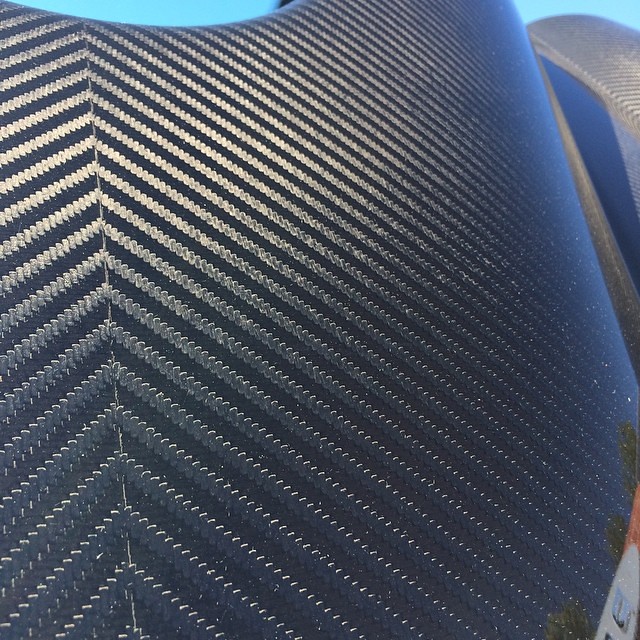
At Pagani, carbon fibre isn’t just structural.
It’s aesthetic.
Technicians spend time aligning the carbon weave so patterns flow perfectly across body panels — something that has no structural advantage whatsoever but looks beautiful.
Which tells you everything about how this company thinks.
How a Pagani Is Assembled
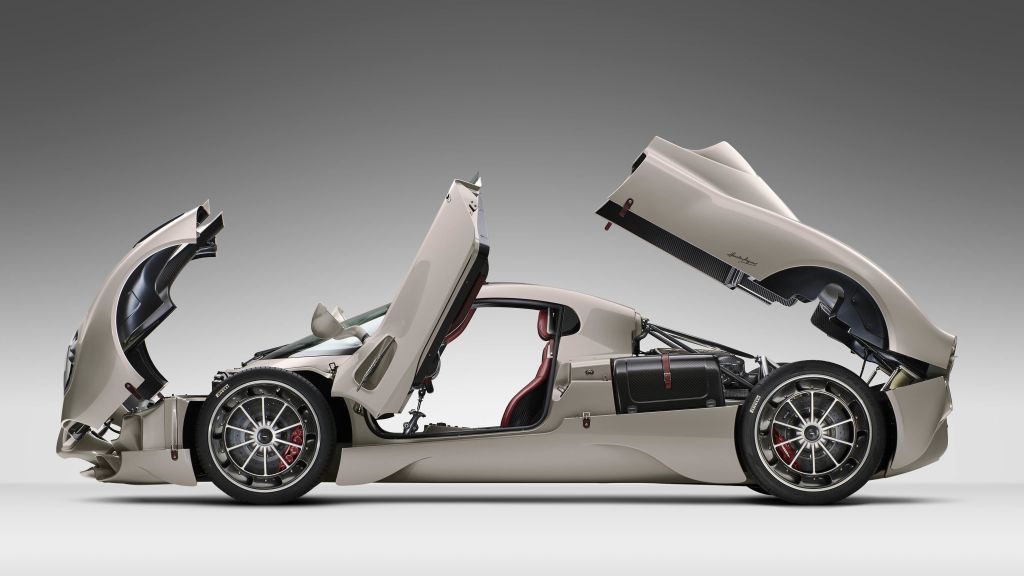
The assembly process begins with the carbon fibre monocoque chassis, which forms the central structure of the car.
From there, the car moves through several carefully managed stages.
Suspension components are installed first, followed by drivetrain elements and electrical systems.
The engines come from Mercedes-AMG, specifically bespoke twin-turbocharged V12 units built for Pagani.
Each AMG engine is assembled by a single technician, whose signature appears on a plaque attached to the finished unit.
Once installed in the Pagani chassis, technicians integrate the drivetrain, suspension and braking systems before body panels are fitted.
Interior work happens later in the process.
And this is where things become slightly extraordinary.
Interiors Built Like Luxury Watches
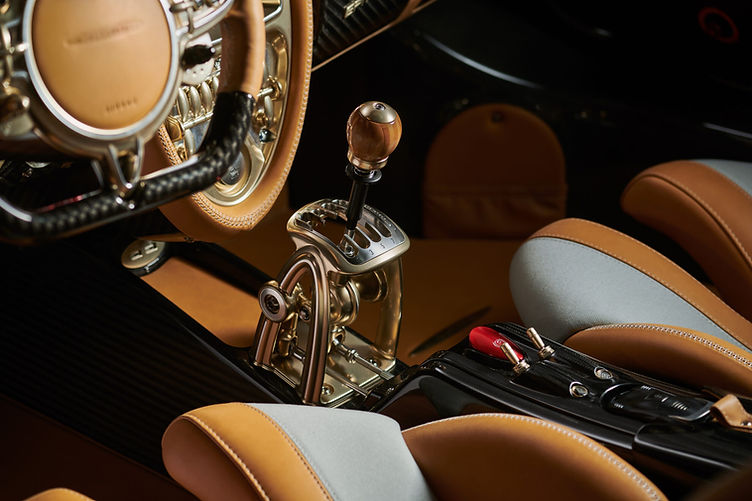
Pagani interiors are famous for looking like mechanical jewellery.
Instead of hiding components behind plastic trim, Pagani highlights them.
Switchgear is machined from solid aluminium.
Gear linkages are exposed and polished.
Leather is cut and stitched by hand.
Even relatively small parts receive astonishing attention.
Air vents are machined from metal and assembled like miniature sculptures. Fasteners are often visible rather than hidden, and many are custom designed.
It’s not unusual for customers to request highly specific materials or colour combinations.
Because Pagani buyers rarely order “standard” cars.
Many cars leaving the factory are effectively one-off specifications, customised to a level that most manufacturers simply couldn’t accommodate.
The Pagani Utopia
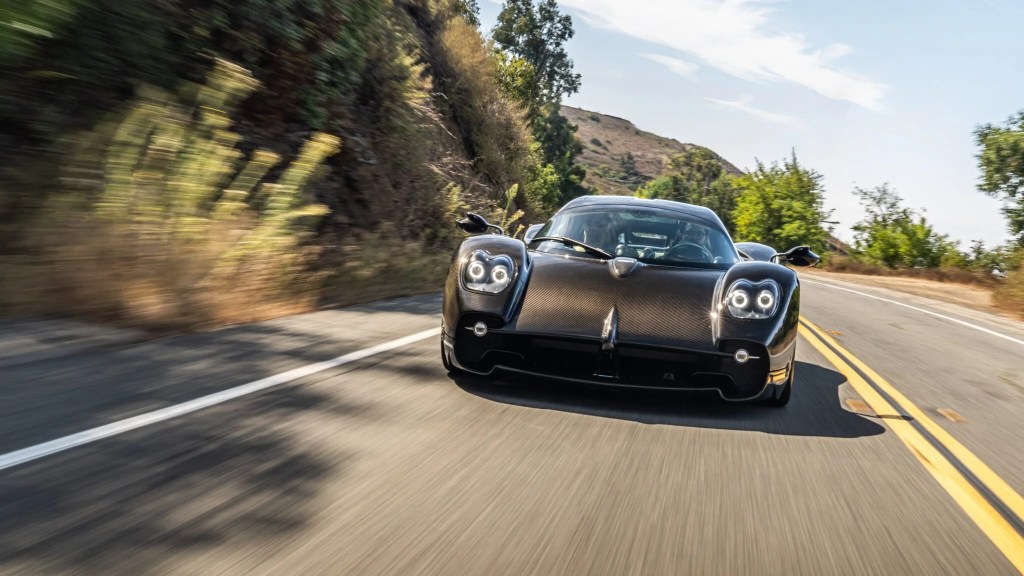
The newest car produced in this factory is the Pagani Utopia, unveiled in 2022.
It continues many of the company’s traditional ideas:
- a 6.0-litre twin-turbo AMG V12
- a carbon fibre monocoque chassis
- optional manual gearbox
That last detail is especially interesting.
In a world increasingly dominated by electrification and digital interfaces, Pagani deliberately chose to offer a traditional manual transmission.
Not because it is faster.
But because it makes the driving experience more engaging.
And that decision tells you something important about the philosophy behind the factory.
Pagani builds cars for emotion, not optimisation.
Why Pagani Builds Cars This Way
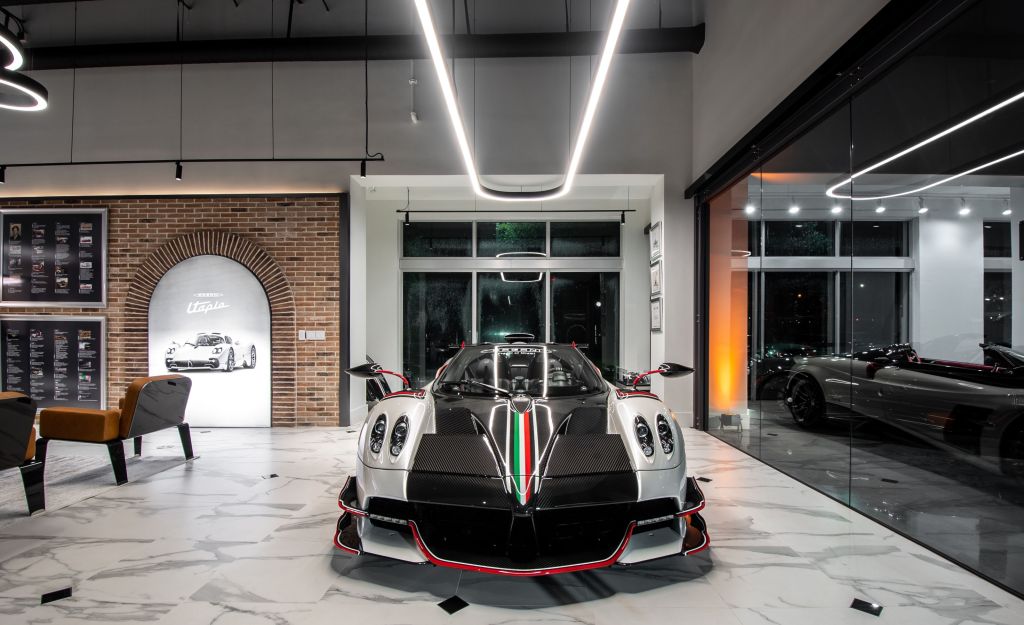
If you ran Pagani like a conventional car company, the first thing you would change is the factory.
Production would increase.
Processes would become automated.
Components would be standardised.
Efficiency would improve dramatically.
But something else would disappear.
Pagani’s entire identity is built around the idea that each car is crafted rather than assembled.
That’s why production remains tiny.
And why the factory feels more like a workshop than an industrial facility.
It isn’t trying to compete with Ferrari or Lamborghini on scale.
It’s competing on craftsmanship.
Final Verdict
The Pagani factory is not the fastest car factory in the world.
It is not the largest.
And it certainly isn’t the most efficient.
But it might be one of the few places left where a car is still built slowly, deliberately and obsessively.
Which in the modern automotive industry feels almost radical.
Because while most factories produce cars like products…
Pagani builds them like objects worth admiring.


 UNBUILT GARAGE
Leave a comment