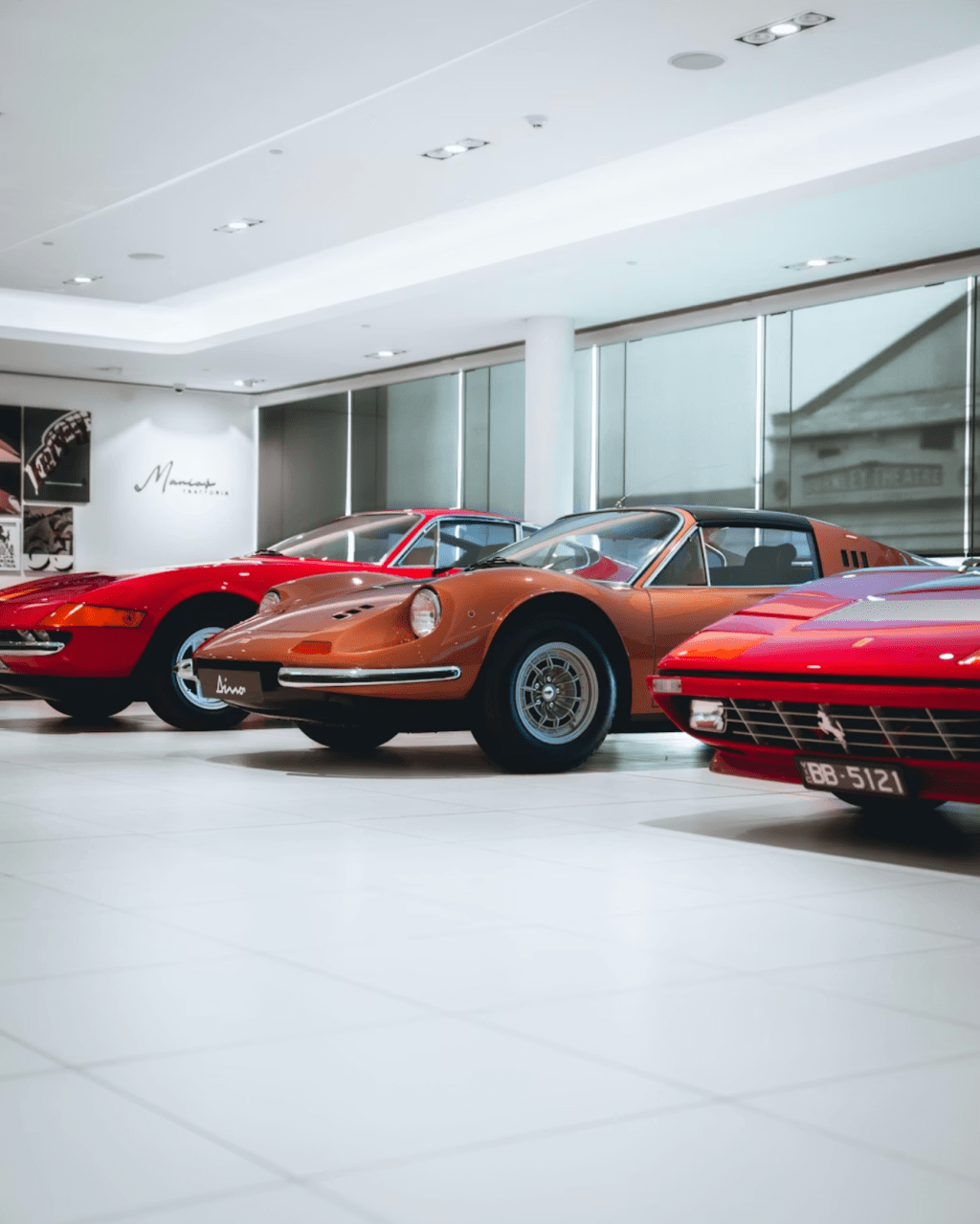
If the golden age is behind us, nobody seems to have told the configurator department.
There is a growing murmur in the car world. It isn’t loud. It isn’t dramatic. It doesn’t come with protest signs or YouTube thumbnails featuring arrows and shocked faces. It’s quieter than that.
It’s the feeling that we may already have driven the best cars we’ll ever drive.
Not the fastest. Not the safest. Not the most efficient. The best.
And that is a deeply uncomfortable thought for an industry that insists, year after year, that everything is better than it’s ever been. More power. More torque. More screens. More modes. More acronyms. More “innovation.”
But if progress is measured in gigabytes rather than goosebumps, we may have made a small but important miscalculation.
Brand DNA vs the Concept
Every great car era had a defining philosophy.
The late 1980s and 1990s were about mechanical honesty. You turned a wheel and something metal moved. You pressed a throttle cable and air rushed in. A manual gearbox was not a lifestyle accessory. It was simply how driving worked.
Look at something like the BMW E46 M3. It wasn’t bloated with ambition. It wasn’t trying to be a rolling operating system. It was a balanced, rear-wheel-drive coupe with a straight-six that sounded like it was being paid per decibel. The steering spoke. The chassis listened. The driver mattered.
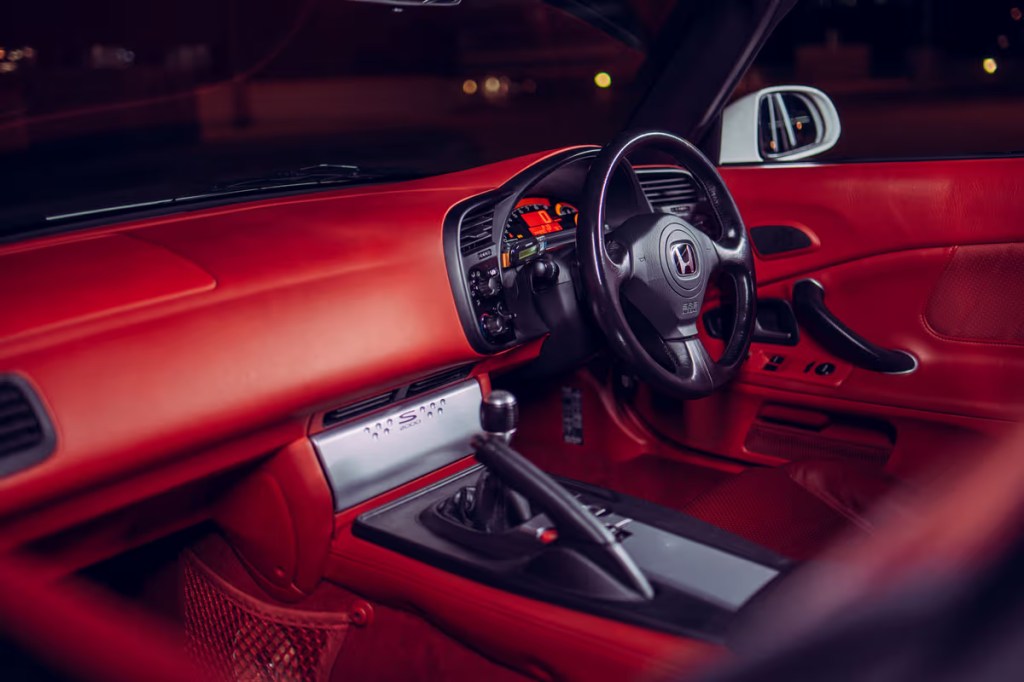
Or take the Honda S2000. A naturally aspirated engine that only truly woke up at 8,000rpm. No fake sound augmentation. No artificial theatrics. If you wanted drama, you had to earn it.
Now compare that DNA to today’s prevailing concept: the car as an all-purpose digital appliance. It must be a smartphone, a safety supervisor, a wellness retreat, a software subscription hub, and occasionally, almost as an afterthought, a means of transportation.
The industry hasn’t abandoned driving. It’s just quietly demoted it.
Design Implications
Visually, the shift is impossible to ignore.
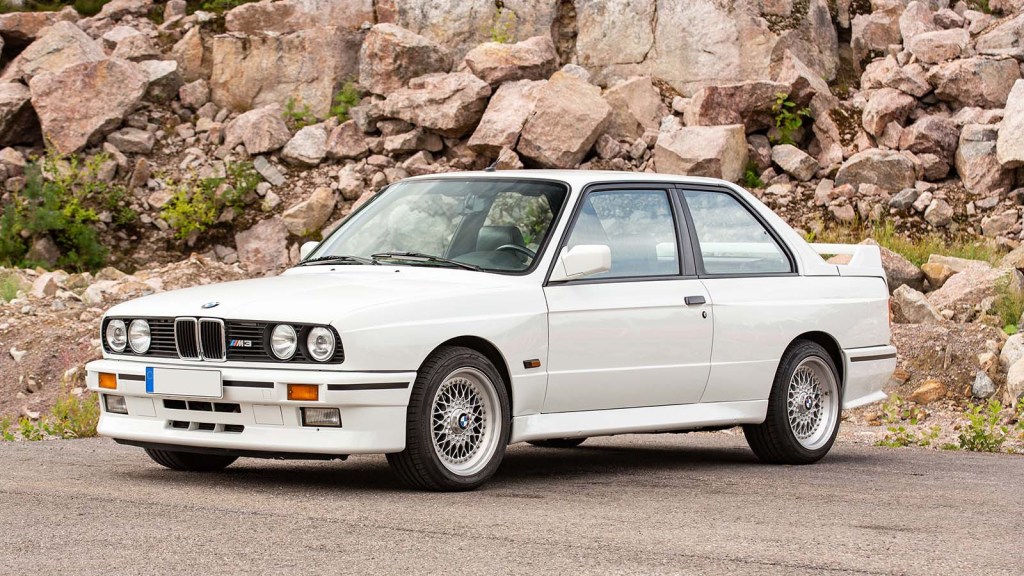
Older performance cars tended to look lean. Glasshouses were generous. Bonnet lines were modest. You could see out of them without relying on a 360-degree camera stitched together by algorithms.
Modern cars, by contrast, look like they’re perpetually clenching. Beltlines have risen. Windows have shrunk. Grilles have expanded to the size of small postcodes. Every surface is aggressively folded, as though subtlety has been outlawed.
This isn’t entirely aesthetic. Regulations have grown stricter. Pedestrian safety rules have reshaped front ends. Crash structures have grown thicker. The physics of electrification demands battery packaging that alters proportions.
But somewhere in this entirely rational evolution, elegance got slightly misplaced.
An older sports saloon stood on the road. A modern one tends to loom over it.
And while today’s cars are objectively more rigid, safer, and often astonishingly capable, they frequently feel distant. The steering is filtered. The throttle response is mapped by committee. Even the exhaust note is sometimes composed by a sound engineer with a laptop rather than by the shape of a combustion chamber.
We didn’t lose speed. We lost texture.
Interior Philosophy
Step inside a performance car from 20 years ago and you’ll find a cockpit designed around one primary question: “Can the driver control the machine?”
The dials were analogue. The buttons had weight. Climate controls clicked with mechanical intent. You could adjust the temperature without navigating through three sub-menus and a terms-and-conditions update.
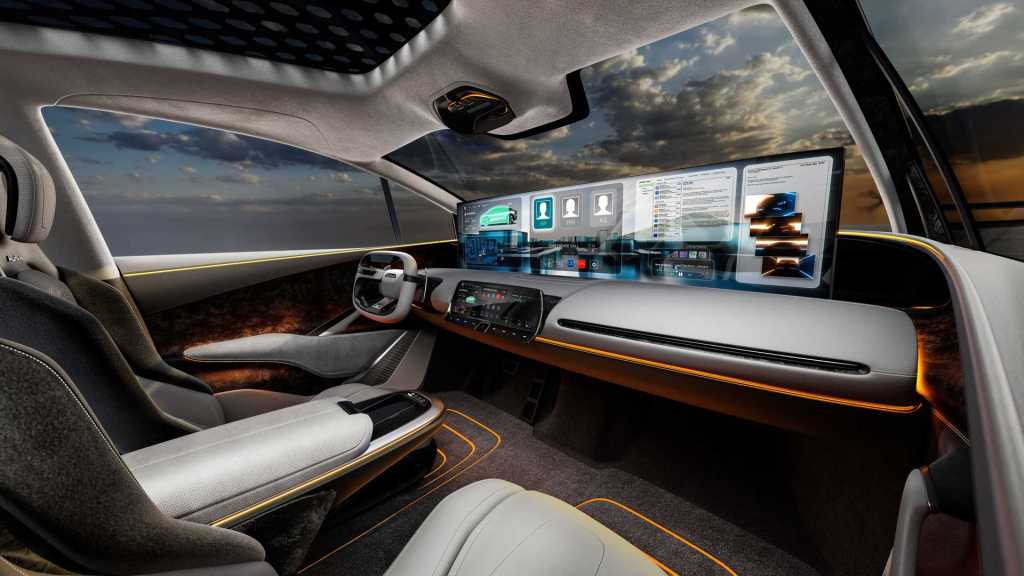
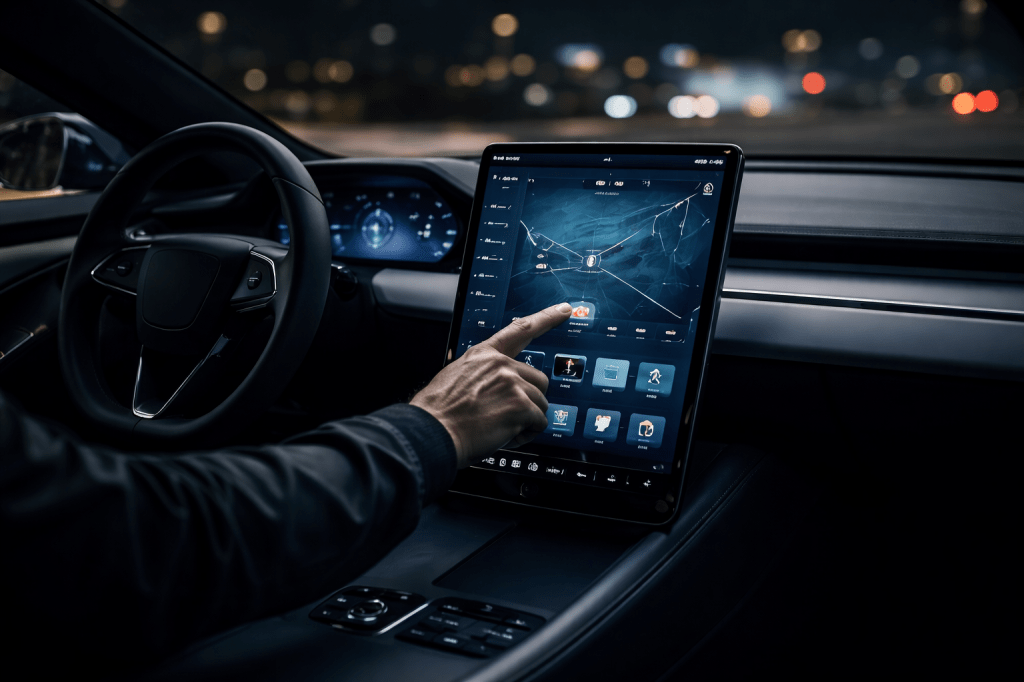
Today, interior design is dominated by the screen. Horizontal, vertical, curved, floating — it doesn’t matter. The screen is king.
There is a case to be made for this. Infotainment systems are vastly more capable than they once were. Connectivity is seamless. Navigation is intelligent. Over-the-air updates mean your car improves while parked on your driveway.
But the cost is tactile satisfaction.
When everything becomes a smooth piece of glass, the experience flattens. A physical rotary dial tells your hand what it’s doing. A haptic slider tells you… that you’ve touched a piece of glass.
Some manufacturers have begun quietly reintroducing physical controls, almost sheepishly, after customer feedback suggested that perhaps turning the windscreen demister on shouldn’t require a firmware patch.
Which tells you everything you need to know.
Market Positioning
There’s another layer to this debate: accessibility.
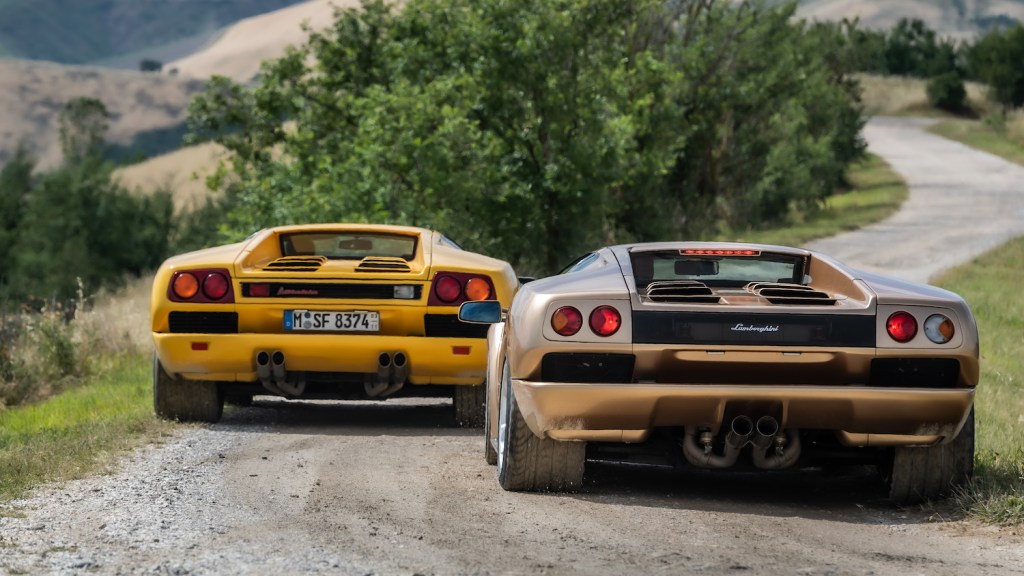
The performance heroes of the late 1990s and early 2000s were not cheap, but they were attainable. A young professional with ambition and a sensible finance agreement could realistically aspire to something special.
Now, performance has become polarised.
At one end, you have high-powered electric saloons capable of embarrassing yesterday’s supercars in a straight line. At the other, you have crossovers optimised for school runs and efficiency metrics. The middle ground — the affordable, characterful driver’s car — feels narrower.
Even when modern performance cars are brilliant, they are often wrapped in layers of complexity. Adaptive dampers with twelve settings. Drive modes that alter throttle response, steering weight, differential mapping, and perhaps the colour of the ambient lighting for good measure.
You can configure your car into 729 possible personalities.
But the great cars of the past didn’t need personalities. They had one. And it was usually enough.
This isn’t nostalgia talking. It’s about clarity of purpose.
So, Are We Past It?
Objectively, no.
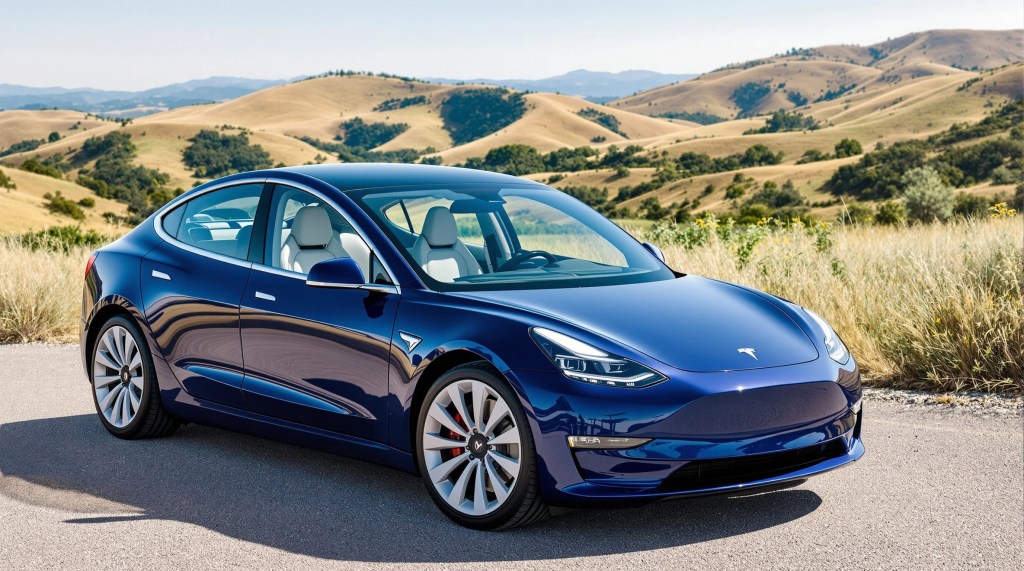
Modern cars are engineering marvels. They are safer than ever. They pollute less. They accelerate faster. They can commute autonomously through traffic while playing your preferred podcast.
By measurable standards, we are in a golden age of capability.
But capability is not the same as character.
The best era of cars wasn’t necessarily the one with the highest horsepower figures. It was the one where engineering constraints, analogue feedback, and a slightly lower layer of digital insulation created machines that felt alive.
Alive in a way that modern perfection sometimes smooths out.
That doesn’t mean the future is bleak. Electrification brings its own kind of immediacy. Instant torque has a drama all of its own. Chassis control systems are now so advanced that physics occasionally seems optional.
The question is not whether modern cars are good.
It’s whether they are emotionally richer than what came before.
And here, the answer becomes less comfortable.
Final Verdict
Are we already past the best era of cars?
In terms of purity — quite possibly.
The sweet spot may have been that brief window where technology had matured enough to make cars reliable and genuinely fast, but not so much that it filtered out the human element.
Where engines sang because of combustion, not because of speakers. Where steering felt alive without needing calibration updates. Where driving modes were limited to “on” and “off.”
We haven’t lost greatness. We’ve just changed its definition.
Today’s cars are extraordinary achievements of software and safety. Yesterday’s best were extraordinary achievements of feel.
And if you define “best” not by acceleration times or touchscreen resolution, but by how vividly a car imprints itself on your memory, then yes — there is a serious argument that we’ve already been there.
The golden age didn’t end in flames. It faded quietly, replaced by progress.
And progress, as it turns out, isn’t always more fun.
 UNBUILT GARAGE
Leave a comment