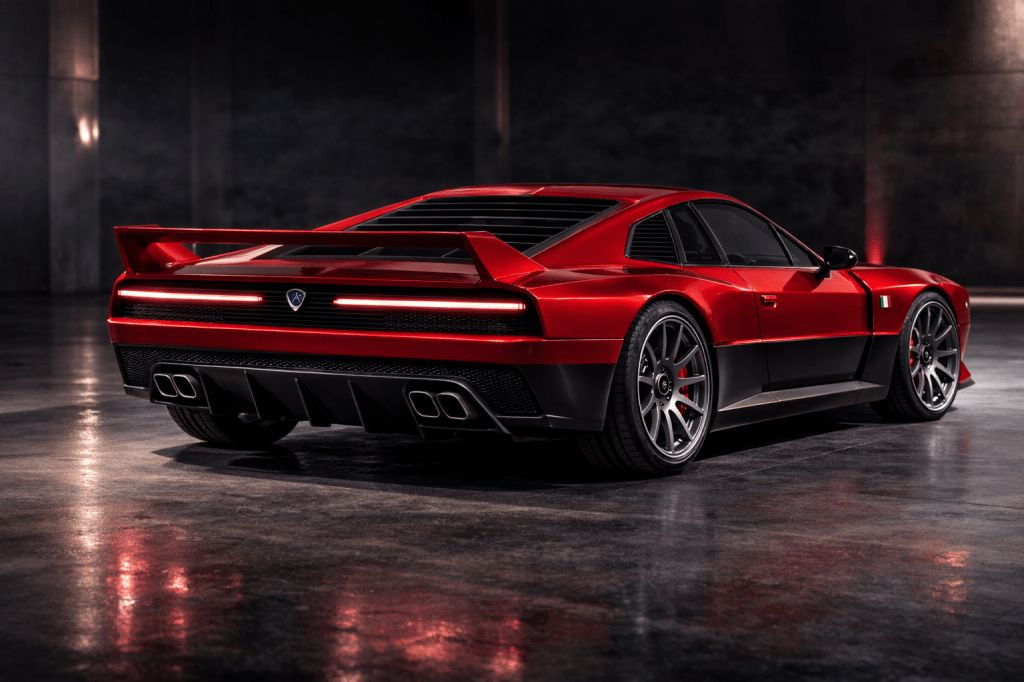
A spectacular return to relevance that exposes just how far the badge has drifted.
Lancia does not need reinvention. It needs remembering.
For three decades the brand has behaved like a once-brilliant architect who now specialises in garden sheds. The idea that a Lancia Aurelia 2026 concept could restore dignity is not romantic — it is obvious. By the third image circulating online, you already know the uncomfortable truth: this is the Lancia we should have in 2026, and the fact it does not exist tells you everything about the company’s trajectory.
To be clear, the Lancia Aurelia 2026 concept currently making the rounds is not a real vehicle. It is an enthusiast-driven proposal, illustrated convincingly enough to spark debate across forums and social feeds. The conflict at its centre is simple: can a brand once defined by engineering courage survive on retro fonts and small electric hatchbacks, or does it require something braver?
The answer is not complicated. It requires something braver.
Brand DNA vs the Concept
Lancia’s heritage is not built on nostalgia. It is built on audacity.
The original Aurelia was groundbreaking because it dared to be technically superior. It introduced a production V6 when others were still arguing about carburettors. It did not posture. It simply arrived with better engineering and expected the world to keep up.
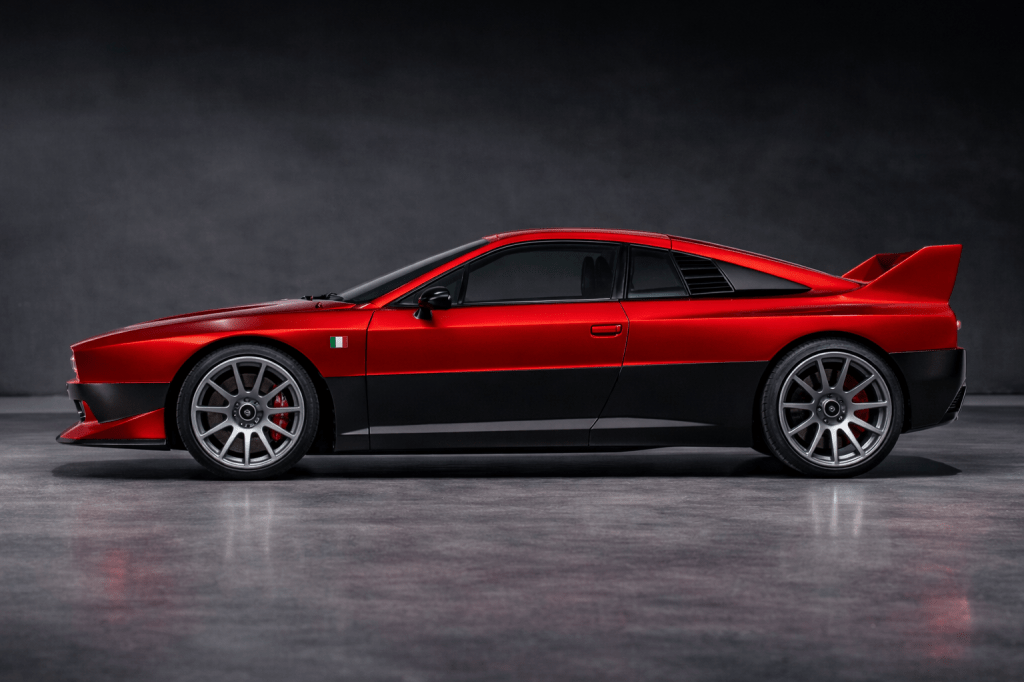
The Lancia Aurelia 2026 concept taps into that philosophy, at least visually. Long bonnet. Clean surfacing. No exaggerated vents. A fastback profile that suggests speed without shouting about it. The proportions alone imply confidence — which is refreshing in an era where confidence is usually expressed through illuminated badges.
What works here is restraint. The concept avoids the trap of becoming a caricature. No unnecessary chrome flourishes. No awkward attempt to mimic 1950s detailing. Instead, it interprets elegance through modern tension lines and tight overhangs.
The problem is not the design itself. The problem is whether today’s Lancia would recognise this as its own child.
Design Implications
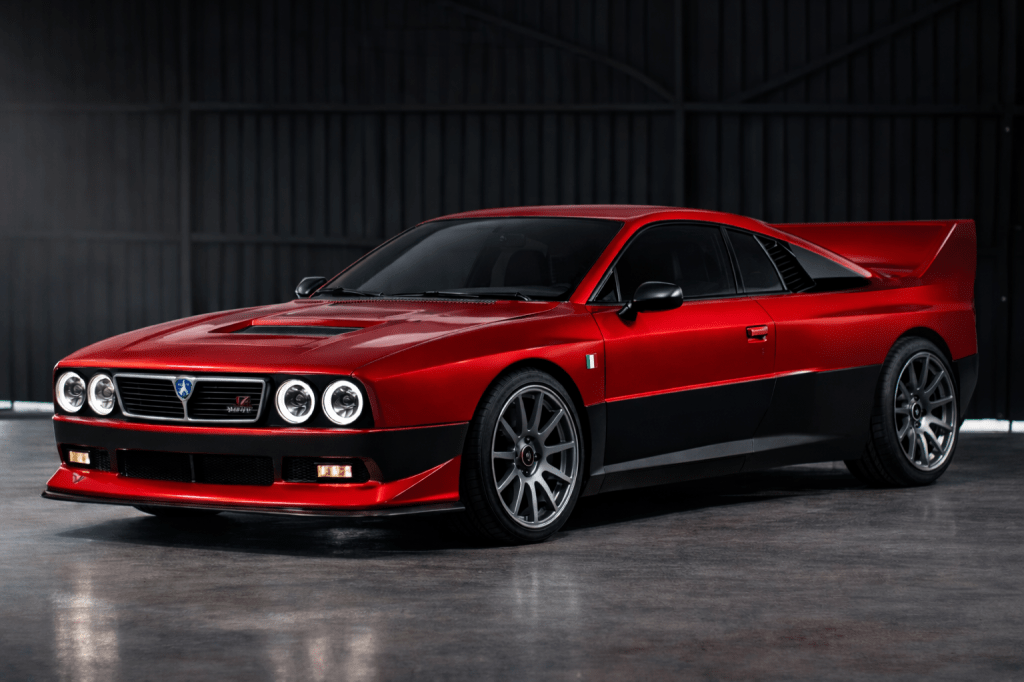
The exterior images — clearly illustrative and not official — present a grand touring coupé that feels European in the old sense of the word. Slim LED signatures. A subtle reinterpretation of the historic grille shape. A cabin pushed rearward for proper rear-wheel-drive proportions.
It looks expensive without trying.
That alone separates it from much of the current market, where visual drama is often mistaken for presence. The Lancia Aurelia 2026 concept understands that elegance is about deletion, not addition.
However, there is a fine line between timeless and timid. If this car were to be softened by corporate committees, diluted by focus groups, or burdened with unnecessary visual noise, it would collapse into irrelevance instantly. The concept works because it is decisive. Real-world execution would require the same nerve.
And that is rarely how large automotive groups operate.
Interior Philosophy
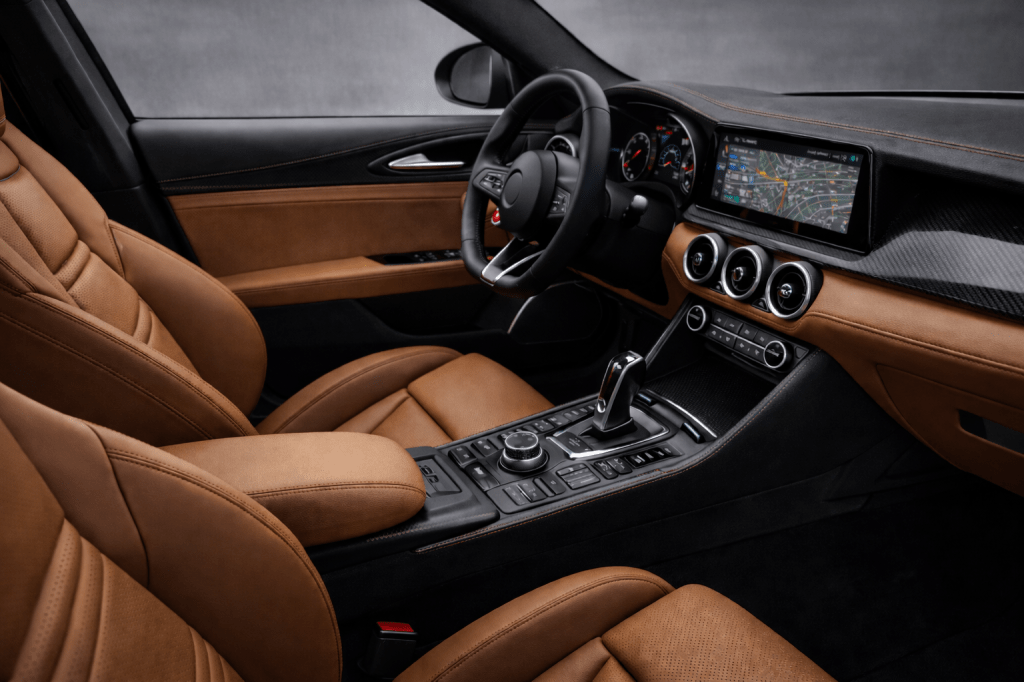
If Lancia is to return as a credible premium marque, the interior must reject the industry’s obsession with spectacle.
The concept images suggest a cabin that favours tactility over theatrics. Physical controls where it matters. Materials that feel substantial rather than backlit. A driver-focused layout that does not resemble a consumer electronics showroom.
This is critical.
Modern interiors often confuse technology with luxury. Large screens do not equal sophistication. They equal cost efficiency. A revived Aurelia would need to differentiate itself through craftsmanship — layered materials, mechanical switchgear with proper damping, and genuine acoustic insulation.
Anything less would be cosplay.
A Lancia that cannot deliver interior substance has no business attempting a halo coupé.
Market Positioning
Here lies the strategic tension.
The Lancia Aurelia 2026 concept positions itself somewhere between a BMW 4 Series and a Maserati GranTurismo. That is ambitious territory. It demands both dynamic credibility and emotional pull.
The European market does not lack for premium coupés. It lacks compelling reasons to choose them. To justify existence, an Aurelia revival would need to offer something distinct: comfort-biased grand touring with understated Italian character.
Not Nürburgring bragging rights. Not synthetic exhaust theatrics.
It would need to embody calm authority.
That is a narrow but defensible niche. The question is whether Lancia still has the internal structure to execute such a strategy without compromising it.
Brand Risk

Launching a halo model is not merely about sales volume. It is about signalling.
If Lancia were to build something like the Aurelia 2026 concept, it would be admitting that the brand’s recent direction has been insufficient. It would require investment in rear-wheel-drive architecture, refined powertrains, and premium assembly standards.
This is not a sticker package exercise.
The risk is twofold. Failure would be highly visible. Success, however, could reposition the brand overnight. Halo cars do not need to dominate sales charts. They need to reset perception.
At present, Lancia does not have such a reset button.
Potential Specifications
For the Lancia Aurelia 2026 concept to function as more than a digital fantasy, it would require credible hardware drawn from existing group resources.
- Powertrain (with reasoning)
A longitudinal 3.0-litre twin-turbo V6 sourced from within the Stellantis portfolio would be essential. Electrification could arrive in the form of a mild-hybrid system to meet emissions targets without diluting character. A fully electric configuration would undermine the grand touring identity this concept suggests. - Power output (with context)
Approximately 400–450 hp. Anything less would position it awkwardly against established rivals. Anything substantially more would distort its intended refinement-first personality. - Drivetrain
Rear-wheel drive as standard. Optional all-wheel drive for higher trims. Front-wheel drive would be indefensible. - Platform
A modified premium rear-wheel-drive architecture shared within the group to contain costs. Developing a bespoke platform would be financially unrealistic. - Performance estimates
0–62 mph in roughly 4.5 seconds. Top speed electronically limited to around 155 mph. Performance should feel effortless rather than aggressive. - Estimated price range
€65,000–€85,000 depending on specification. Pricing must undercut more exotic Italian offerings while justifying a premium over German equivalents through design and exclusivity.
These figures are not fantasies. They are minimum requirements.
Reality Check
1. Could this be built?
Yes. Stellantis possesses the engineering capability and powertrain inventory required to produce a vehicle of this type.
2. Would it make financial sense?
Only if development costs were tightly controlled through platform sharing. A standalone architecture would render the project commercially unviable.
3. Is there a realistic customer for it?
Yes, but limited. Buyers seeking understated Italian grand touring alternatives to German coupés represent a niche market. Volume would be modest but defensible.
Final Verdict
The Lancia Aurelia 2026 concept exposes a simple truth: the brand does not lack heritage or imagination. It lacks conviction.
This is the Lancia we should have in 2026 — restrained, technically credible, and unapologetically elegant. Not nostalgic. Not desperate. Just confident.
Build something like this, and the badge regains meaning.
Continue as before, and it remains a footnote.
 UNBUILT GARAGE
Leave a comment