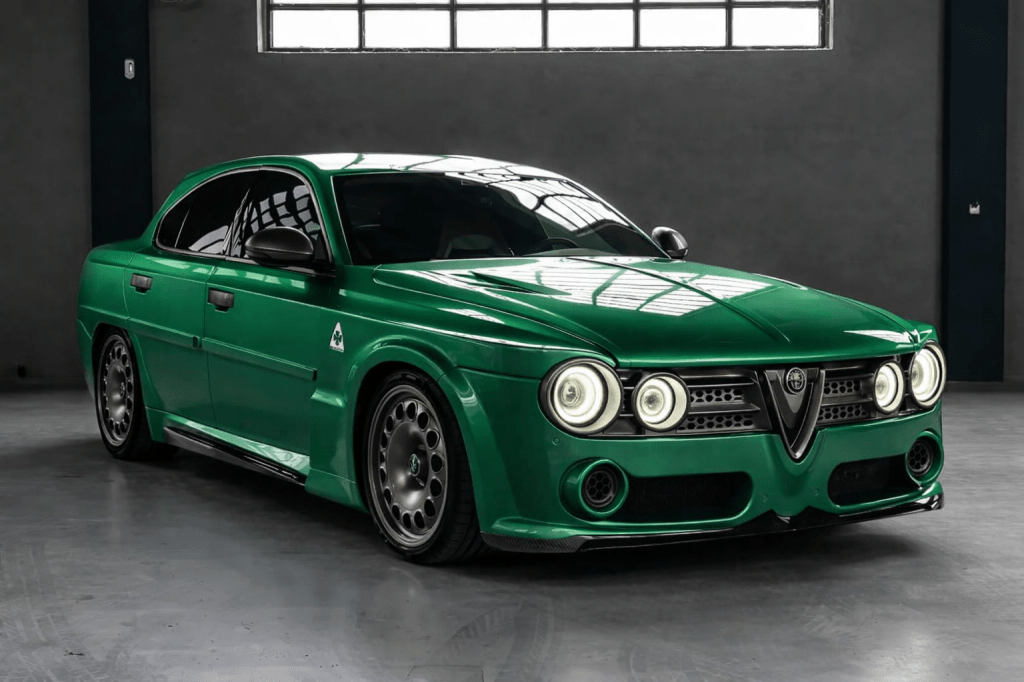
If this is built by a spreadsheet, it will be quick, beautiful — and totally irrelevant.
Introduction
Somewhere inside Stellantis, there is a PowerPoint slide with Alfa Romeo’s name on it that should be burned.
You can imagine it perfectly: tidy bullet points, a neat little curve showing profitability, phrases like “scalable architecture,” “cross-brand efficiencies,” and — worst of all — “broader market appeal.” In that room, well-meaning people are trying very hard to be clever.
They are also trying very hard to kill Alfa Romeo without noticing.
Because here is the brutal reality: the industry no longer knows how to build cars that misbehave emotionally. It knows how to build cars that misbehave technically — overpowered, over-tyred, over-engineered — but it has forgotten how to build cars that misbehave in your chest.
Modern sports cars are marvels of precision and monuments to boredom. They do everything right and nothing dangerous. They grip like geckos, calculate like supercomputers, and leave you feeling nothing at all.
Alfa Romeo is not allowed to join that club.
Alfa’s greatest cars were never clean victories of logic. They were beautiful arguments with reality — passionate, temperamental, occasionally ridiculous, and utterly unforgettable. They were the kind of cars that made sensible people act stupid and smug people feel alive.
A modern Alfa Romeo sports car must not be a response to Porsche, Tesla, or the latest electric hyper-hatch. It must be an antidote to them.
The central conflict is simple:
If Alfa builds what the industry thinks is “modern,” it will be dead on arrival.
If it builds what Alfa actually is, it might be messy — and that is exactly why it could be brilliant.
Brand DNA vs the Concept
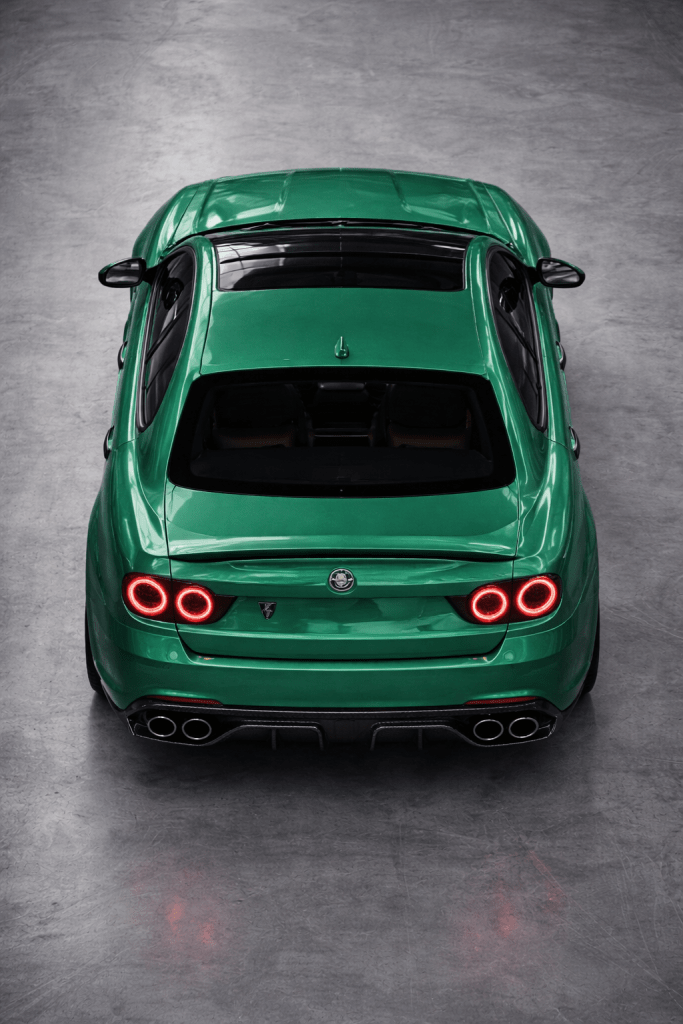
Alfa Romeo’s DNA is not “performance.” It is temperament.
This is the brand that taught generations of drivers that reliability is negotiable if the emotion is good enough. Not because owners were masochists — but because the experience was so intoxicating that logic surrendered.
Today’s car industry hates that idea. It worships control, consistency, and metrics. It has turned sports cars into rolling server racks with leather seats.
A true modern Alfa sports car must actively resist that philosophy.
It should not be calibrated to flatter you. It should not cushion your ego with artificial grip and fake feedback. It should occasionally remind you that you are not the hero you think you are — and make you smile while doing it.
Most modern sports cars feel like they were designed to protect you from your own impulses. An Alfa should feel like it is quietly encouraging them.
This is the key divide:
Porsche builds sports cars for people who like being right.
Alfa must build a sports car for people who like being alive.
If the concept prioritises telemetry over temperament, software over soul, or platform efficiency over character — it has already failed.
Design Implications
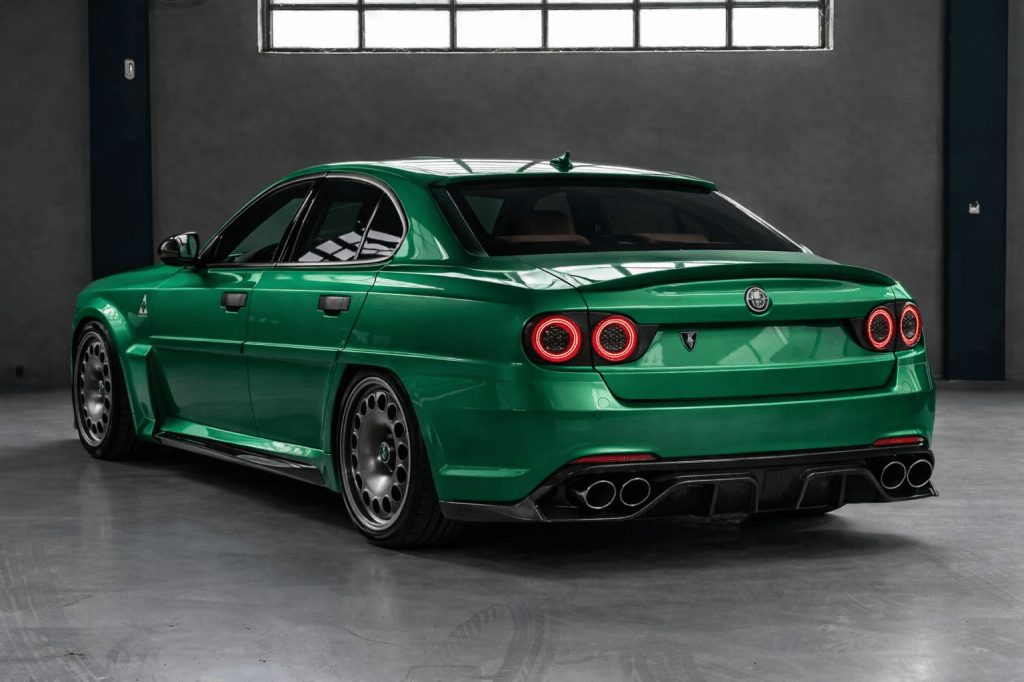
Contemporary sports cars look like they were carved by a laser guided by a risk committee.
Alfa’s must look like it was sketched by someone in love.
The proportions are sacred: long bonnet, cabin shoved rearward, hips that look like they are trying to escape their own bodywork. Not cartoonish. Not exaggerated. Just coiled intent.
The Scudetto grille must dominate — not as branding, but as personality. It should look slightly confrontational, like the car already knows something you don’t.
Aerodynamics should be present, but never shouty. No video-game wings. No ostentatious “track pack” theatrics. If you can see the engineering thinking too clearly, the design has already lost.
Every surface should feel under tension, like the car is holding its breath. Not smooth. Not bland. Not universally “pretty.” This car should be beautiful in a way that makes you slightly uncomfortable.
Most importantly, it must avoid globalised anonymity. No generic LED light signatures. No trend-driven minimalism. No safe corporate styling.
If you could mistake this for anything other than an Alfa from across a car park, you may as well cancel the project.
Interior Philosophy
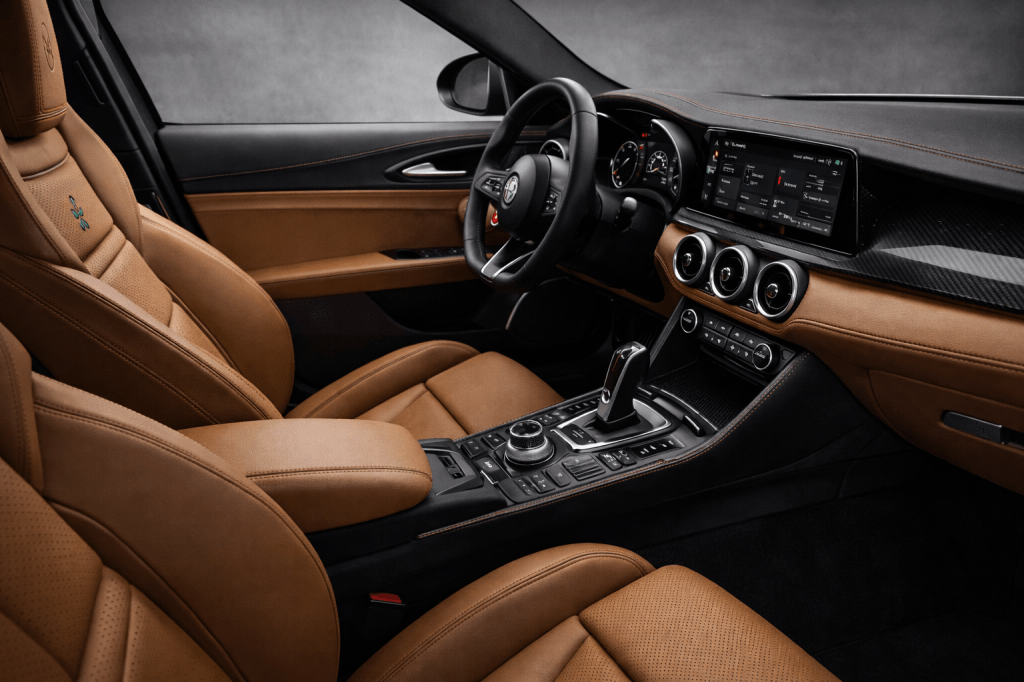
Modern sports cars are obsessed with glass.
Alfa should be obsessed with feeling.
Yes, screens will exist — this is the 21st century, not a museum. But they must feel like tools, not the main event. The driver should not feel like a systems operator in a cockpit simulator.
The steering wheel must be thick, alive, and unashamedly mechanical in its feedback. Real metal paddles. Real resistance. No dead, video-game numbness.
Materials should be tactile, not glossy. Leather that smells like leather. Brushed metal that actually feels cold to the touch. Stitching that suggests someone cared.
There must be ceremony. A start button that feels like waking something predatory, not booting up an iPad. Dials that move with intent, not cartoon animations designed for tech reviewers.
And here is the critical line Alfa must not cross:
The interior must not feel like a shared Stellantis cabin with an Italian filter applied.
If you recognise a single switch from another brand, the illusion is shattered.
This cockpit should feel like a space that encourages slightly reckless decisions — and promises memories in return.
Market Positioning
This is where most brands panic.
They look at Porsche’s sales figures, see the Cayman, and decide they need “something like that, but Italian.”
That is the wrong answer.
A modern Alfa sports car should not chase volume, benchmarking, or category leadership. It should chase devotion.
Not limited by production numbers — but limited by mindset. This should be a car for people who value emotion over resale value, character over carbon figures, and theatre over technology.
It should sit awkwardly between rational German precision and flamboyant Italian excess. Not neatly in a segment. Not easy to categorise.
If marketing cannot put it in a tidy box, that is a good sign.
If it sells fewer units as a result, that is the price of authenticity.
Brand Risk
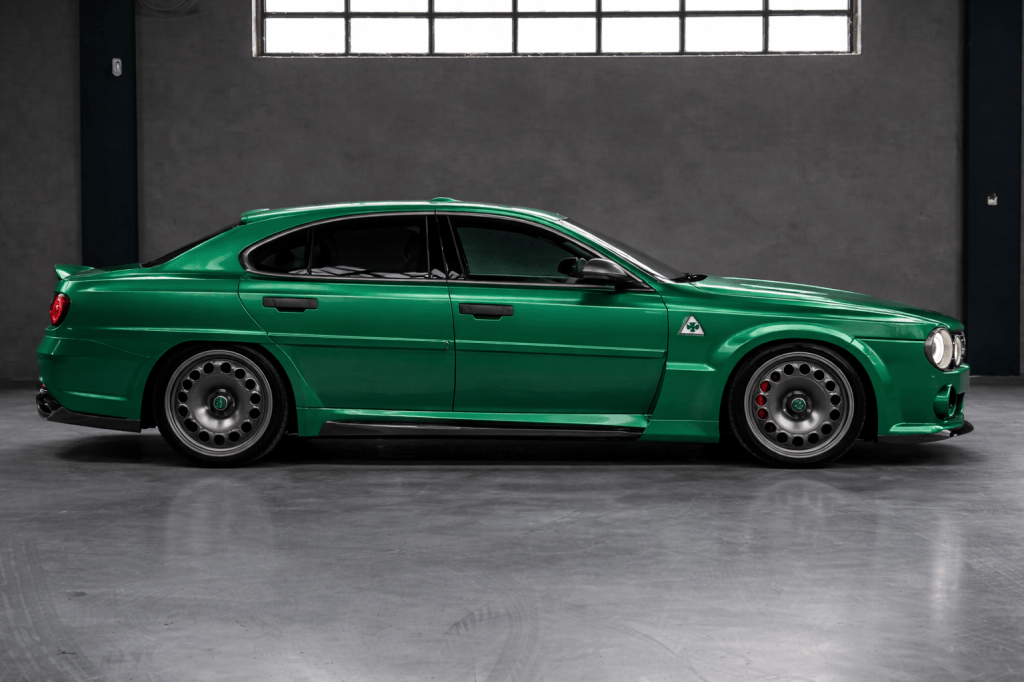
Here is the paradox: playing it safe is the most dangerous thing Alfa could do.
A safe Alfa is not an Alfa — it is a design exercise with a heritage badge.
If Alfa builds something perfectly polished, platform-shared, and globally acceptable, it will sell respectably and be forgotten instantly. It will become another “nice” car in a world drowning in nice cars.
There is also the risk to Alfa’s “premium” repositioning. A properly unruly sports car might disrupt the brand’s carefully curated image.
Good.
If “premium” means sterile, then Alfa should reject it outright.
The real risk is not building something controversial.
The real risk is building something that nobody argues about.
Potential Specifications
Let’s talk hardware, but like enthusiasts, not press officers.
• Powertrain: A characterful V6 is the ideal heart. Electrification only if it adds urgency, not silence. Hybrid torque is acceptable. Electric dullness is not.
• Weight: It must feel alive. Not featherweight track toy, but not bloated GT either. Immediate responses, not delayed reactions.
• Drivetrain: Rear-wheel drive. Anything else is an identity crisis on wheels.
• Steering: Talkative, slightly mischievous, occasionally unsettling in the best possible way.
• Sound: If this car doesn’t make you grin before you move, Alfa has missed the entire point.
Not the fastest. Not the cleanest. The most Alfa.
Reality Check — Three Questions Alfa Must Answer
• Would this car still make sense if nobody ever used the word “electrified”?
• Would an Alfisti from 1975 recognise its spirit instantly?
• If every badge vanished, would you still know it was an Alfa within five seconds?
If any answer is “no,” this project is already compromised.
Final Verdict
A modern Alfa Romeo sports car should not be an offering.
It should be a challenge.
Not a product shaped by platform economics. Not a compliance exercise dressed up as passion. Not a clinical performance machine wearing an Italian suit.
It should be louder than accountants would approve of. Sharper than regulators would prefer. More emotional than engineers could ever justify.
It should make you feel slightly nervous, deeply alive, and hopelessly attached — sometimes all at once.
If Alfa builds something tidy, rational, and universally applauded, it will win awards, sell respectably, and vanish from memory within a year.
If it builds something a little wild, a little flawed, and unmistakably Alfa, it might sell less — but it will be remembered.
And memory is the only currency that matters for a brand like this.
So what should a modern Alfa Romeo sports car actually be?
Not efficient. Not polite. Not safe.
It should be intoxicating — a middle finger to the idea that progress must feel boring.
Because if Alfa Romeo ever starts behaving like the rest of the industry, it may as well stop pretending to be Alfa Romeo at all.


Leave a Reply