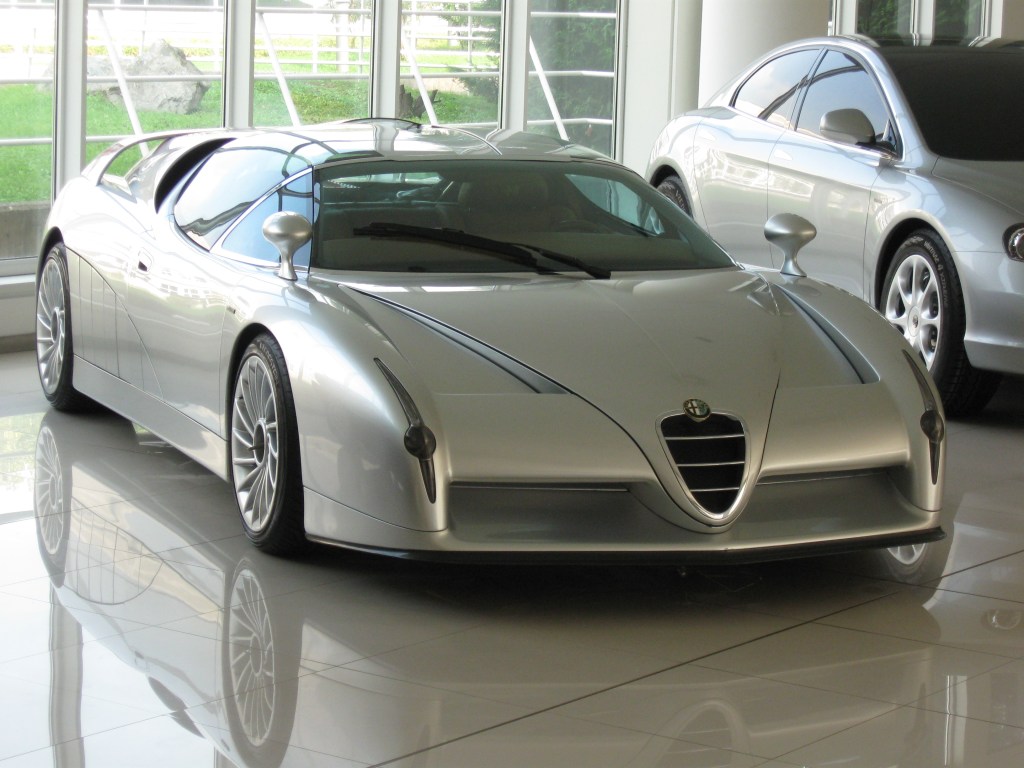
A ranking of ideas the industry was brave enough to show — and too cautious to commit to.
Introduction
Concept cars are supposed to be lies.
Not dishonest ones. Useful ones. The kind that exaggerate a truth until it becomes impossible for a company to ignore what it is really thinking. A proper concept car is not a preview of next year’s light signature. It is a philosophical position, expressed in aluminium and intent. It is a manufacturer briefly admitting what it wants to be, before accounting departments remind it what it is allowed to be.
For decades, concept cars acted as permission slips. They let engineers and designers step outside platform logic and brand containment. They were not about whether something could be built cheaply. They were about whether something deserved to exist at all.
That function has been quietly dismantled.
Today’s concepts are risk-managed objects. They preview surfacing, not strategy. They are designed to look progressive while carefully avoiding anything that would actually change how a company operates. The theatre remains. The courage does not.
That is why the most important concept cars are often the ones that never made it past the motor show stand. They reveal moments where manufacturers briefly found a better version of themselves — and then chose not to become it. Not because the idea failed, but because it was inconvenient.
This ranking is not about what would have sold.
It is about what should have redefined thinking.
Each of these cars exposed a fault line inside its company: between imagination and structure, between engineering ambition and corporate permission. What makes them important is not their absence — but what their absence tells us about how the industry really works.
Ranking Method
This ranking is based on philosophical weight, not feasibility. Design integrity, engineering intent, and what the concept revealed about corporate fear matter more than how close the car was to production.
The higher the ranking, the more the cancellation represents a lost direction — not just a lost product.
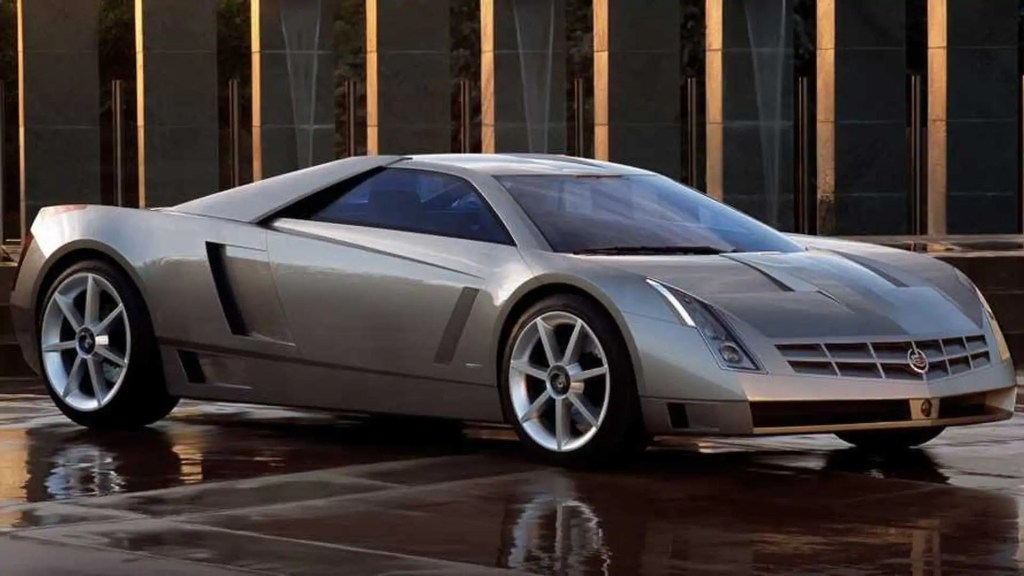
10. Cadillac Cien (2002)
Context
The Cien was Cadillac’s centenary supercar: a mid-engined, V12 statement piece built to reassert relevance at the very top of the performance hierarchy.
Why It Mattered
It wasn’t about beating Ferrari. It was about Cadillac proving it still understood aspiration as something forward-facing.
Why It Failed / Was Killed / Never Happened
GM could not justify a halo project that didn’t integrate into platform economics and volume logic.
What the Industry Lost
Cadillac forfeited a clean prestige reset. What followed was incremental performance branding instead of philosophical repositioning.
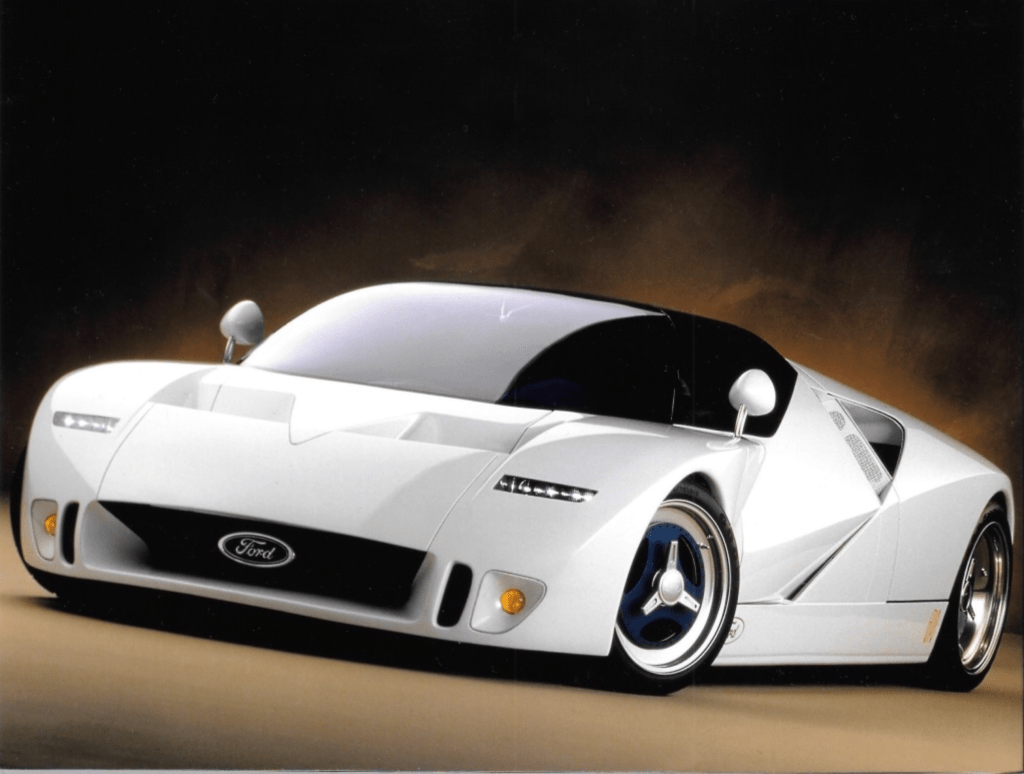
9. Ford GT90 (1995)
Context
A quad-turbo V12 supercar concept from Ford during a period of deep corporate restraint.
Why It Mattered
It showed Ford still understood spectacle as strategic authority, not childish excess.
Why It Failed / Was Killed / Never Happened
Too complex, too disconnected from Ford’s production reality, and politically indefensible internally.
What the Industry Lost
Ford lost the chance to embed emotional leadership structurally instead of episodically.
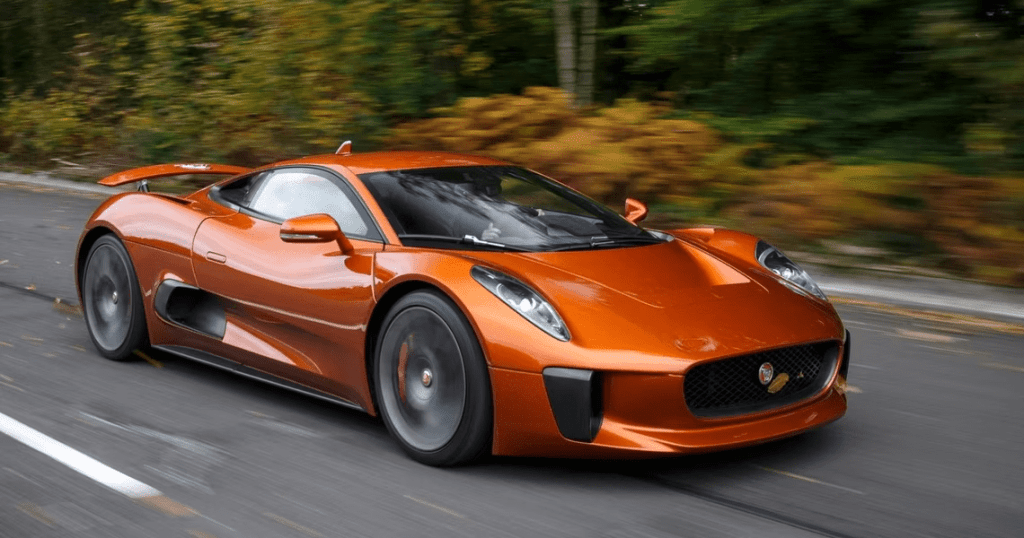
8. Jaguar C-X75 (2010)
Context
A hybrid hypercar concept that reframed Jaguar as technologically ambitious rather than retro-defined.
Why It Mattered
It offered Jaguar a modern engineering identity instead of a heritage dependency.
Why It Failed / Was Killed / Never Happened
Post-crisis conservatism and corporate caution killed long-term ambition.
What the Industry Lost
Jaguar missed its strongest opportunity to reset itself as a forward-looking performance brand.

7. BMW Nazca M12 (1991)
Context
BMW’s Italdesign-penned mid-engined supercar concept.
Why It Mattered
It showed BMW could define top-tier performance outside tuned sedans.
Why It Failed / Was Killed / Never Happened
Brand containment won over brand expansion.
What the Industry Lost
BMW surrendered the chance to define a true flagship philosophy rather than incremental escalation.
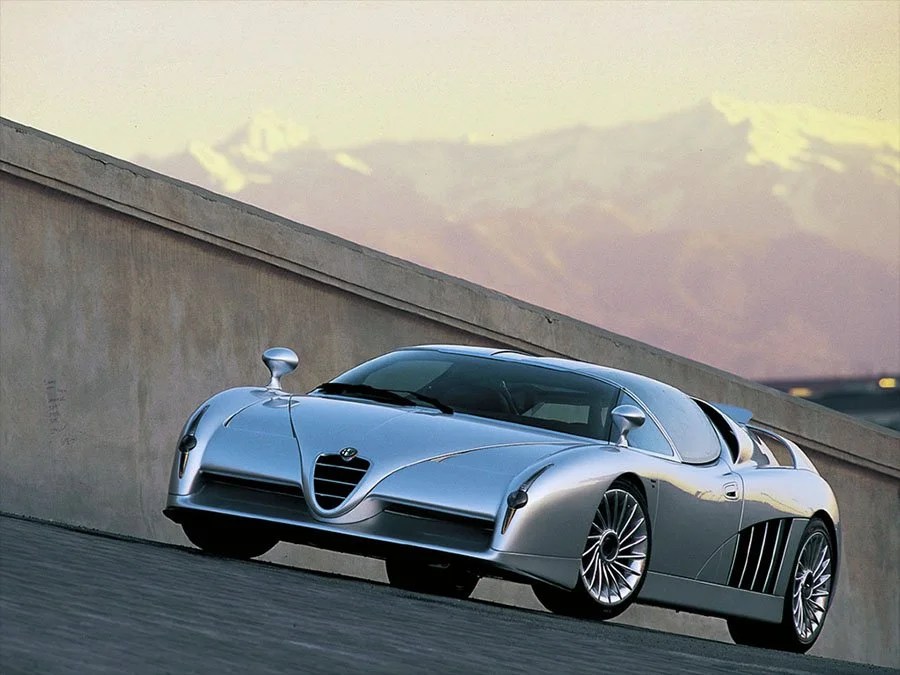
6. Alfa Romeo Scighera (1997)
Context
A mid-engined, twin-turbo V6 concept that hinted at a structurally serious Alfa future.
Why It Mattered
It framed Alfa as an engineering-led performance brand, not just an emotional design house.
Why It Failed / Was Killed / Never Happened
Chronic financial instability made sustained ambition impossible.
What the Industry Lost
Alfa lost authority at the top — and spent decades compensating stylistically instead.
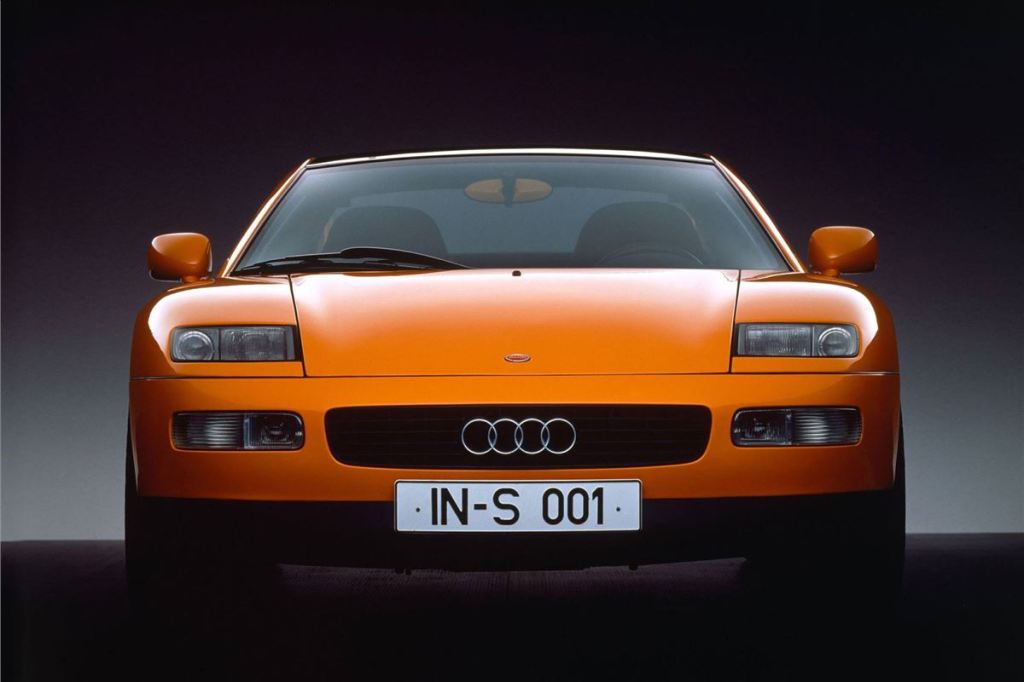
5. Audi Quattro Spyder (1991)
Context
A lightweight, mid-engined sports car concept before Audi’s modern performance era.
Why It Mattered
It suggested Audi could be adventurous rather than purely disciplined.
Why It Failed / Was Killed / Never Happened
Internal brand hierarchy discouraged philosophical expansion.
What the Industry Lost
Audi delayed emotional credibility. The R8 arrived later — as a more corporate, safer echo.
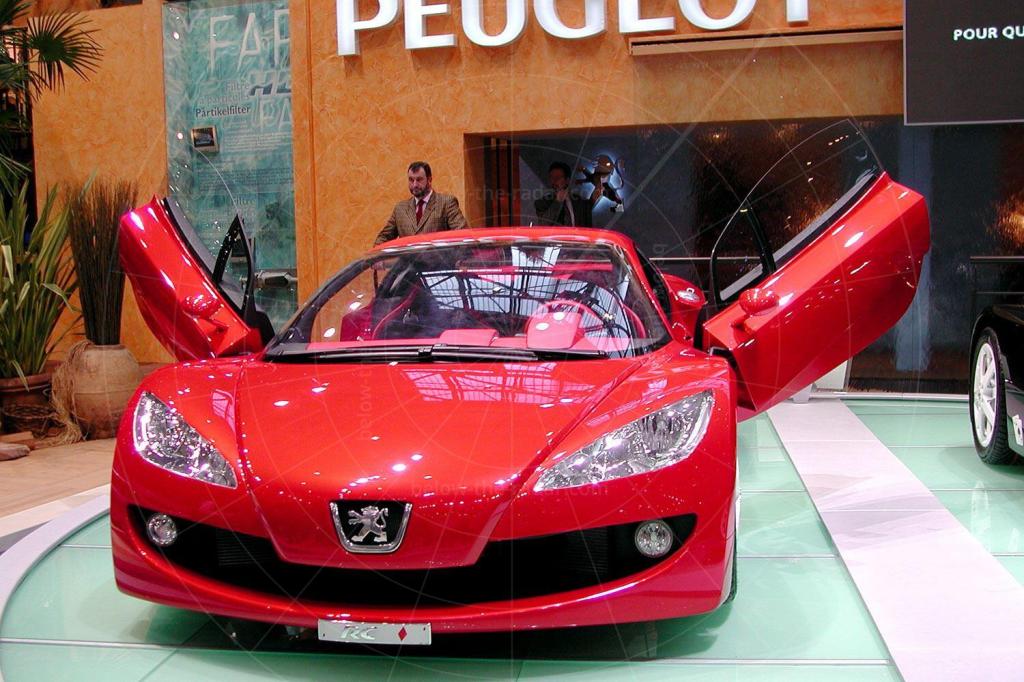
4. Peugeot RC (2002)
Context
A low-slung, performance-focused concept that reframed Peugeot as something more than competent transportation.
Why It Mattered
It suggested Peugeot could lead with design and driver-focused intent, not just rational packaging.
Why It Failed / Was Killed / Never Happened
The brand retreated into safe identity territory. Performance ambition was deemed off-message.
What the Industry Lost
The industry lost evidence that mainstream brands can credibly own emotional, performance-led thinking without premium repositioning.
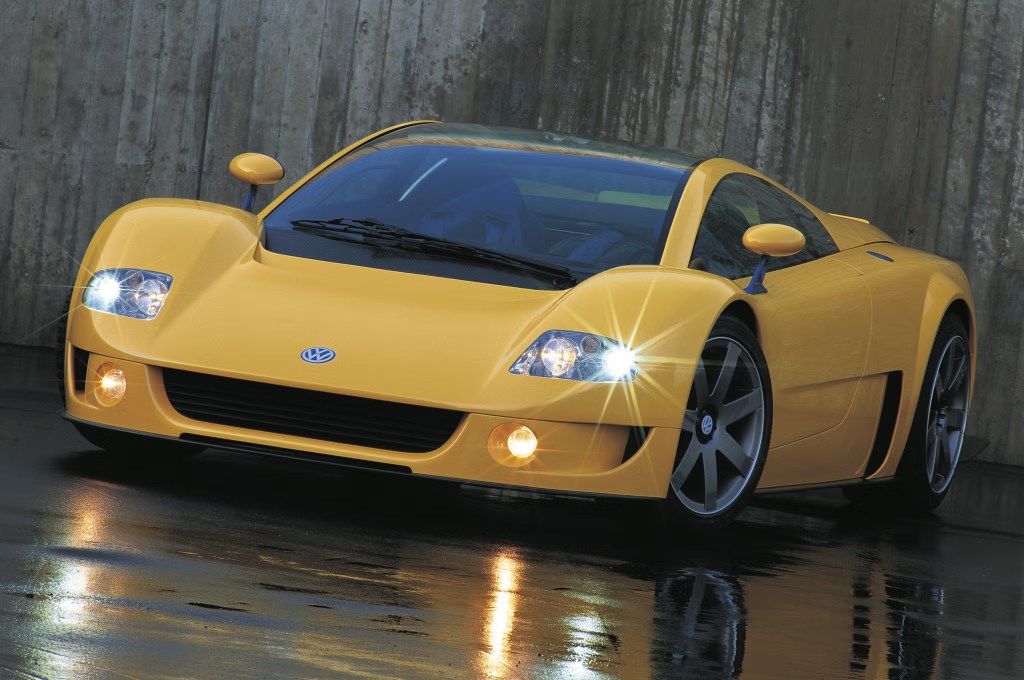
3. Volkswagen W12 Syncro (1997)
Context
A mid-engined W12 supercar concept that predated VW’s multi-brand performance empire.
Why It Mattered
It showed Volkswagen thinking like a top-tier engineering house, not just a volume manufacturer.
Why It Failed / Was Killed / Never Happened
The group chose to distribute ambition across brands rather than define a flagship VW identity.
What the Industry Lost
Volkswagen remained philosophically “central.” Performance lived elsewhere.
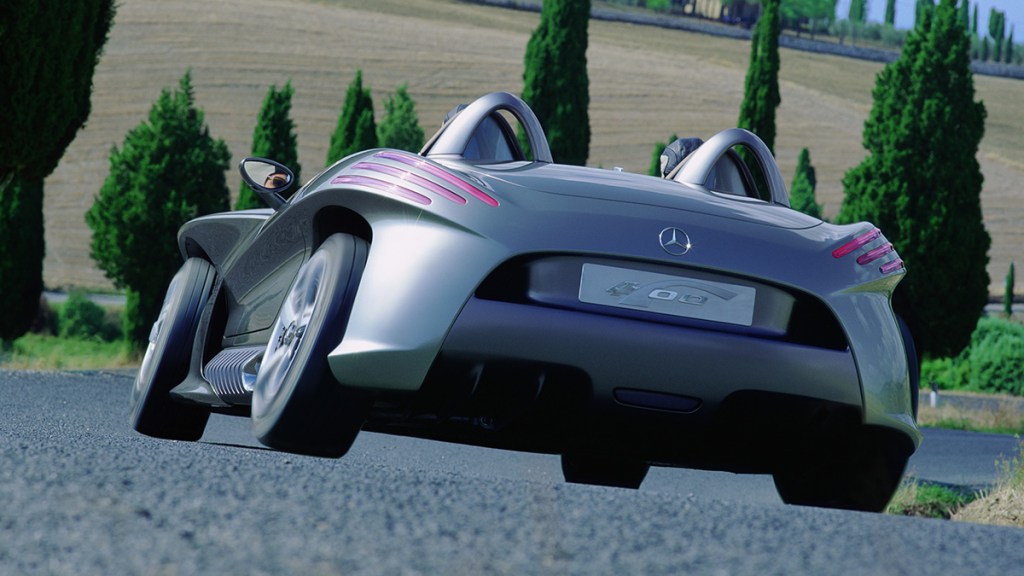
2. Mercedes-Benz F400 Carving (2001)
Context
A radical concept featuring tilting front wheels designed to improve grip and steering behaviour.
Why It Mattered
It challenged basic assumptions about front-end geometry and vehicle dynamics — not styling, not trim, but fundamentals.
Why It Failed / Was Killed / Never Happened
Complexity, regulation, and risk aversion made it politically unpalatable.
What the Industry Lost
The industry lost a willingness to rethink mechanical fundamentals. Software became the substitute for structural innovation.
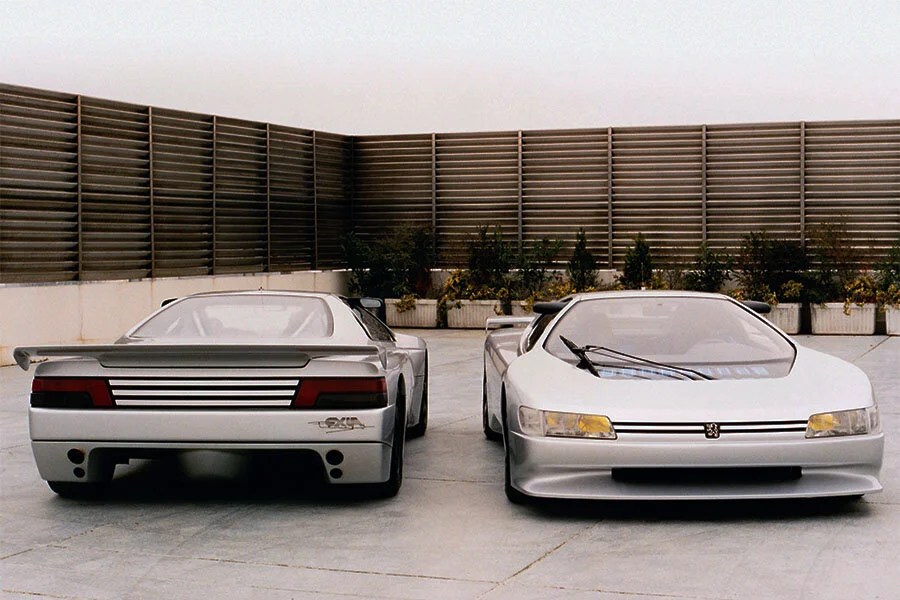
1. Peugeot Oxia (1988)
Context
A twin-turbo V6, four-wheel-drive supercar from Peugeot — a mass-market brand briefly acting like a technological aggressor.
Why It Mattered
The Oxia was not brand theatre. It was Peugeot positioning itself as an engineering authority.
Why It Failed / Was Killed / Never Happened
Internal identity policing killed it. A supercar did not fit what Peugeot was “supposed” to be.
What the Industry Lost
The industry lost proof that ambition does not have to follow premium branding. The Oxia exposed how much brand limitation is self-inflicted.
Industry Pattern
Every car here exposes the same flaw.
Not technical weakness.
Not market impossibility.
But internal permission.
Platform logic replaced philosophy.
Brand containment replaced curiosity.
Innovation became something to be styled, not structurally allowed.
Final Verdict
These ideas did not die because they were unrealistic.
They died because the modern car industry has taught itself that clarity of intent is dangerous.
Concept cars still exist.
Conviction does not.
And that is why modern cars feel so technically accomplished — and so philosophically empty.

 UNBUILT GARAGE
Leave a comment