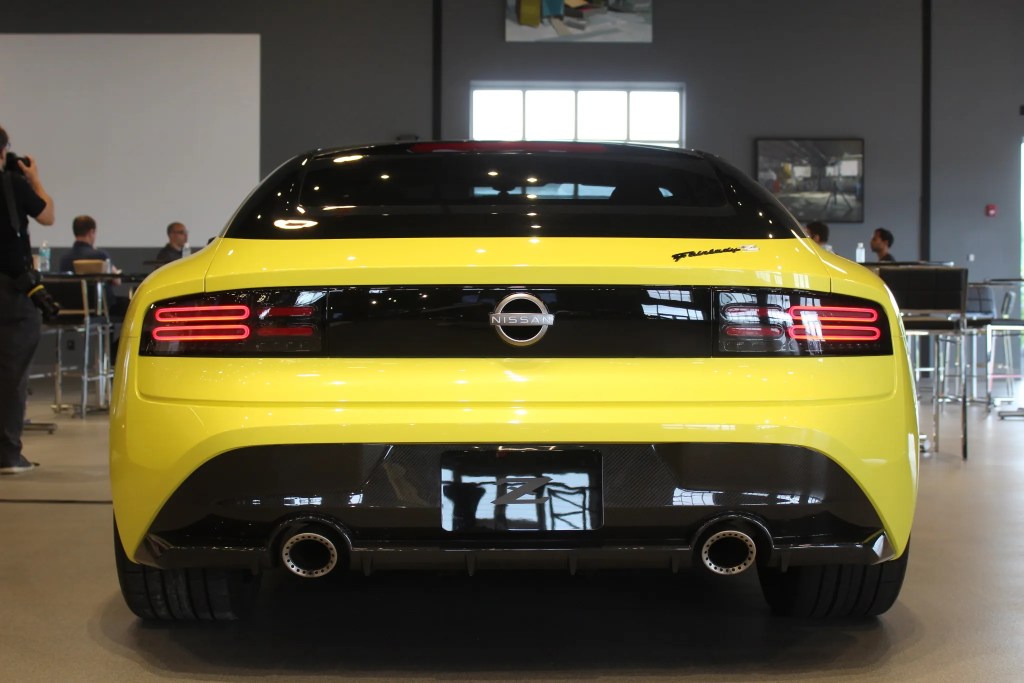
A praise for a car that dares to look like it was designed by people, not processes.
Introduction
The modern car industry has become exceptionally good at one thing: not offending anyone.
Every new model arrives smoothed, softened, focus-grouped, and optimised until it no longer has a clear opinion about itself. It is efficient, competent, safe, and utterly forgettable. A triumph of process over intent.
Which is why the idea of a modern Nissan Z feels so jarring.
Not because it is perfect. It isn’t.
Not because it is revolutionary. It isn’t that either.
But because it feels like a car designed with a point of view.
This article is speculative not because the Z doesn’t exist, but because what it represents almost doesn’t anymore: a willingness to prioritise character over consensus, and design intent over algorithmic safety. In an industry increasingly allergic to risk, the Z feels like an argument made in metal.
And it also has an uncomfortable side effect. Cars like this remind you how much you’ve been trained to accept.
That alone makes it worth paying attention to.
Brand DNA vs the Concept
Nissan has always had a split personality.
On one side, the sensible mass-market manufacturer: efficient, practical, quietly competent. On the other, a long and occasionally glorious history of building cars that exist for no rational reason beyond enjoyment. The Z lineage sits squarely in the second category.
Historically, the Z was never about winning every comparison test. It was about delivering something recognisable: long bonnet, short tail, rear-drive intent, and the unspoken understanding that this car existed because someone inside the company wanted it to.
The modern interpretation doesn’t try to reinvent that DNA. And that is precisely the point.
Where most brands now treat heritage as a liability — something to be hidden behind abstract “future mobility” language — the Z leans into it. Not nostalgically, but unapologetically. It doesn’t pretend the past didn’t happen. It uses it as an anchor.
That decision alone separates it from most modern sports cars, which seem terrified of acknowledging what they used to be in case someone on a strategy deck decides it limits global scalability.
Design Implications
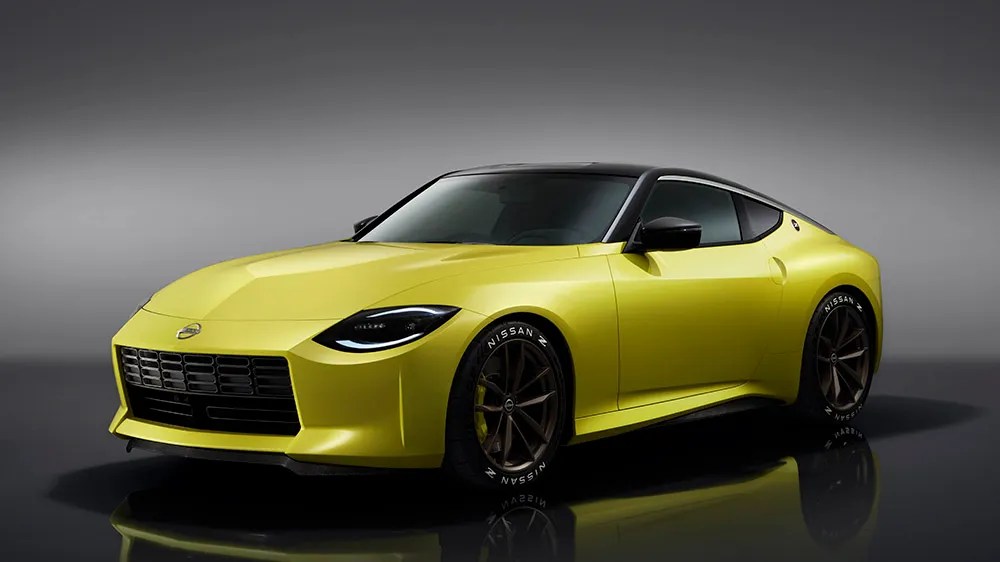
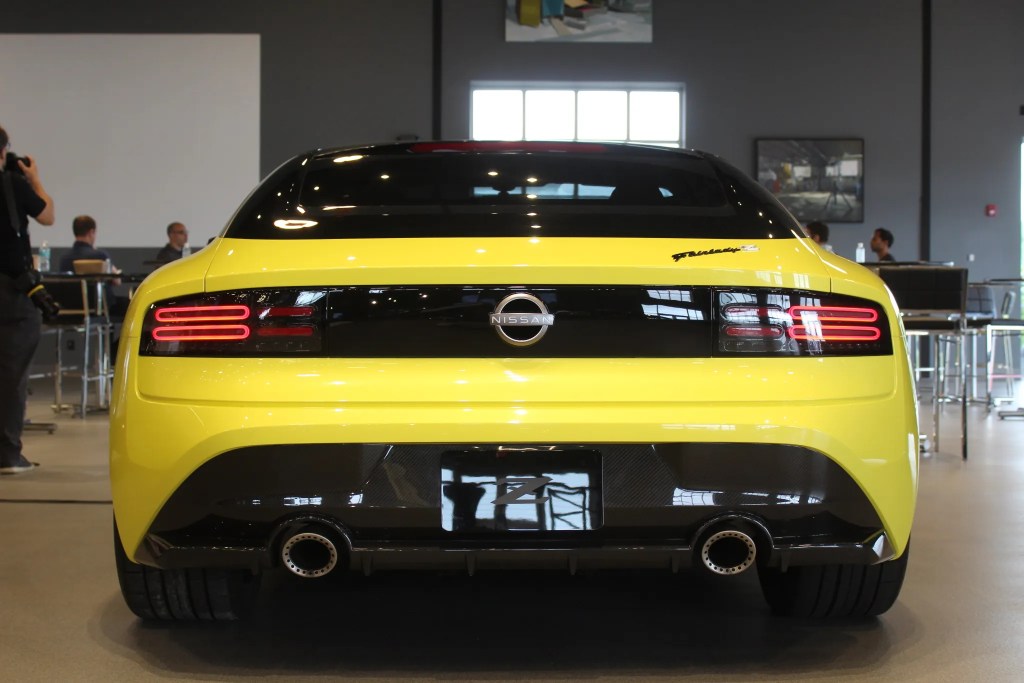
The first thing the Nissan Z gets right is that it has a face.
This should not be remarkable. And yet, in 2026, it is.
Most modern cars no longer have faces. They have lighting signatures, graphic elements, and brand-approved shapes designed to read well at three pixels high on a phone screen. The Z, by contrast, looks like a car you can recognise from across a car park without needing to see the badge.
The proportions are doing the heavy lifting. Long bonnet. Clear cabin. Rearward mass. These are not accidental choices. They communicate purpose before you’ve even processed the details.
Crucially, the Z resists the industry’s obsession with visual neutrality. It does not attempt to please everyone. It accepts that some people won’t like it. That is not a design failure — it is a design stance.
In an era where many vehicles resemble aerodynamic appliances — rounded, softened, and polished until they look pre-worn — the Z retains edges, contrast, and tension. It hasn’t been sanded into anonymity.
This stands in direct contrast to the kind of performance-badged crossover currently filling press fleets: tall, heavy, visually aggressive, and dynamically apologetic.
This is not about retro styling. It is about refusing to erase intent.
Interior Philosophy
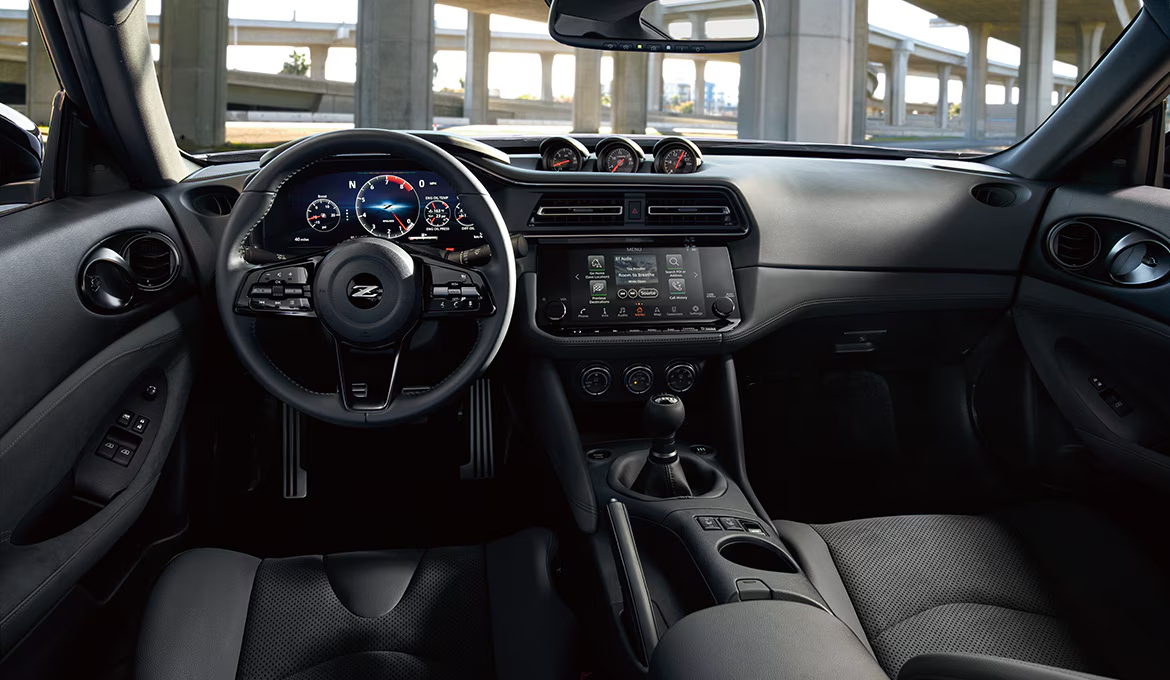
Inside, the Z continues its quiet rebellion.
Modern interiors are increasingly dominated by screens, ambient lighting, and configurable experiences designed to impress passengers rather than engage drivers. The result is often a cabin that feels expensive, technologically dense, and emotionally distant.
The Z’s interior philosophy is refreshingly direct.
You sit low. You face forward. The controls exist where you expect them to. There is an implied hierarchy: driving first, everything else second. The cabin does not attempt to distract you with digital theatre or immersive lighting schemes designed to compensate for a lack of physical engagement.
This is not minimalism for the sake of trend. It is restraint in service of clarity.
Where many modern performance-branded cars feel like technology lounges with steering wheels attached, the Z still feels like a place built around the act of driving. That distinction matters more than ever, because it is becoming increasingly rare.
Market Positioning
From a market perspective, the Nissan Z makes almost no sense.
It occupies an awkward space: too niche to be a volume product, too honest to justify luxury pricing, and too focused to chase lifestyle buyers. Which is precisely why it feels so refreshing.
Most modern sports cars are now positioned as status objects first and driving tools second. They must signal success, relevance, and technological progress. The Z signals something else entirely: enthusiasm.
It is not trying to be aspirational in the modern sense. It is not attempting to redefine mobility or disrupt a segment. It simply exists to be driven.
That is commercially unfashionable. But it is emotionally powerful.
In a market dominated by crossovers pretending to be sporty and performance trims sold primarily through badges and wheel size, the Z’s straightforward positioning feels almost radical.
Brand Risk
This is where the Z becomes genuinely interesting.
Because building a car like this is risky.
Not financially — sports cars have always been marginal propositions — but philosophically. The Z exposes an uncomfortable truth for the industry: that emotional design and mechanical honesty are still possible, if you are willing to accept that not everyone has to like the result.
That is a dangerous message in a world governed by global platforms, shared architectures, and brand strategies designed to minimise internal conflict.
By producing a car with a clear personality, Nissan implicitly highlights the absence of personality elsewhere. It reminds people what has been lost in the pursuit of scale and safety.
That is not something most manufacturers are eager to do.
Potential Specifications
Speculating about the Z’s mechanical package is revealing, because the numbers themselves are almost beside the point.
A turbocharged V6. Rear-wheel drive. Sensible power, not headline-chasing output. Enough performance to be engaging without turning the car into a straight-line statistic.
The important thing is not how fast it is, but how deliberately it avoids excess. There is no attempt to overwhelm physics with power or disguise mass with torque figures. The Z’s imagined specification prioritises balance over bravado.
In a market obsessed with being “the fastest ever,” choosing to be good enough is a quietly confident move.
Reality Check
- Would this sell in massive numbers?
No. And it was never supposed to. - Would it survive Europe’s regulatory landscape?
Probably not without compromise, which is telling in itself. - Does it matter anyway?
Absolutely. Because not everything valuable needs to scale.
Final Verdict
The Nissan Z gets something fundamentally right that most modern cars have forgotten: it knows what it is.
It does not apologise for existing. It does not attempt to please everyone. It does not hide behind technology narratives or lifestyle positioning. It is a car designed with intent, in an industry increasingly uncomfortable with intent.
That does not make it perfect. But it makes it honest.
And honesty, in today’s automotive landscape, is the rarest feature of all.
The Z is not a glimpse of the future.
It is a reminder of what the present could still be — if the industry remembered that cars are allowed to have opinions.

 UNBUILT GARAGE
Leave a comment