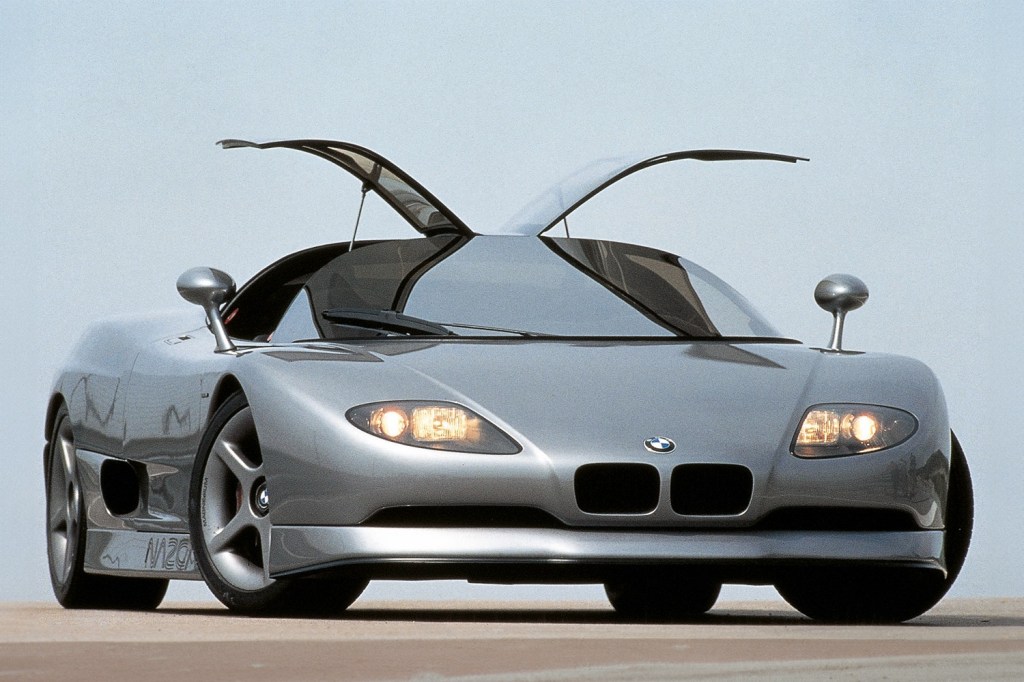
The BMW Nazca M12 was a real mid-engined V12 supercar concept built with Italdesign in 1991 — and it still looks more exciting than most modern BMWs.
BMW has built plenty of fast cars.
It has built some brilliant ones, too. The E39 M5 still feels like engineering with a pulse. The E46 M3 remains one of the few cars that can make grown adults speak in reverent whispers. Even the original M1, chaotic as its backstory was, proved that Munich was once willing to do something gloriously unreasonable.
And then there’s the BMW Nazca M12.
A car so outrageous, so sleek, and so implausibly futuristic that even now — more than three decades later — it doesn’t look like a historical curiosity. It looks like a missed opportunity. The sort of machine that makes you stop mid-scroll, zoom in, and ask the obvious question:
Why on earth didn’t BMW build this?
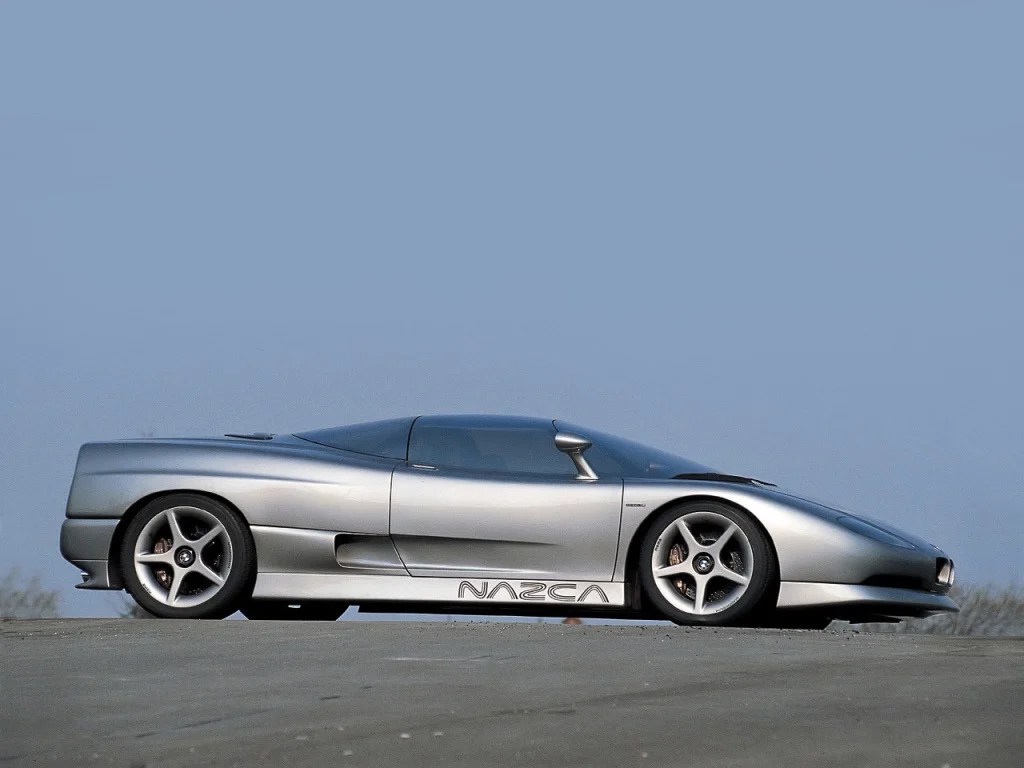
Because this wasn’t some static motor show ornament built to spin under harsh lights for six minutes before being rolled into storage forever. The Nazca M12 was a real, running, mid-engined V12 supercar concept developed with Italdesign and shaped by Fabrizio Giugiaro, making his design debut under the long shadow of his father, Giorgetto Giugiaro. It had a proper powertrain, a proper structure, a proper sense of intent — and a silhouette that still makes a depressing number of modern “halo” cars look like committee work. Italdesign’s own project archive confirms it as a functioning concept, not a static styling model.
That’s what makes the Nazca M12 so compelling in 2026.
Not just that it looked mad.
Not just that it was rare.
But that BMW got alarmingly close to building the sort of supercar legend it has spent the last 30 years not building.
This Wasn’t Fantasy — It Was a Real Supercar Blueprint
The Nazca M12 arrived in 1991, and the spec sheet alone is enough to make modern BMW fans slightly resentful.
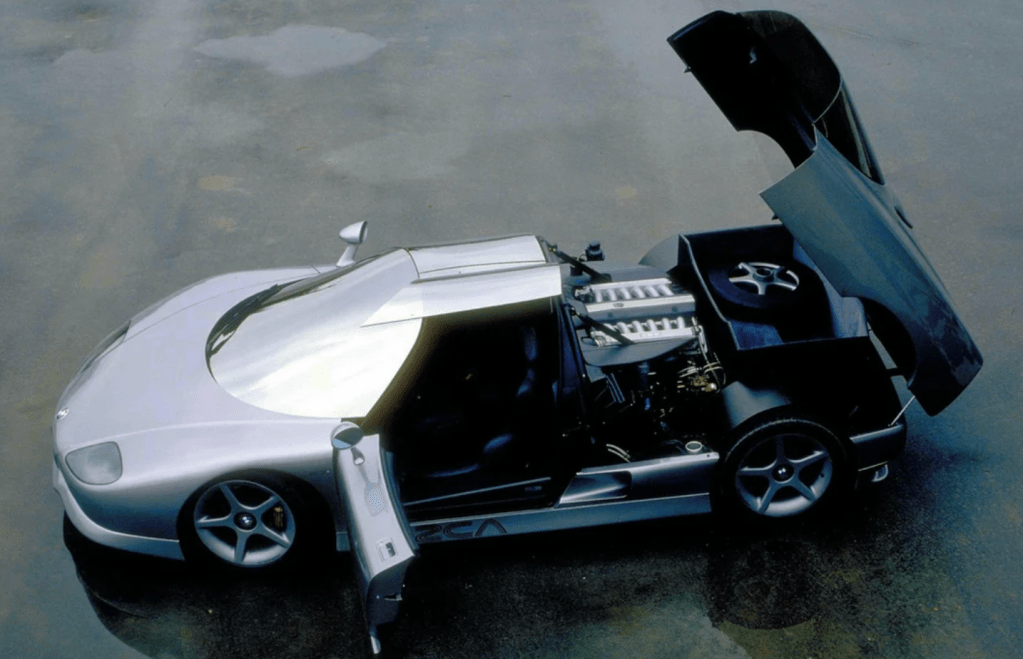
Underneath that impossibly low glass canopy sat a mid-mounted 5.0-litre BMW V12, sourced from the 850i, mounted longitudinally behind the cabin and paired with a ZF five-speed manual gearbox. Power was quoted at 300 hp, which doesn’t sound especially wild by today’s numbers until you realise the whole car weighed roughly 1,100 kg thanks to a carbon-fibre monocoque and body structure. Italdesign also claimed a 0.26 drag coefficient and a top speed of around 297 km/h (184 mph). In period terms, that wasn’t ambitious. That was properly serious.
And crucially, it wasn’t the usual concept-car trick of making something dramatic and hoping nobody asks difficult questions about what’s underneath.
The Nazca had answers.
A real BMW engine.
A real gearbox.
A real performance target.
A real lightweight structure.
In other words, this wasn’t design theatre. It was the outline of a production-worthy supercar if BMW had wanted one badly enough.
Which, evidently, it didn’t.
It Still Looks More Exciting Than Most New Cars
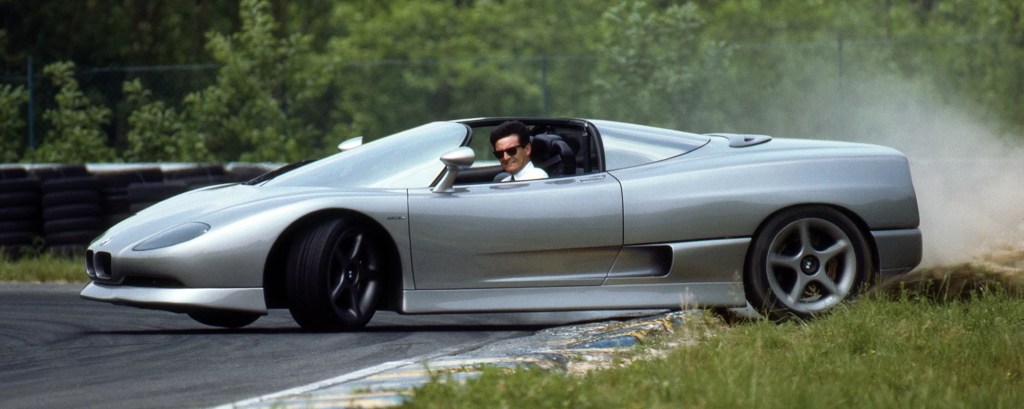
This is where the Nazca stops being an interesting footnote and starts becoming genuinely irritating.
Because if it merely had a good backstory, it would be a neat forgotten concept. Instead, it still looks absolutely outrageous.
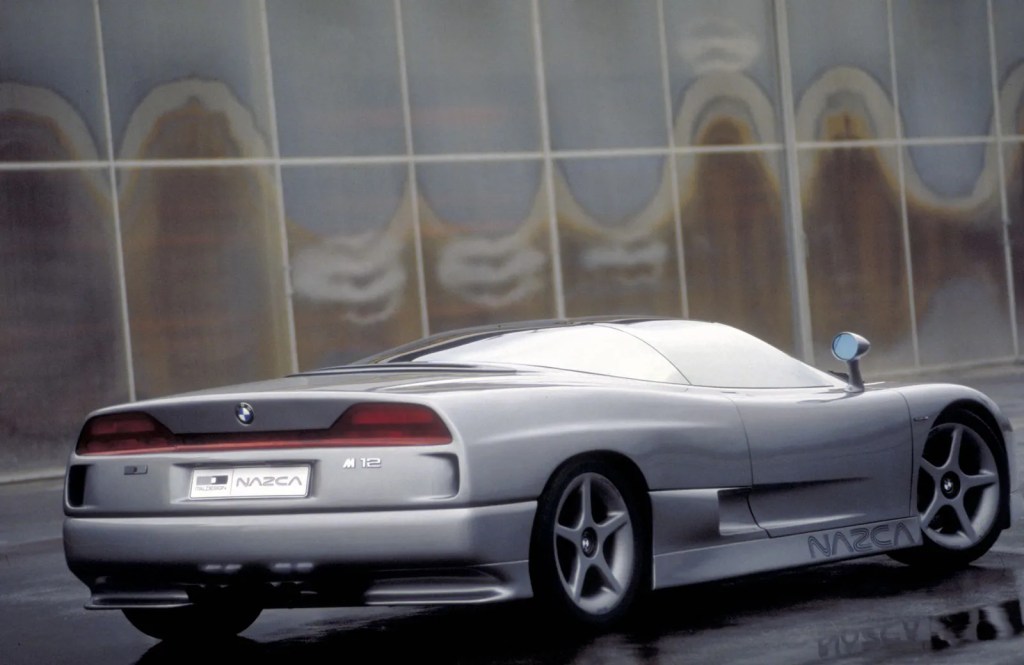
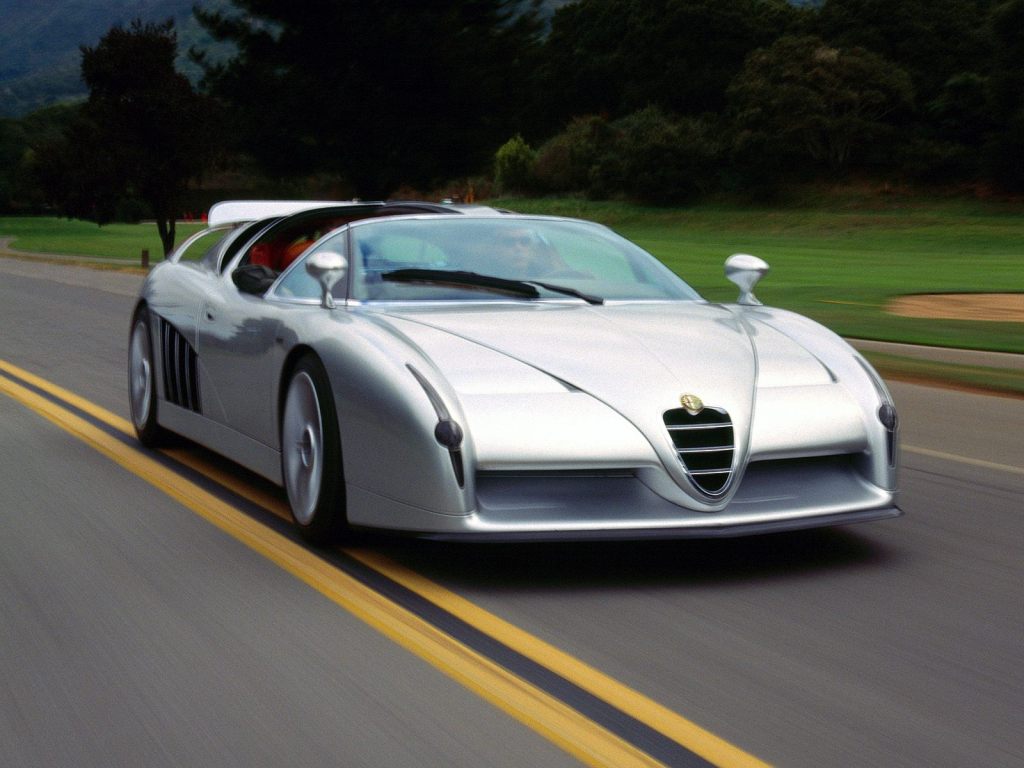
Not in the usual early-1990s wedge-car way, either. It doesn’t rely on pop-up headlamps, poster-car nostalgia, or period gimmicks to win you over. The Nazca is smoother than that. Cleaner. Stranger. More elegant. It looks like a Le Mans prototype and a sci-fi grand tourer accidentally collided in the best possible way.
The proportions do most of the work. The cabin is wrapped in an almost absurd amount of glass, with a fighter-jet canopy effect that makes the car look even lower than it already is. The nose is clean and disciplined. The flanks are taut without being fussy. The tail looks like it belongs to a machine that was never supposed to be legal in the first place.
And somehow, despite all of that, it never tips into parody.
That’s the trick.
A lot of concept cars from this era still look dramatic. Very few still look expensive. The Nazca does. It still carries itself like something that should have been parked next to an F40, a Diablo and a Jaguar XJ220, not quietly archived as a fascinating “what if”.
Fabrizio Giugiaro himself said the design was heavily influenced by Formula 1 and Group C prototypes, and once you know that, the whole thing makes perfect sense. That vast glasshouse, the low body, the sense that airflow mattered more than ornament — it all feels like a road-going endurance racer filtered through a design studio that still believed beauty and madness could share the same drawing board.
And that, frankly, is why it still humiliates so many modern performance cars.
Today, too many “special” cars announce themselves by shouting.
The Nazca doesn’t shout.
It just sits there looking impossibly self-assured.
The Details Make It Even Better
Then you start digging, and the Nazca somehow becomes even more absurdly charming.
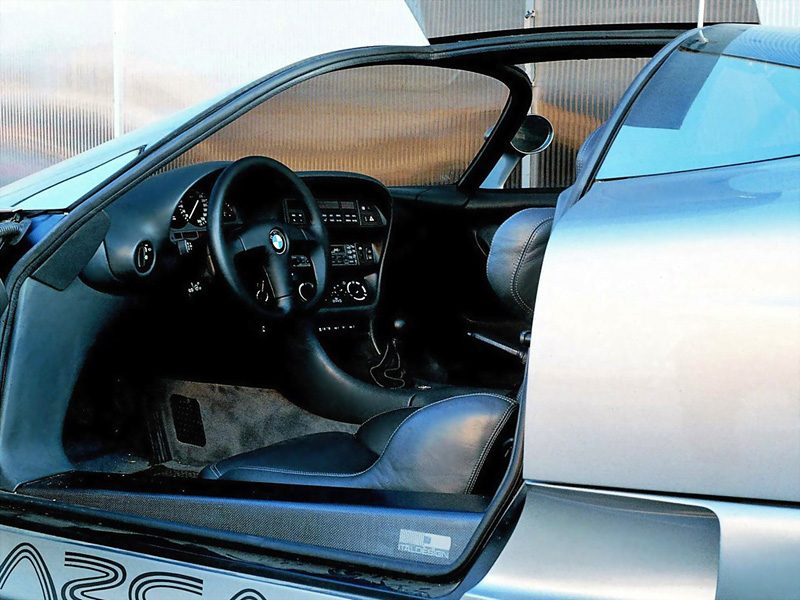
The front and rear body sections opened as full clamshells, because apparently normal access panels were for ordinary people. The canopy design gave almost 360-degree visibility, which sounds ridiculous on a car this dramatic until you remember this was a serious engineering project, not a social media render with no door seals. Even the side glass was treated unusually: because of the shape of the canopy, the window sections used a gullwing-style opening mechanism to make the whole thing work in the real world.
That’s what separates the Nazca from most lost concepts.
It wasn’t merely beautiful.
It was resolved.
Somebody had thought about how this thing would actually exist.
And then, just to make the missed opportunity sting even more, Italdesign pushed the idea further.
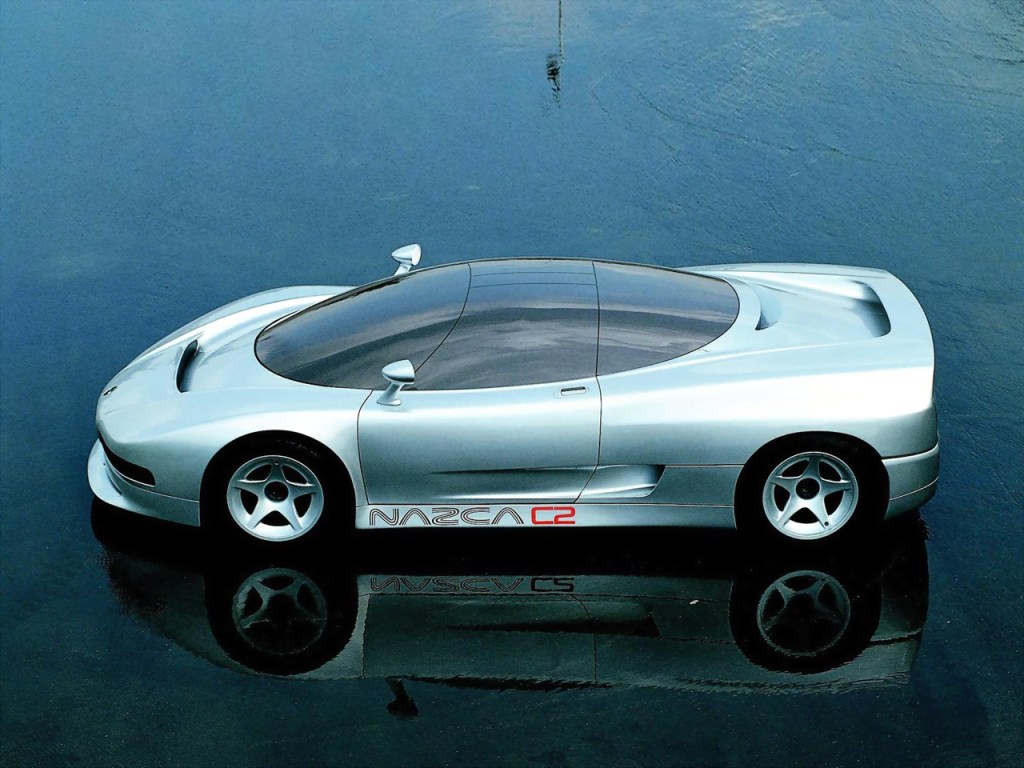
In 1992, the project evolved into the Nazca C2, a sharper, more aggressive development with the BMW V12 reworked by Alpina from 300 hp to 350 hp, while weight was cut further. Italdesign’s own archive is wonderfully blunt about the result: the C2 was “actually a race car.” In other words, this was not a concept that was winding down. It was gaining momentum.
BMW had the ingredients.
It had the design.
It had the mechanical credibility.
It had a car people would still be talking about 30 years later.
And yet, somehow, it never pulled the trigger.
BMW Didn’t Kill the Nazca Because It Was a Bad Idea
This is the part that matters.
The Nazca M12 did not die because it was a silly fantasy.
It died because BMW had already been burned once.
The original BMW M1 had proven the brand could build a proper supercar, but it also proved how awkward, expensive and politically messy that sort of project could become. The M1’s development saga is the sort of thing corporate planners remember for decades. By the early 1990s, BMW was clearly far more comfortable being the maker of world-class fast saloons, coupes and GTs than diving back into the chaotic business of building a low-volume mid-engined halo car. Retrospectives on the Nazca consistently point to that reluctance: admiration, yes. Commitment, no.
From a business perspective, that probably made sense.
From a legacy perspective, it looks like cowardice.
Because the Nazca wasn’t some absurd moonshot. It was plausible. More than plausible, in fact. It was believable enough to become dangerous.
Dangerous because it would have forced BMW to decide what sort of company it wanted to be at the very top end: the master of sensible excellence, or the builder of at least one machine per generation that made absolutely no sense until you drove it.
BMW chose sensible excellence.
Which is how you end up with a company that has built dozens of fast cars since, but almost nothing that occupies the same mythic space.
The Nazca Makes the i8 Look Clever — and Slightly Timid
This is where the Nazca becomes uncomfortably relevant.
Because yes, BMW eventually gave us the i8, and the i8 deserves credit. It was bold, it was innovative, and visually it absolutely landed. But emotionally? It was a different kind of statement. A futuristic experiment. A sustainability-era halo car. A car designed to make a point.
The Nazca M12 feels like something else entirely.
It feels like a proper obsession.
A machine built because somebody wanted BMW to have a supercar again — not a technological showcase, not a brand exercise, not a piece of eco-theatre with dramatic doors, but a genuine V12 flagship that could sit nose-to-nose with the best lunatics of the 1990s and not blink.
That is why the Nazca lingers in the imagination.
Because it represents the road BMW didn’t take.
And looking at it now, it’s hard not to suspect that the more interesting version of BMW’s history is the one that never happened.
Final Verdict
The BMW Nazca M12 is one of the greatest supercars BMW never built — and one of the clearest reminders that the company once had more nerve than it does now.
It had the layout.
It had the V12.
It had the manual gearbox.
It had the carbon-fibre ambition.
And above all, it had the kind of design confidence that modern performance cars keep trying to imitate with giant grilles, angry lighting signatures and far too much explanation.
If BMW had built it, the Nazca M12 could have become one of the defining halo cars of the 1990s.
Instead, it became something rarer.
A concept car that still feels like a genuine loss.
And that may be even more revealing.
 UNBUILT GARAGE
Leave a comment