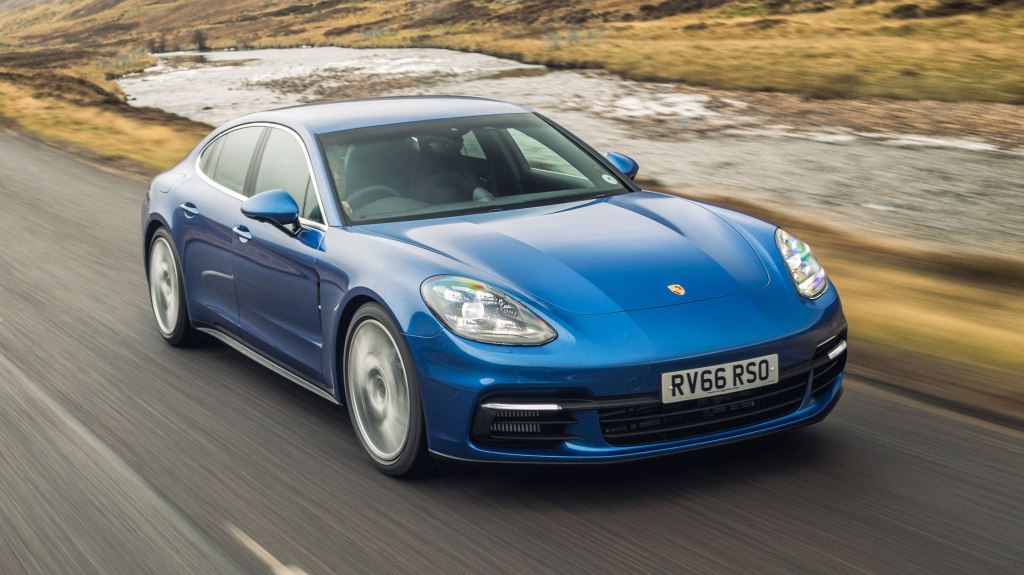
Some are still available new, others only on the used market — but all of them are genuine production diesels you can realistically still buy in 2026. And yes, some of them are still absurdly quick.
There was a time when diesel performance made a strange kind of sense.
Not emotional sense, obviously. Nobody ever heard a clattering cold-start at 7am and thought, yes, this is the sound of passion. Diesel never had the glamour of a Ferrari V12, the menace of a big AMG V8, or the theatre of something Italian with an appetite for ignition coils. But for a brief and very peculiar period, diesel did have one thing on its side: it was startlingly effective.
And in some corners of the car world, that was enough.
It was enough for Porsche to build a Panamera diesel capable of nearly 180mph. Enough for Bentley to sell a diesel Bentayga that could outrun plenty of cars pretending to be sporty. Enough for Alpina — naturally — to look at the whole thing and quietly, tastefully, find a way to go one mile per hour faster than everyone else.
That is what makes fast diesel cars so interesting in 2026. They now feel like survivors from a dead automotive dialect.
The diesel performance boom is over. Emissions scandals poisoned the image, electrification killed the business case, and most brands have moved on to pretending they never really liked compression ignition in the first place. Which means the best fast diesels now sit in a strangely appealing sweet spot: old enough to feel like a lost era, modern enough to still be usable, and weird enough to make you wonder how any of this was ever approved.
So here they are: the fastest diesel production cars you can still realistically buy in 2026, whether new or used.
One important rule before we begin: this list uses factory-claimed top-speed figures for genuine production road cars, based on the fastest officially quoted version you can still realistically buy in 2026. No race cars. No concepts. No tuned examples. No forum folklore. And because the diesel world is full of awkward regional and body-style caveats, those matter too.
10. Volkswagen Touareg V10 TDI
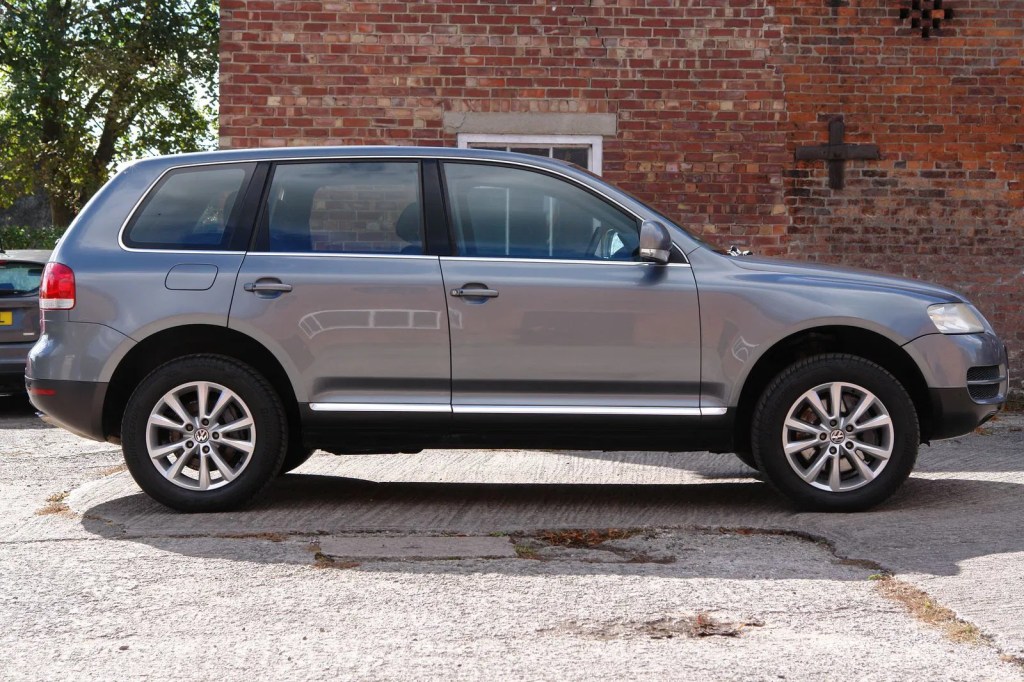
Top speed: 143 mph (230 km/h) | 0–62 mph: ~7.0 sec
Before diesel performance became polished, luxurious and mildly self-satisfied, Volkswagen built the Touareg V10 TDI — which is still one of the most gloriously irrational SUVs of the modern era.
This was a large family 4×4 fitted with a 5.0-litre twin-turbo V10 diesel, because apparently somebody at Volkswagen decided the correct answer to “what should power our premium SUV?” was “something with the engine spec of a slightly confused executive express train.” In later form it made 313hp and 750Nm, and would do around 143 mph, which doesn’t sound outrageous today until you remember when it arrived. Back then, this was an SUV doing proper high-speed damage while sounding like it ought to be towing a small building.
It is not the quickest car here. It is not the cleanest. It is not even especially elegant. But it absolutely deserves a place because it set the tone for what diesel performance would become: excessive, oddly compelling, and just strange enough to be memorable.
If the entire diesel performance era needed an opening act, this would be it. Not refined. Not subtle. Just committed.
9. Audi Q7 V12 TDI
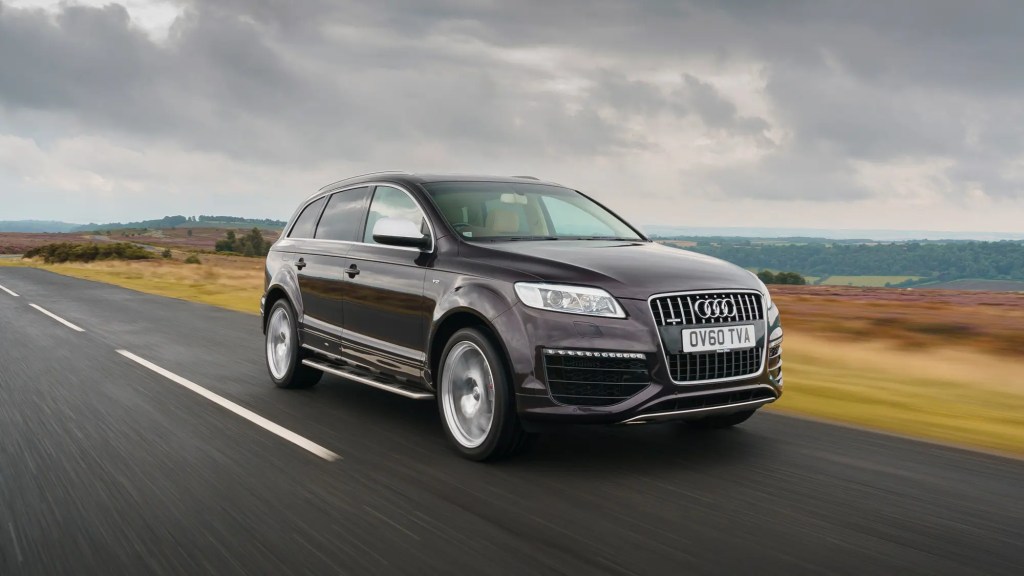
Top speed: 155 mph (250 km/h, limited) | 0–62 mph: 5.5 sec
If the Touareg V10 TDI was diesel excess with a slightly unhinged grin, the Audi Q7 V12 TDI was the point where the whole idea became truly magnificent.
This was not Audi being sensible. This was Audi taking the swagger of its Le Mans diesel dominance and deciding, with a perfectly straight face, to build a luxury SUV powered by a 6.0-litre twin-turbo V12 diesel. The result was 500hp, 1,000Nm, a 0–62 mph time of 5.5 seconds, and a top speed electronically capped at 155 mph.
Those numbers still look faintly absurd now. A thousand newton metres in a family SUV is not really a rational product decision. It is a flex. A monument. A piece of German overconfidence cast in aluminium and leather.
And that is why it belongs here.
Yes, the limiter means it gets trapped in the same 250 km/h swamp as several other cars on this list. But nobody remembers the Q7 V12 TDI because of the limiter. They remember it because Audi actually sold a V12 diesel SUV to normal human beings. Not as a concept. Not as a show car. Not as a thought experiment. As an actual production vehicle.
That alone earns its place.
8. BMW 750d xDrive
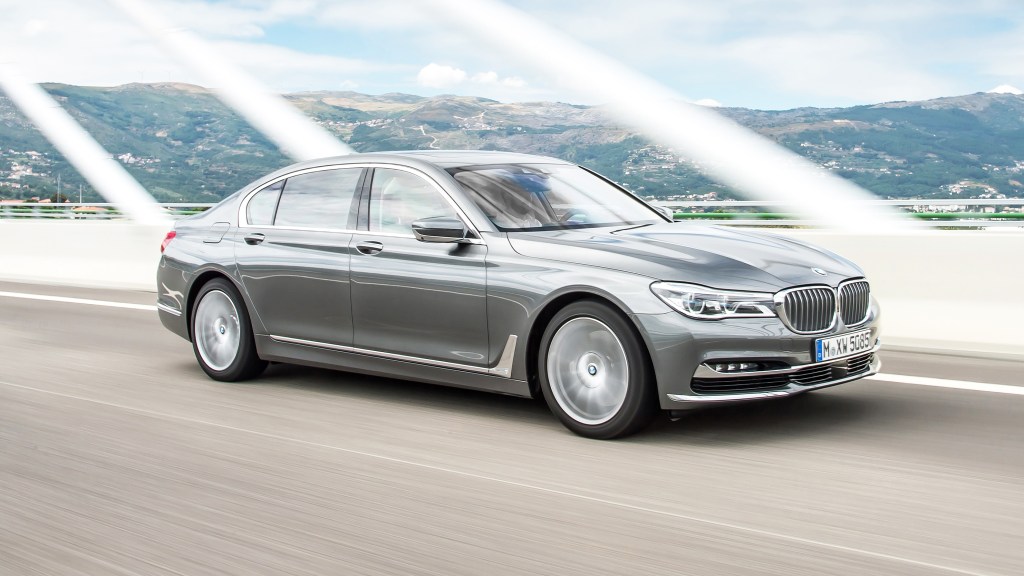
Top speed: 155 mph (250 km/h, limited) | 0–62 mph: 4.6 sec
The BMW 750d xDrive is one of those cars that perfectly captures why fast diesels became so oddly fascinating.
On paper, it sounds almost sensible: a large luxury saloon with a six-cylinder diesel. Fine. Predictable. Company director spec. And then you look closer. In later form, BMW’s 3.0-litre quad-turbo straight-six diesel produced up to 394hp and 760Nm, which meant this large executive limousine could reach 62 mph in just 4.6 seconds before brushing against the usual 155 mph limiter.
That is not normal diesel behaviour. That is diesel behaving like it has been told it needs to impress somebody.
And the 750d did impress, because it managed to combine all the things diesel was supposedly good at — range, refinement, motorway authority — with the sort of real-world pace that made plenty of petrol performance cars look oddly unnecessary. It was the kind of machine that could cross continents without complaint, all while making overtaking feel like a formality.
It is not the most dramatic car here. It does not shout. It does not need to. The 750d is what happens when diesel performance stops trying to be rebellious and becomes quietly, deeply effective.
Which, in its own way, is even more unsettling.
7. BMW M550d xDrive
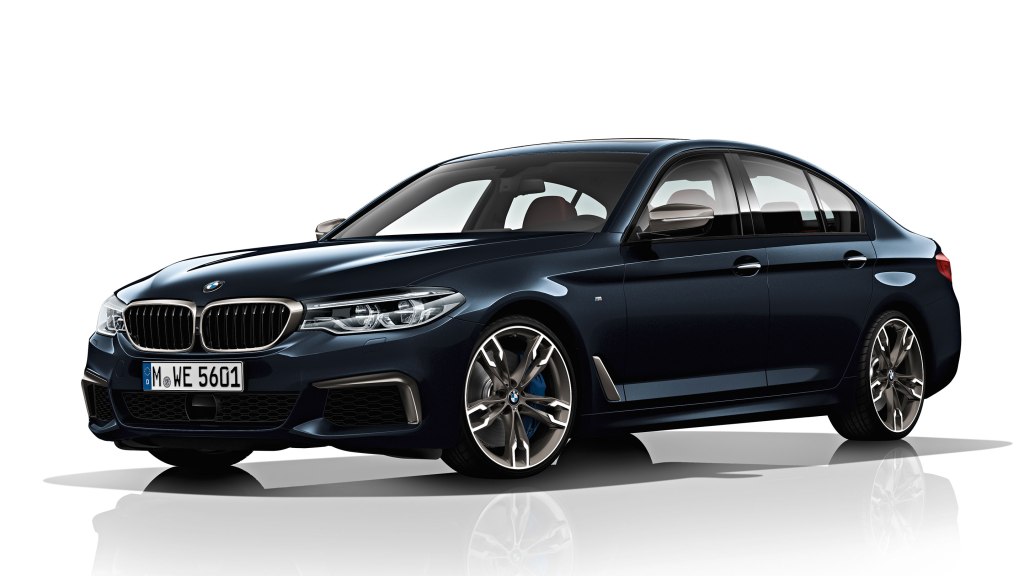
Top speed: 155 mph (250 km/h, limited) | 0–62 mph: 4.4 sec
The BMW M550d is where diesel performance started to feel like an engineering dare.
A diesel 5 Series was one thing. A very fast diesel 5 Series was understandable. But a quad-turbo diesel 5 Series? That is the point where somebody in Munich was clearly enjoying themselves far too much.
In later G30 form, the M550d’s 3.0-litre straight-six diesel produced 394hp and 760Nm, good for 0–62 mph in 4.4 seconds and, once again, the familiar 250 km/h limiter. Which means the top-speed figure is slightly dull, but the rest of the car absolutely is not.
Because what made the M550d special was never the number at the top end. It was the way the whole thing seemed to contradict itself. A diesel. In an M Performance 5 Series. With four turbos. Delivering super-saloon urgency while still being able to cross half of Europe without stopping for fuel every ten minutes.
This is exactly the sort of car that made the diesel era so interesting. Not because it was romantic. It wasn’t. Not because it sounded glorious. It didn’t. But because it was so oddly, hilariously effective.
The M550d feels like the automotive equivalent of someone turning up to a black-tie dinner in hiking boots and somehow still being the best-dressed person there.
6. Audi A8 4.2 TDI quattro
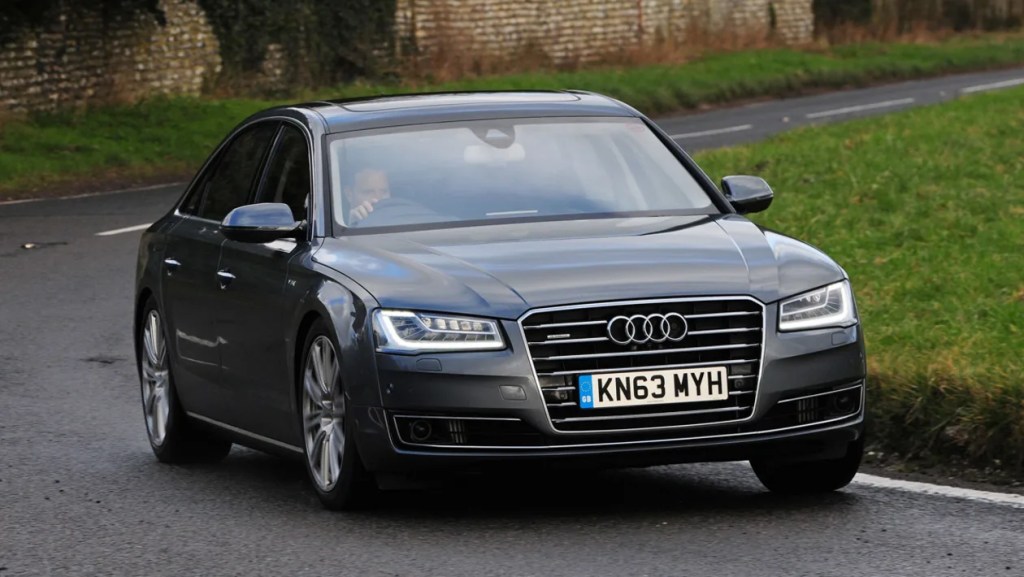
Top speed: 155 mph (250 km/h, limited) | 0–62 mph: 4.7 sec
Before Porsche and Alpina turned diesel top-speed bragging into a proper contest, the Audi A8 4.2 TDI quattro had already done a very good job of making the whole category feel faintly surreal.
This was Audi’s flagship luxury saloon fitted with a 4.2-litre V8 diesel, producing 385hp and 850Nm — numbers that were deeply serious in their day, and still impressive now. The result was 0–62 mph in 4.7 seconds and a limited 155 mph top speed, which made the A8 4.2 TDI one of the earliest truly convincing diesel autobahn missiles.
And that is what makes it important.
The A8 4.2 TDI is not here because it is the weirdest. It is here because it helped define the modern fast-diesel formula: big torque, big comfort, huge range, and the sort of pace that made the idea of a petrol V8 executive car feel increasingly indulgent rather than obviously superior.
This was the car that proved diesel performance did not have to feel like compromise. It could feel expensive. It could feel effortless. It could feel, in a very Audi sort of way, almost inevitable.
Looking back now, it feels like an early draft of the diesel arms race that followed.
5. Audi SQ7 TDI (First-Generation Diesel Version)
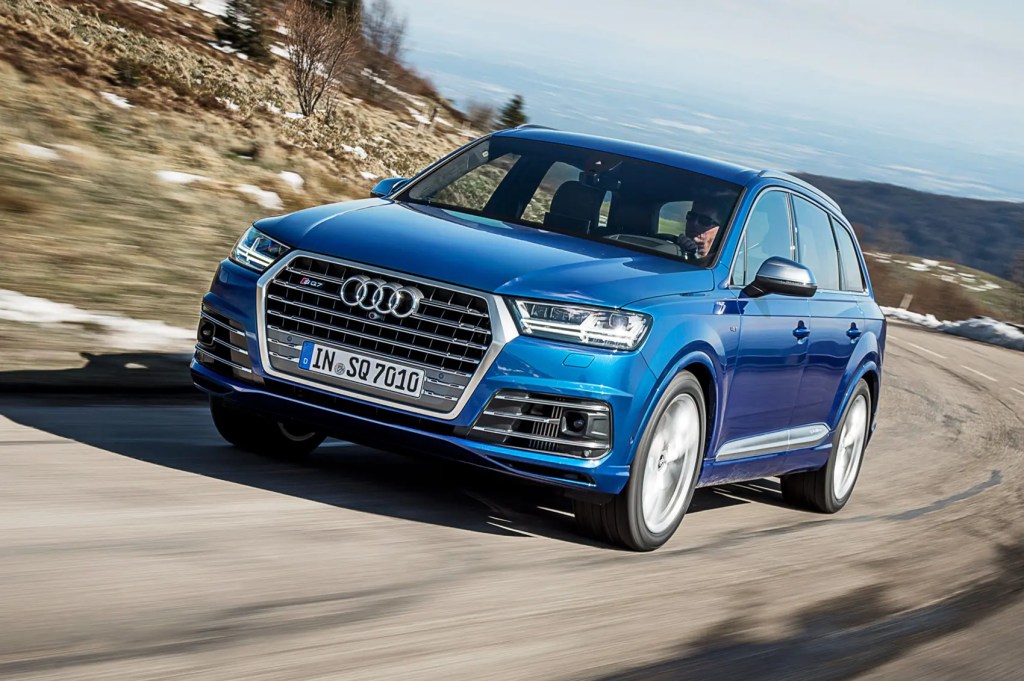
Top speed: 155 mph (250 km/h, limited) | 0–62 mph: 4.8 sec
The first-generation Audi SQ7 TDI is one of those cars that still sounds slightly made-up, even when you know perfectly well it existed.
A large, three-row luxury SUV. A 4.0-litre V8 diesel. 435hp. 900Nm. An electric compressor to sharpen response. And enough pace to reach 62 mph in 4.8 seconds before gently colliding with the now-familiar 155 mph limiter.
In other words, Audi built a family SUV with the sort of performance that would have seemed faintly obscene not all that long ago.
And crucially, it was not just quick in a numbers-sheet way. The SQ7 TDI represented the moment when diesel performance stopped being confined to executive saloons and spread into the most unlikely corners of the premium market. Suddenly, diesel was not just for reps and motorway obsessives. It was for giant luxury SUVs too. Fast ones.
There is something almost admirable about the sheer confidence of it. Instead of accepting that a heavy seven-seat SUV should probably be merely brisk, Audi engineered one that could embarrass a great many cars with far more sporting pretensions.
It may be limited, yes. But the ambition is not.
4. BMW Alpina XD3 (Earlier Quad-Turbo Version)
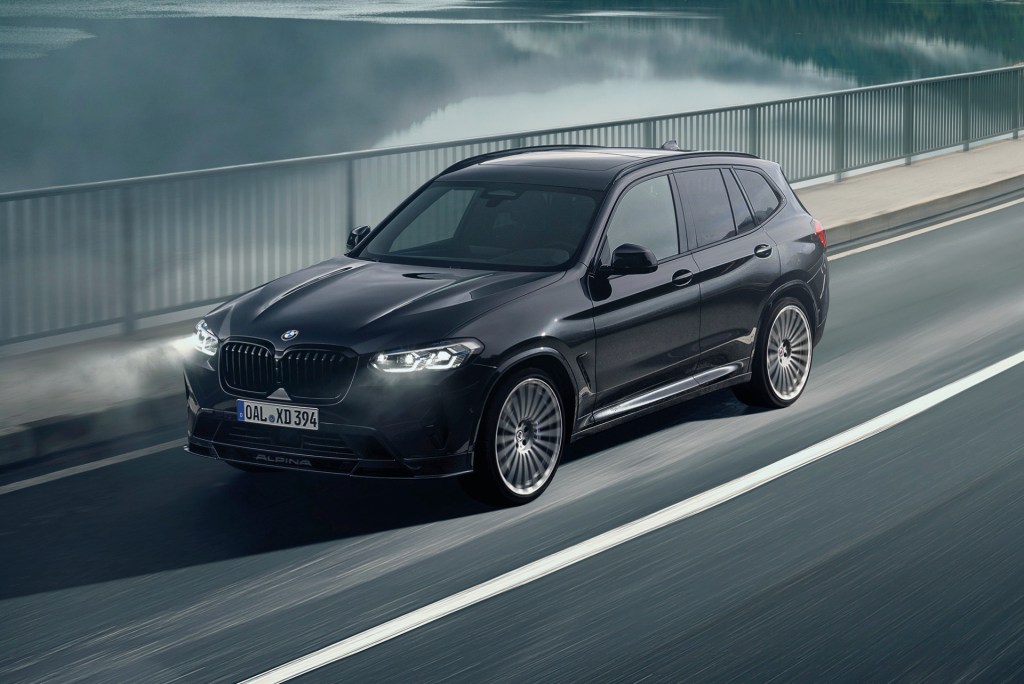
Top speed: 166 mph (267 km/h) | 0–62 mph: 4.6 sec
This is where the list stops being merely interesting and starts becoming genuinely strange.
Because the BMW Alpina XD3 is not simply fast for a diesel SUV. It is fast in a way that forces you to double-check the spec sheet. In its earlier, faster quad-turbo form — the key detail here — the XD3 was officially quoted at 267 km/h (166 mph), with 0–62 mph in 4.6 seconds. That makes it one of the rare diesel SUVs to escape the 250 km/h limiter swamp and post a genuinely distinctive top-speed number.
And yes, that caveat matters.
The later mild-hybrid facelifted XD3 is slower, officially quoted at 254 km/h (158 mph). But this list is based on the fastest production version you can still realistically buy in 2026, and if you shop carefully on the used market, the earlier quad-turbo car is still very much obtainable. That is the one that counts here.
Which is fortunate, because it is also the more entertaining story.
Alpina understood diesel performance better than almost anyone. While the major brands were busy proving diesel could be quick, Alpina was busy proving it could be ridiculously quick without ever looking like it needed attention. The XD3 is the perfect example: an SUV that looks tasteful, feels expensive, and is somehow capable of the sort of speed that should really come with something lower, louder and less practical.
Very Alpina. Very good.
3. Bentley Bentayga Diesel
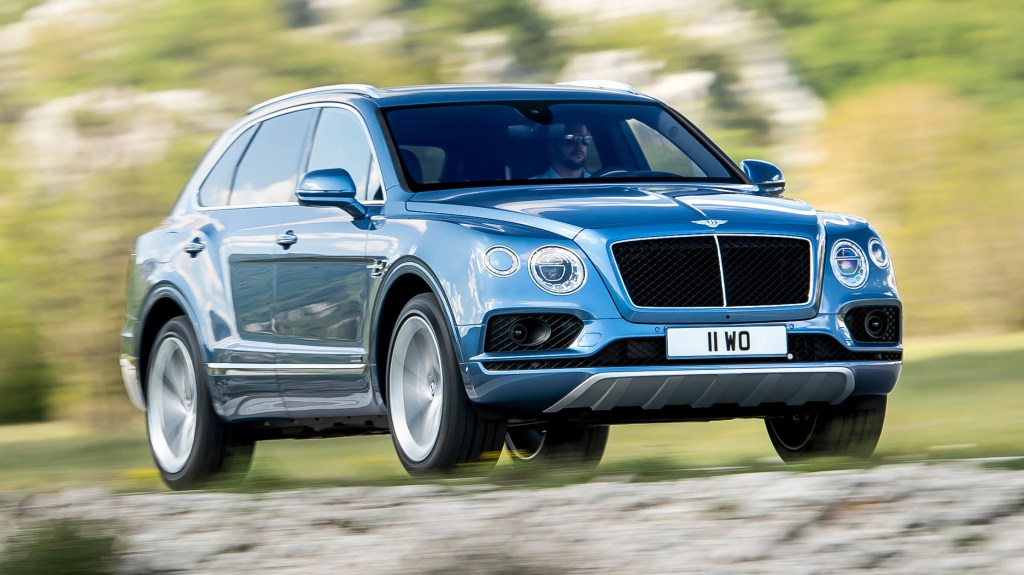
Top speed: 168 mph (270 km/h) | 0–62 mph: 4.8 sec
A Bentley Bentayga Diesel should not really make sense.
Bentley is supposed to do opulence, occasion, a little bit of excess, and the sort of wood trim that makes you suspect somebody in Crewe owns a very expensive polishing cloth. Diesel, by contrast, is supposed to do airport runs, fleet discounts, and mild conversations about fuel economy.
And yet, somehow, the Bentayga Diesel works as an idea precisely because it is so gloriously contradictory.
Under the bonnet sat a 4.0-litre triple-charged V8 diesel, producing 429hp and 900Nm. That gave Bentley’s giant luxury SUV a 0–62 mph time of 4.8 seconds and a top speed of 168 mph (270 km/h) — a figure that, at launch, allowed Bentley to call it the world’s fastest diesel SUV.
And unlike the 250 km/h-limited crowd, that number actually matters. It is clean. It is distinct. It gives the Bentayga Diesel a proper place near the sharp end of this list.
More importantly, it is exactly the sort of car Unbuilt Garage should love. It is expensive, faintly ridiculous, technically impressive, and built around an idea that sounds as if it should have been laughed out of the room during the first meeting.
Nobody needed a 168 mph diesel Bentley SUV.
Which is, of course, precisely why it is excellent.
2. Porsche Panamera 4S Diesel
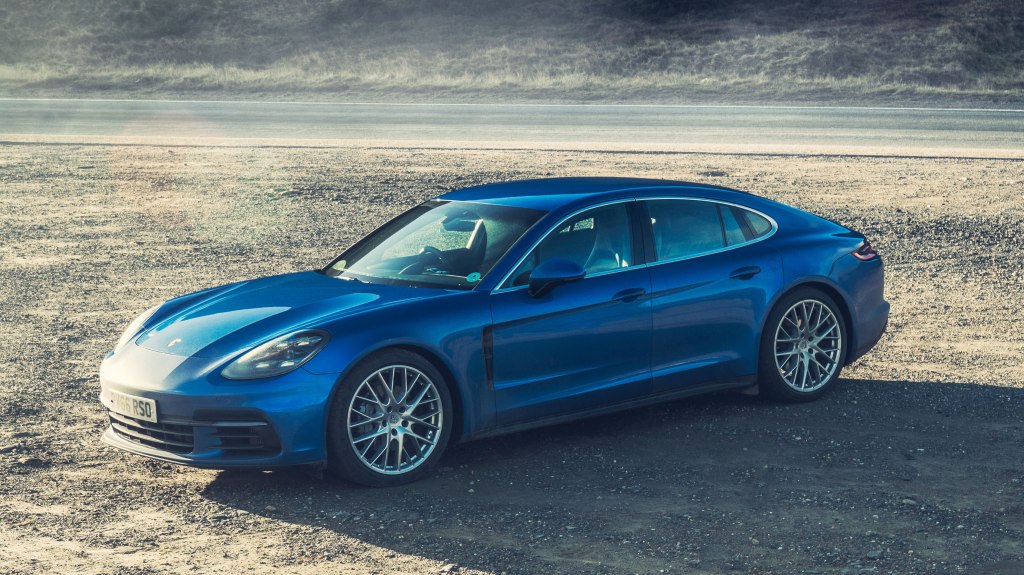
Top speed: 177 mph (285 km/h) | 0–62 mph: 4.5 sec (4.3 sec with Sport Chrono)
For most people, this is still the fast diesel.
When Porsche launched the Panamera 4S Diesel, it did so with a claim that sounded faintly implausible at the time: this was the world’s fastest production diesel. According to Porsche’s own figures, it could hit 285 km/h (177 mph), while its 4.0-litre twin-turbo V8 diesel produced 422hp and 850Nm, enough for 0–62 mph in 4.5 seconds, or 4.3 seconds with the optional Sport Chrono Package. That is serious pace in any language, never mind one usually spoken by taxi drivers and people who use the phrase “real-world economy.”
And what made the Panamera 4S Diesel so effective was that it actually looked like a proper performance flagship. This was not some oddly quick executive compromise with a monster torque figure. It was sleek, muscular, recognisably Porsche, and genuinely fast enough to make the entire diesel conversation feel less like a curiosity and more like a statement.
That matters, because the Panamera did not just arrive with numbers. It arrived with credibility.
Even now, in 2026, it still feels like the emotional high point of diesel performance: the moment when the whole category stopped being an engineering trick and started feeling like a real, coherent idea.
It just is not quite number one.
1. BMW Alpina D5 S (Left-Hand-Drive Saloon)
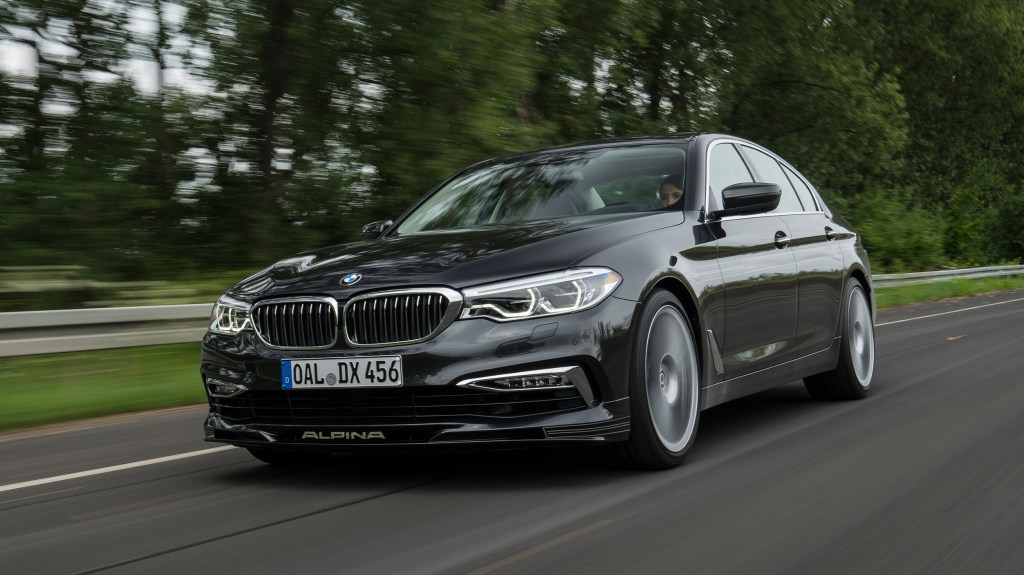
Top speed: 178 mph (286 km/h) | 0–62 mph: 4.4 sec
This is the one that needs the caveat.
And if you are going to write this article properly, the caveat matters.
Because the BMW Alpina D5 S only takes the top spot here in its fastest left-hand-drive saloon form. That version is officially quoted at 286 km/h (178 mph), with 0–62 mph in 4.4 seconds, which means it edges the Panamera 4S Diesel by the narrowest possible margin. The Touring is slower, and the right-hand-drive saloon is slower again. Which is exactly why this car is so easy to rank incorrectly if you are not paying attention.
But if the title is The Fastest Diesel Cars You Can Still Buy in 2026, and if the rule is fastest officially quoted production version still realistically available on the market, then the numbers have to decide it.
And the numbers put the left-hand-drive Alpina D5 S saloon at the top.
Which feels entirely appropriate, really.
Because this is exactly the sort of thing Alpina would do: build a car that looks restrained, elegant and faintly expensive, then quietly make it fractionally faster than the much more obvious Porsche. In fastest-spec saloon form, the D5 S combined 408hp, 800Nm, a properly serious 0–62 time, and a top speed that rewrote the diesel hierarchy by a single, deeply irritating kilometre per hour.
It is not louder than the Panamera. It is not more dramatic than the Bentley. It is not more memorable than the V12 Audi lunacy.
It is simply, by the strictest reading of the brief, the fastest.
And that makes it a very Alpina kind of winner.
Final Verdict
The strange thing about fast diesel cars in 2026 is that they now make more sense as used curiosities than they ever did as new-car logic.
At the time, they were trying to be answers. Answers to fuel prices. Answers to motorway mileage. Answers to the idea that performance had to be noisy, thirsty and theatrical to matter.
Now, they feel like questions.
Questions such as: why did Audi build a V12 diesel SUV?
Why did BMW put four turbos on a diesel 5 Series?
Why did Bentley decide a 168 mph diesel luxury SUV was a sensible addition to the range?
And, perhaps best of all, how did Alpina manage to quietly beat Porsche by one miserable mile per hour?
That is what makes these cars interesting now. Not just the numbers, although the numbers are still impressive. Not just the torque, although some of these things produce enough of it to rearrange local geography. What makes them interesting is that they represent a very specific, very strange chapter in performance-car history — one that is already over, and already more fascinating because of it.
The diesel performance era is gone. Electrification has moved the conversation elsewhere, emissions killed the romance, and most manufacturers have sensibly stopped pretending compression ignition belongs anywhere near a performance halo.
But these cars remain.
And if you still want one in 2026, the fastest officially quoted diesel you can realistically still buy is the left-hand-drive Alpina D5 S saloon.
Provided, of course, you buy the right one.
Because with diesel performance, even the footnotes are fast.
 UNBUILT GARAGE
Leave a comment