Alfa Romeo used to build concept cars that looked like they’d been sketched during a particularly expensive fever dream. Several of them still have more life than half today’s showroom.
There was a time when Alfa Romeo did not merely make cars. It made ideas. Wild ones. The sort that arrived under bright lights at Turin or Geneva looking as though someone at Bertone or Italdesign had been left unsupervised with a ruler, a cigarette, and a very strong opinion about what the future ought to look like.
And the irritating thing — if you happen to spend any time looking at modern car launches — is that many of those old Alfa concepts still look more alive than most new cars now. More daring. More elegant. More theatrical. Occasionally more ridiculous, certainly, but in a way that suggests people were at least trying to make something memorable, rather than simply optimising a crossover for lease rates and touchscreen acreage.
Not all concept cars age well. Some become period curiosities. Some become design dead ends. Some look like household appliances from a future that thankfully never arrived.
But Alfa Romeo, at its best, produced concept cars that still have an unnerving amount of energy decades later. Cars that remain strange, seductive, and just unstable enough to be interesting.
These are seven of the best. Not necessarily the most famous. Not the most obvious. But the ones that still make modern production metal look a bit overmanaged.
7. Alfa Romeo Proteo (1991)
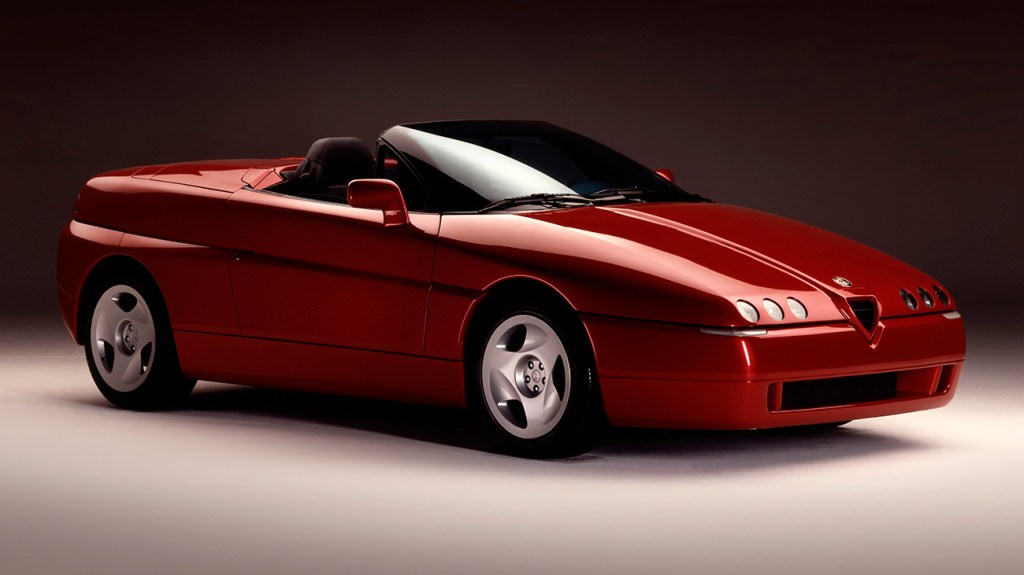
The Proteo is the polite one here. Or at least, as polite as an early-1990s Alfa concept can be when it appears as a compact open-top sports car with clean surfacing, a low stance, and the sort of optimism that only existed before everyone decided everything had to be either a crossover or an SUV pretending to be a coupe.
Unveiled at Geneva in 1991, the Proteo wasn’t trying to be a spaceship. It was something more useful than that: a reminder that Alfa could still do restrained drama when it wanted to. The proportions are the key. Short overhangs, taut lines, a compact footprint, and just enough softness in the detailing to stop it becoming another overly severe wedge.
That matters because many forgotten concepts are remembered mainly for their theatricality. The Proteo is interesting for the opposite reason. It is elegant without being timid.
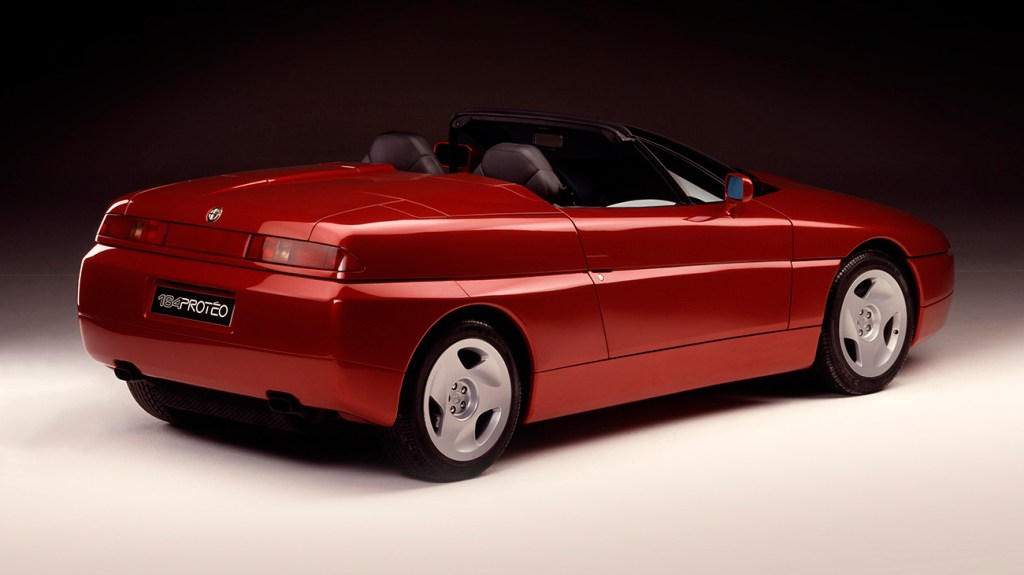
There’s also a tantalising sense of the road not taken here. This could have become a genuinely desirable Alfa halo sports car for the 1990s — a lightweight, rear-drive, emotionally intelligent machine for people who still believed driving should involve more than menu settings. Instead, it remains one of those “wouldn’t that have been nice?” moments in the company’s history.
And today? It still looks crisp, balanced, and surprisingly current. Which is more than can be said for quite a few supposedly premium performance cars now that resemble inflated trainers.
6. Alfa Romeo Nuvola (1996)
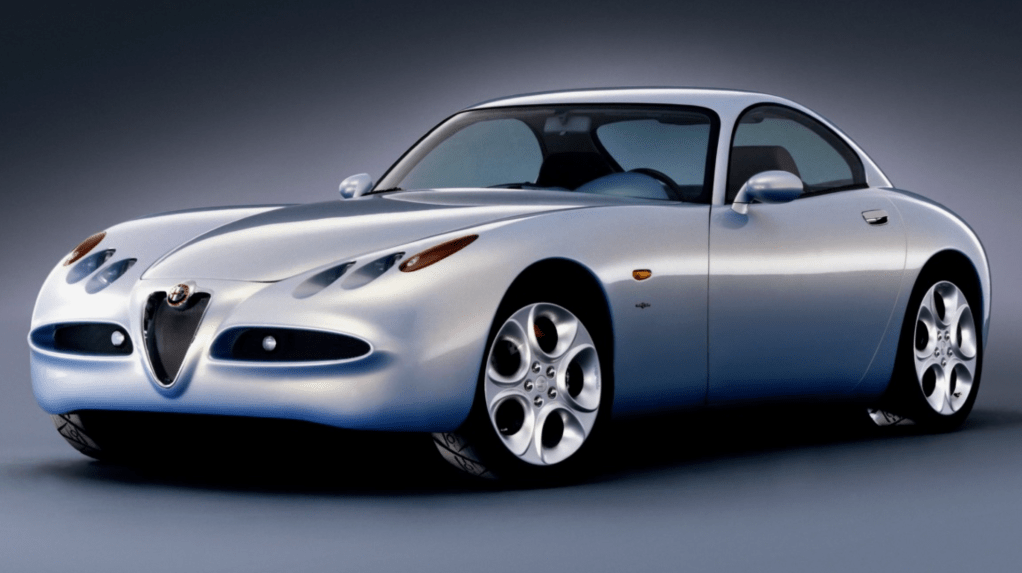
If the Proteo was compact optimism, the Nuvola was mature temptation.
Presented in the mid-1990s, the Nuvola is one of those Alfa concepts that doesn’t need gimmicks to make its point. No outrageous aero appendages. No absurd glass canopy. No origami hysteria. It simply sits there looking expensive, sensual, and entirely convinced of itself.
Which is a very Alfa Romeo quality when it’s done properly.
The Nuvola imagined a refined grand tourer — the kind of machine Alfa should arguably have built more often. Long bonnet, clean cabin placement, muscular but not swollen bodywork, and a sense of tension in the surfaces that still feels far more sophisticated than the usual modern trick of “make the grille bigger and add some angry headlights.”
What makes the Nuvola so effective now is its restraint. In a list full of concept-car theatre, it proves that excitement does not always require visual shouting. Sometimes the most compelling design is the one that knows exactly when to stop.
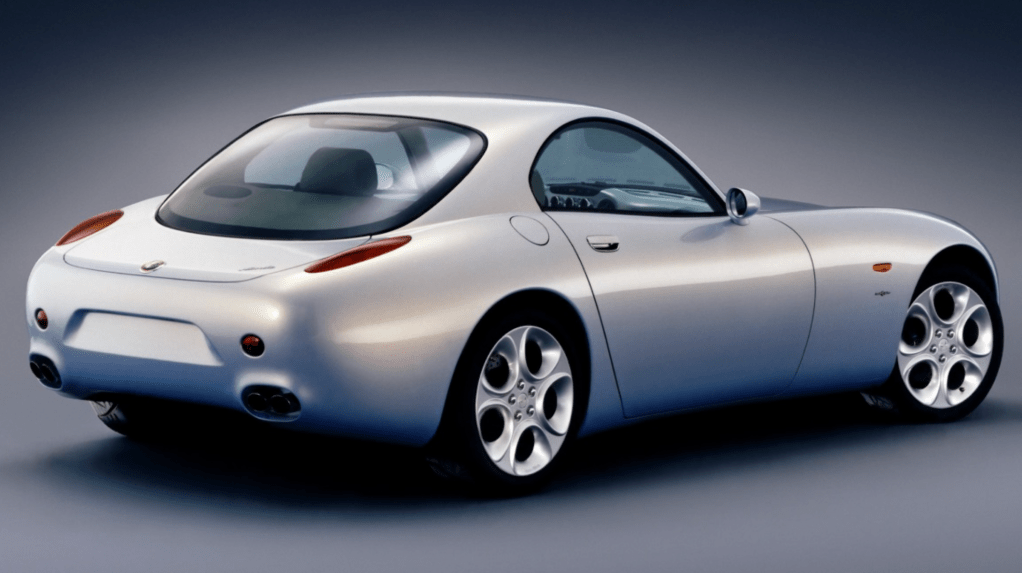
That’s why it still works. It doesn’t feel like a relic. It feels like a premium Italian GT from an alternate timeline — one where Alfa decided that beauty and proportion were still worth prioritising over platform politics.
And yes, it’s less outrageous than what comes later. But if you saw a carefully modernised Nuvola-inspired Alfa coupe revealed tomorrow, half the internet would start writing deeply emotional nonsense about “saving the brand.”
For once, they might have a point.
5. Alfa Romeo Iguana (1969)
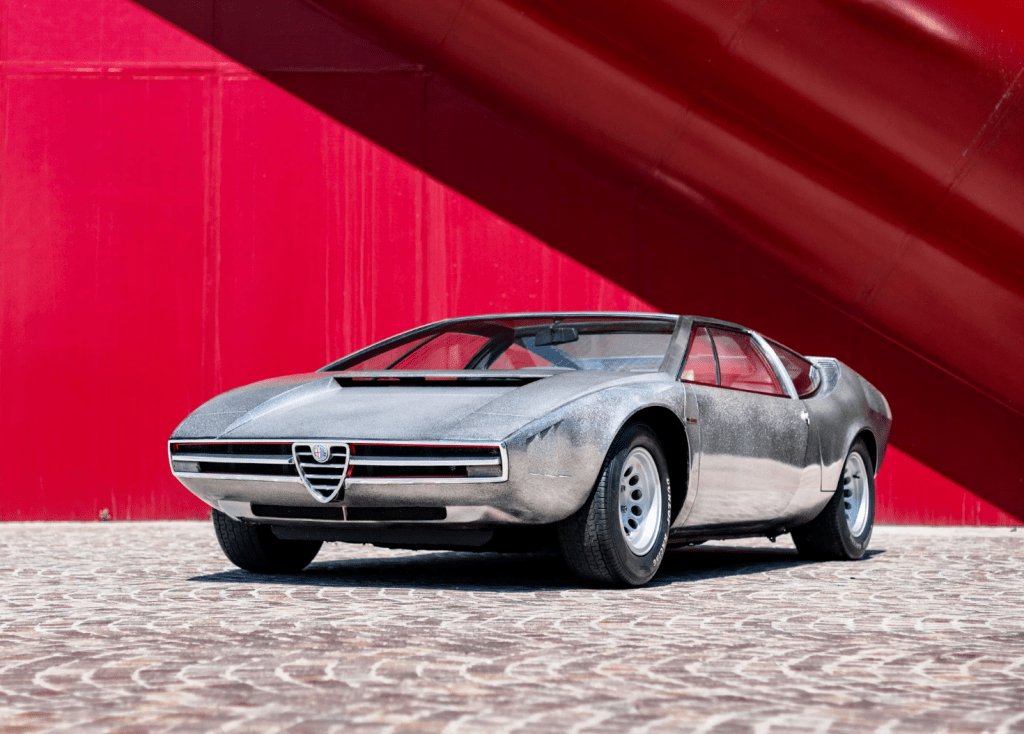
Now we begin getting silly. In the best possible way.
The Alfa Romeo Iguana, penned by Giorgetto Giugiaro and shown in 1969, is one of those transitional concepts that matters because it captures a design world mid-mutation. It still carries traces of the curvier 1960s, but you can already see the wedge era arriving with its tie loosened and its intentions becoming increasingly unhelpful.
Based on Alfa mechanicals and shown through Italdesign, the Iguana has that classic late-1960s concept-car quality of looking both elegant and faintly dangerous. The roofline is low, the glasshouse is slim, the stance is dramatic, and the body appears to be in the process of becoming a weapon.
It isn’t the wildest car on this list, and that is precisely why it earns its place. The Iguana is important because it is a threshold car. It stands at the door between graceful Italian sports design and the glorious madness that would soon follow.
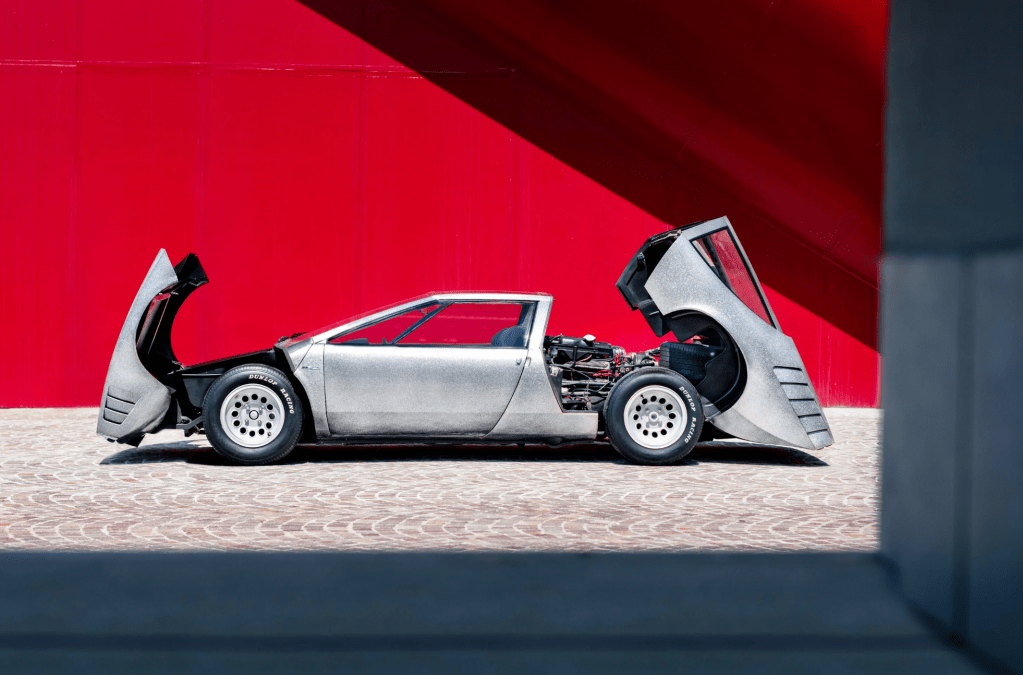
And visually, it still lands. Not because it is conventionally beautiful in the old Alfa sense, but because it looks deliberate. Every line has purpose. Every proportion has tension. Even the brushed-metal treatment and angular surfacing still give it that unsettling, almost conceptual purity that modern retro-futurist nonsense tries very hard to fake and usually fails.
It’s a forgotten Alfa concept in the truest sense: not the one people mention first, but one that becomes more interesting the longer you stare at it.
Which, if we’re honest, is how all the best Italian design works.
4. Alfa Romeo Navajo (1976)
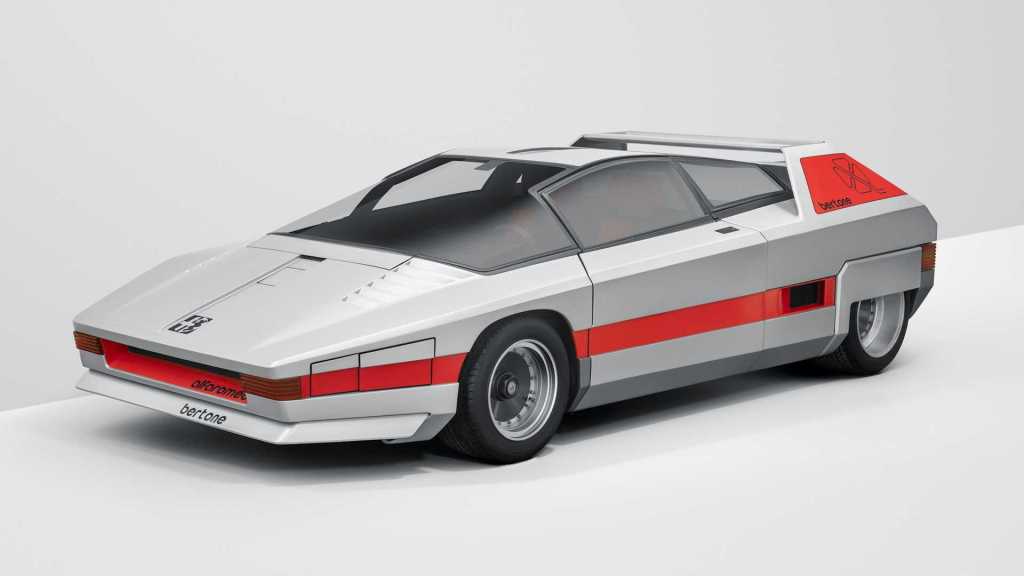
The Navajo looks like someone asked, “What if a supercar was designed entirely by a set square and several poor decisions?” and then, instead of dismissing the idea, funded it.
This was Bertone at full wedge-era tilt. Revealed in 1976, based on the magnificent but underappreciated Alfa Romeo 33 Stradale lineage, the Navajo is not a subtle car. It does not want to charm you. It wants to arrive in a room, throw geometry at your face, and leave before anyone can ask whether any of it is practical.
That, naturally, is why it’s brilliant.
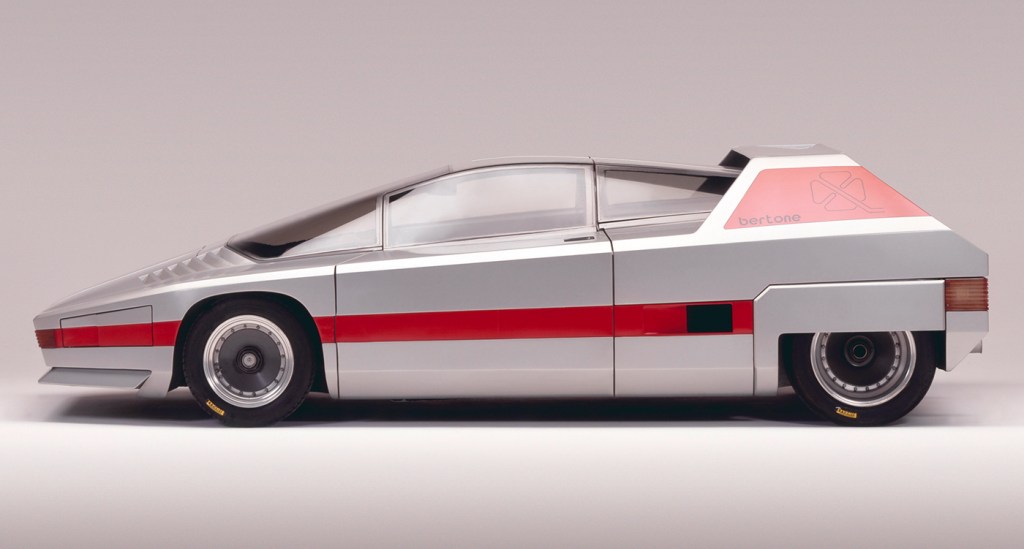
The surfaces are hard-edged, the forms are aggressively theatrical, and the whole thing looks as though it should come with launch codes rather than a steering wheel. It is concept design as performance art. And while some cars from this period now look hopelessly trapped in their decade, the Navajo survives because it commits so completely to its madness that it becomes strangely timeless.
There is no compromise in it. No committee smoothing. No market research. No apologetic softening to make sure it still appeals to fleet buyers in Surrey.
It is not beautiful in the same way as an old Alfa coupe. It is exciting in the way a forbidden prototype in a locked studio is exciting. Which, for this list, matters more.
And crucially, it still has shock value. Put a clean image of the Navajo in front of a casual reader and they will stop. Maybe in admiration. Maybe in confusion. But they will stop.
Which is more than most modern concept cars can manage, because those tend to look like melted gaming mice.
3. Alfa Romeo Caimano (1971)
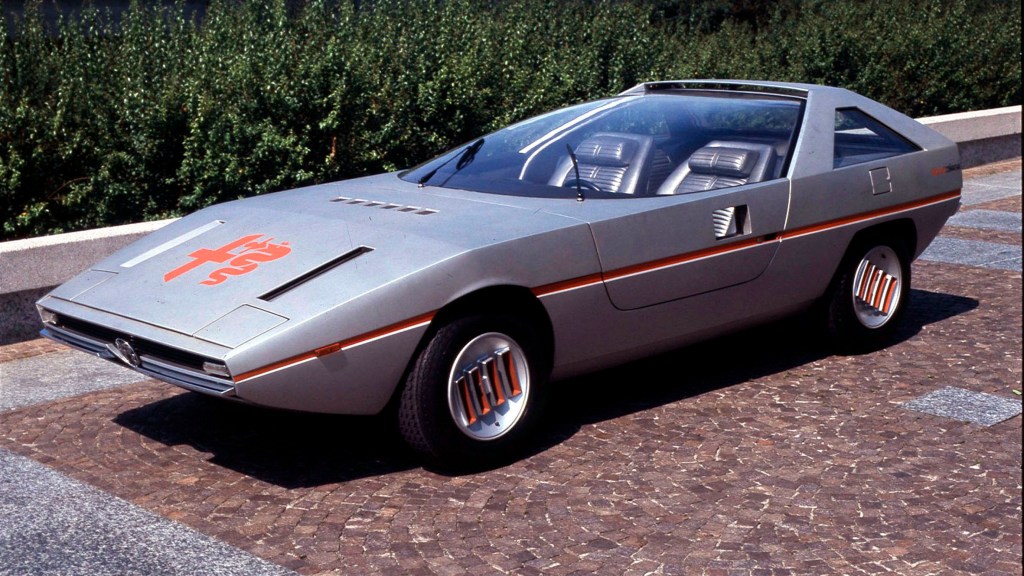
If the Navajo is angular aggression, the Caimano is pure concept-car theatre.
Designed by Giorgetto Giugiaro and shown in 1971, the Caimano remains one of the most gloriously odd shapes Alfa Romeo ever wore. It doesn’t really look like a normal car at all. It looks like a design studio had an argument about canopies, won the argument, and then built the result before anyone sensible returned from lunch.
And that is exactly what makes it unforgettable.
The dramatic glazed canopy dominates the entire composition, turning the car into something that feels halfway between a Le Mans prototype, a science-fiction prop, and an Italian declaration that conventional doors are for people who lack imagination. The body beneath it is low, sharp, and beautifully disciplined, but it is the cabin treatment that gives the Caimano its strange magnetism.
Even now, it feels daring.
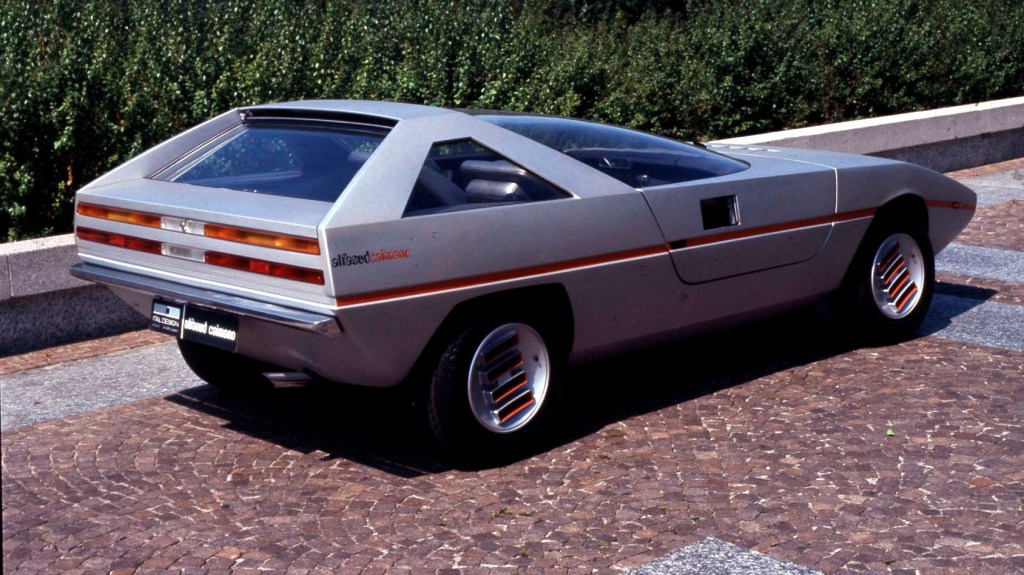
Modern concept cars often try to look futuristic by deleting door handles and adding LED signatures so elaborate they could probably guide aircraft. The Caimano manages it with shape alone. It is theatrical because the design is theatrical, not because someone in marketing wanted a launch trailer.
That distinction matters.
And perhaps more than any other car here, the Caimano captures the old magic of concept cars as genuine experiments. Not lightly disguised previews of next year’s crossover. Not branding exercises. Not “vision statements.” Proper, slightly unhinged design objects.
It should not work as well as it does. Yet half a century later, it still looks as though it belongs in a museum dedicated to better ideas.
2. Alfa Romeo Carabo (1968)
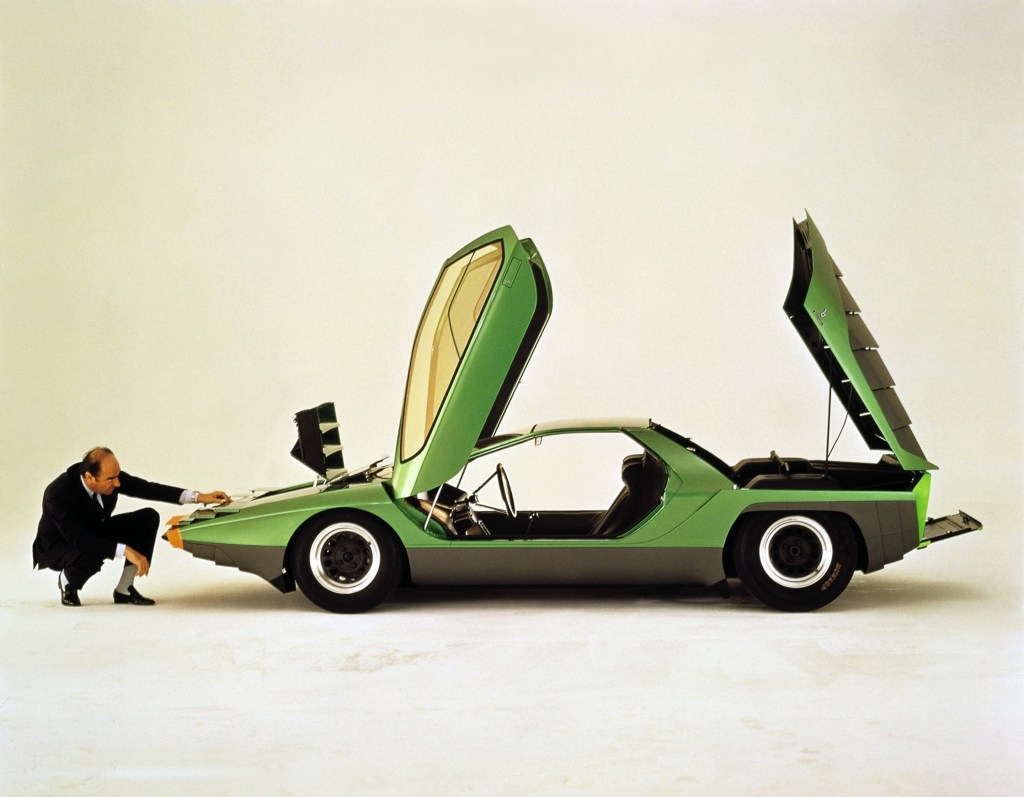
If you know anything about radical concept-car design, the Carabo is not exactly a secret. But in the broader public imagination — and especially outside proper design nerd circles — it remains surprisingly under-discussed for something so influential, so theatrical, and so utterly sure of itself.
Penned by Marcello Gandini for Bertone and unveiled in 1968, the Carabo is one of the great wedge-shaped thunderclaps in automotive history. You can draw a line from this thing to a small nation’s worth of supercars that followed. Not just in stance or silhouette, but in attitude.
It doesn’t merely look low. It looks impossibly low. The sort of car that appears less parked than compressed. The green-and-orange livery is outrageous in exactly the right way, the surfacing is razor-clean, and the entire composition still has that wonderful late-1960s quality of feeling like it arrived from the future before the future had time to tidy itself up.
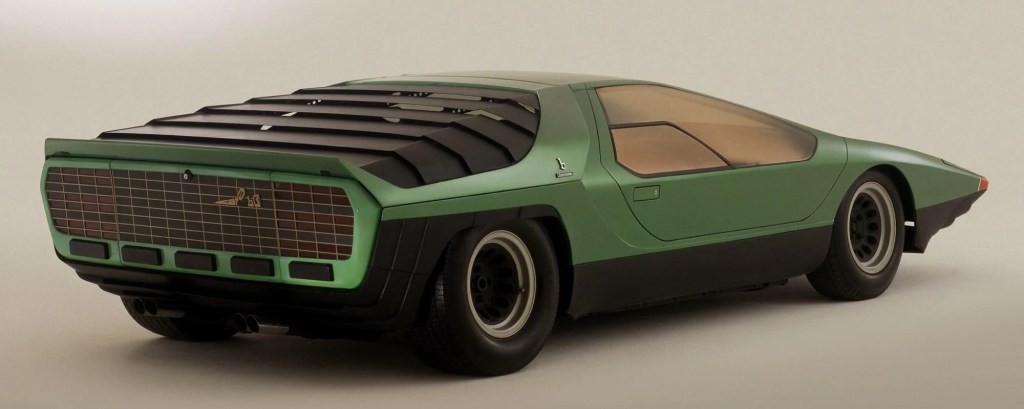
This is the point where the list stops being merely entertaining and becomes slightly infuriating. Because the Carabo is nearly sixty years old, and yet its sense of drama is still stronger than most so-called exciting new cars now. It has presence. It has silhouette. It has conviction.
Most importantly, it has risk.
That is what so many modern designs lack. They may be competent. They may be expensive. They may have enough ambient lighting to resemble a nightclub in Dubai. But risk? Real visual courage? Very often, not so much.
The Carabo is not a reminder that the past was perfect. It’s a reminder that the past was occasionally brave.
And that is much rarer.
1. Alfa Romeo Scighera (1997)
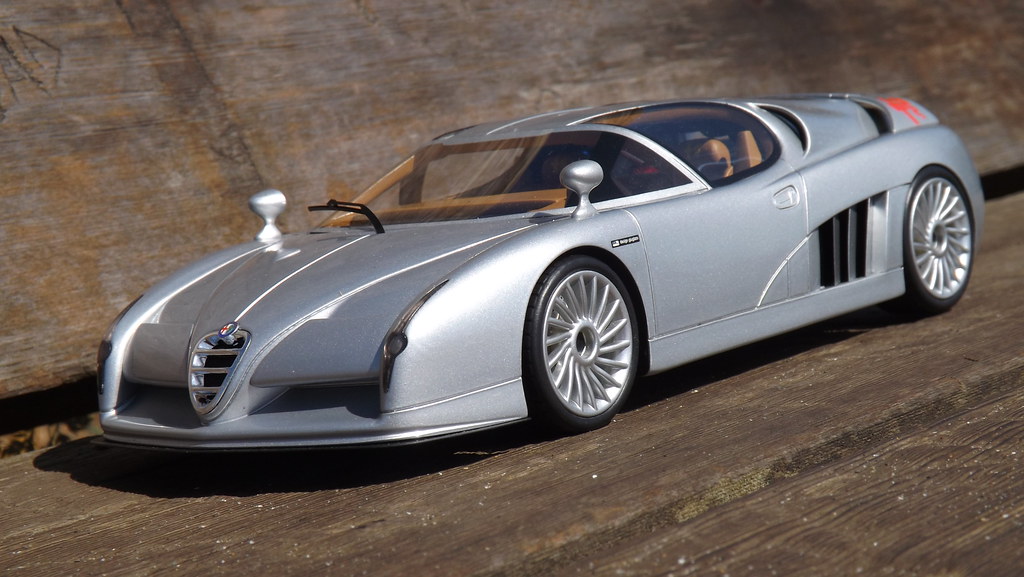
If the Carabo is the historic icon, the Scighera is the one that really makes you wonder whether Alfa Romeo accidentally misplaced an entire future.
Because the Scighera still looks ridiculous. Not “ridiculous for 1997.” Just ridiculous, full stop.
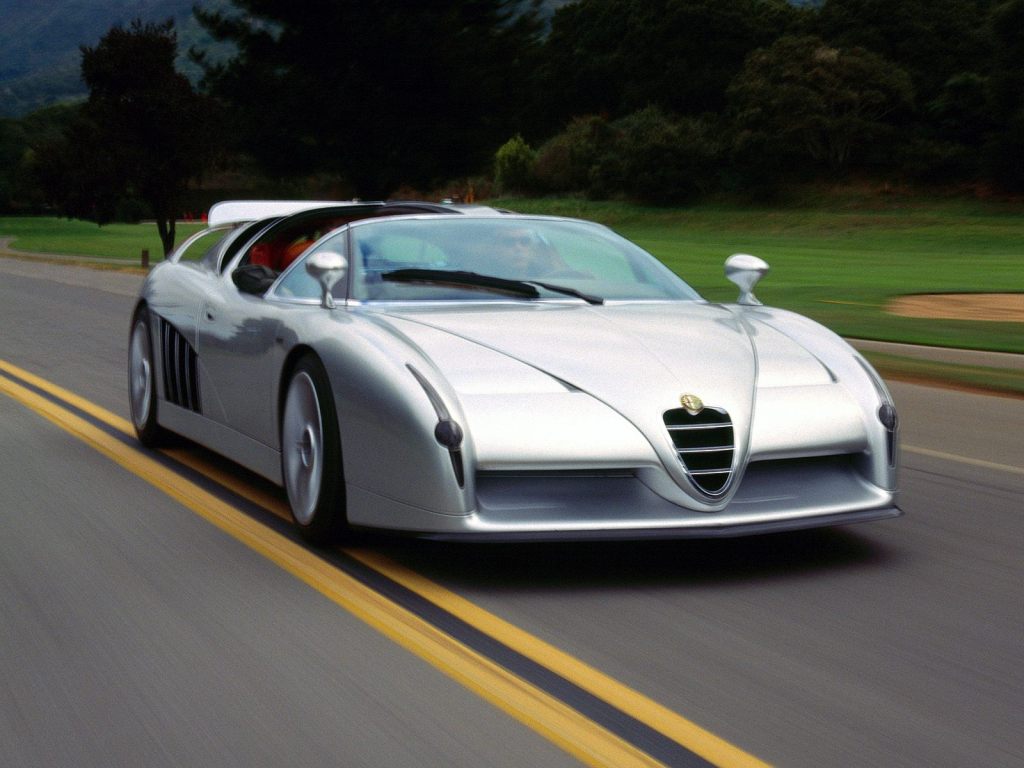
Designed by Italdesign and unveiled in the late 1990s, the Scighera somehow blends race-car aggression, sci-fi fantasy, and pure Alfa Romeo theatre into something that still feels fresh in a way it has no right to. The stance is outrageous, the proportions are compact but muscular, the surfacing is full of tension, and the front end looks like it was designed by someone who believed intimidation should be beautiful.
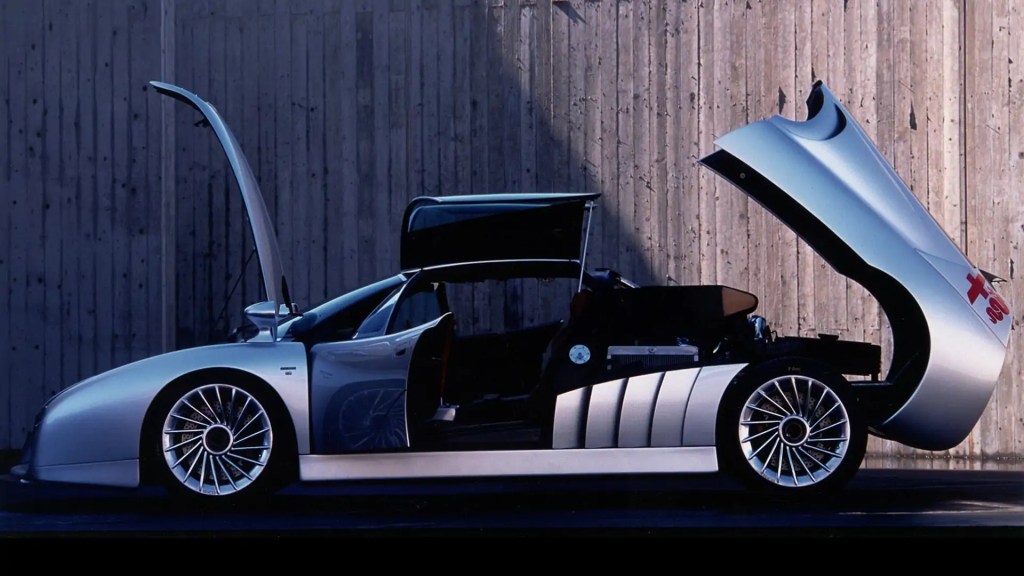
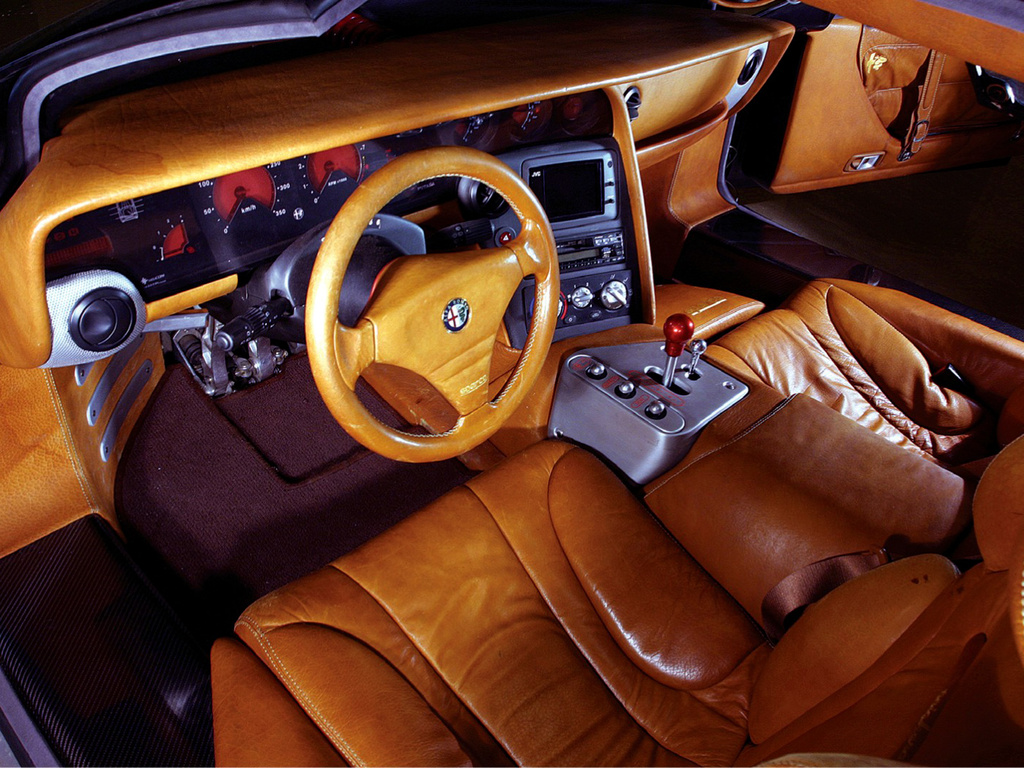
Then there are the details. The exposed drama of the bodywork. The strange interplay of curves and hard technical elements. The cabin treatment. The whole thing looks like a road car from an alternate timeline in which Alfa Romeo decided to build halo machines for romantics rather than sensible cars for spreadsheet satisfaction.
And that, really, is why it belongs at number one.
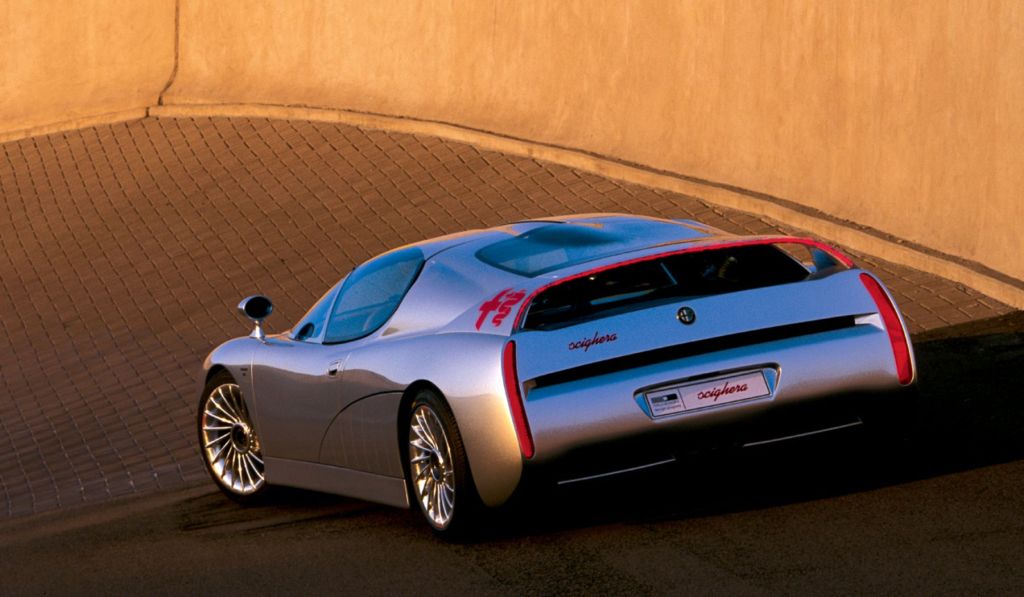
The Scighera isn’t merely a fascinating old concept. It is a devastatingly effective reminder of what made Alfa Romeo compelling in the first place: not perfection, not consistency, and certainly not Germanic self-control, but emotion. Audacity. The willingness to make something that feels alive.
It also nails the core promise of this list better than anything else here. Because while the Carabo is historically more influential, the Scighera is the one most likely to make a modern reader stop mid-scroll and ask the only question that matters:
How on earth did this never become a thing?
That is the highest compliment a forgotten concept can earn.
And in a world where so many new cars arrive looking polished, expensive, and faintly anaesthetised, the Scighera still looks like it has a pulse.
Final Verdict
Alfa Romeo’s greatest concepts were never interesting because they were sensible. They were interesting because they weren’t.
They came from an era when design studios were allowed to be dramatic, occasionally irrational, and just arrogant enough to believe a car could still be an event. Some became influential. Some became footnotes. Some were simply left behind in the usual automotive graveyard of beautiful almosts.
But the best of them still do something modern cars often struggle to manage.
They make you stop.
Not because they’re louder. Not because they’re more expensive. Not because they have more power, more screens, or more pointless digital theatre. But because they have shape, conviction, and the sort of visual bravery that cannot be engineered by committee.
And that, for all the industry’s talk of progress, is still the rarest thing of all.
 UNBUILT GARAGE
Leave a comment