Introduction
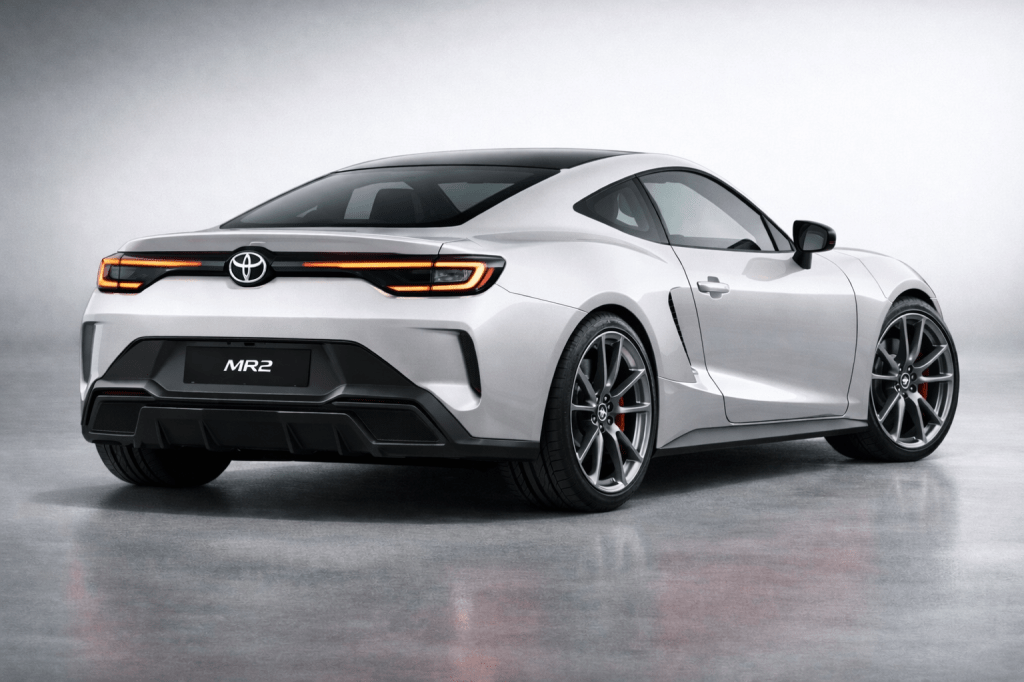
Let’s be clear immediately: the £25,000 electric MR2 does not exist. Toyota has not announced it, designed it, approved it, or accidentally left it on a PowerPoint slide in a meeting room. And yet, it keeps appearing online in renders, mock-ups, and comment sections, usually followed by the same question: why hasn’t Toyota built this already?
The reason people are seeing this concept everywhere is simple. Toyota’s current EV line-up feels oddly disconnected from the things people actually like about Toyotas. The conflict here isn’t nostalgia versus progress. It’s logic versus corporate caution.
Because if you stop and think about it for more than five seconds, a small, affordable electric MR2 makes vastly more sense than almost everything Toyota is currently doing in the EV space.
Toyota’s Brand DNA vs a £25,000 Electric MR2
Toyota does not need help inventing a brand identity. It already has one, and it didn’t come from lifestyle crossovers with anonymous names. It came from cars that were dependable, cleverly engineered, and—when the mood struck—quietly brilliant to drive.
The original MR2 was exactly that. Small. Light. Mid-engined. Sensible on paper and entertaining everywhere else. It wasn’t a Ferrari. It wasn’t trying to be. That was the point.
Now look at Toyota’s EV efforts. The bZ4X is not offensive, but it is anonymous to the point of invisibility. It exists because it has to, not because anyone at Toyota desperately wanted to build it. It feels engineered by committee and styled by compliance.
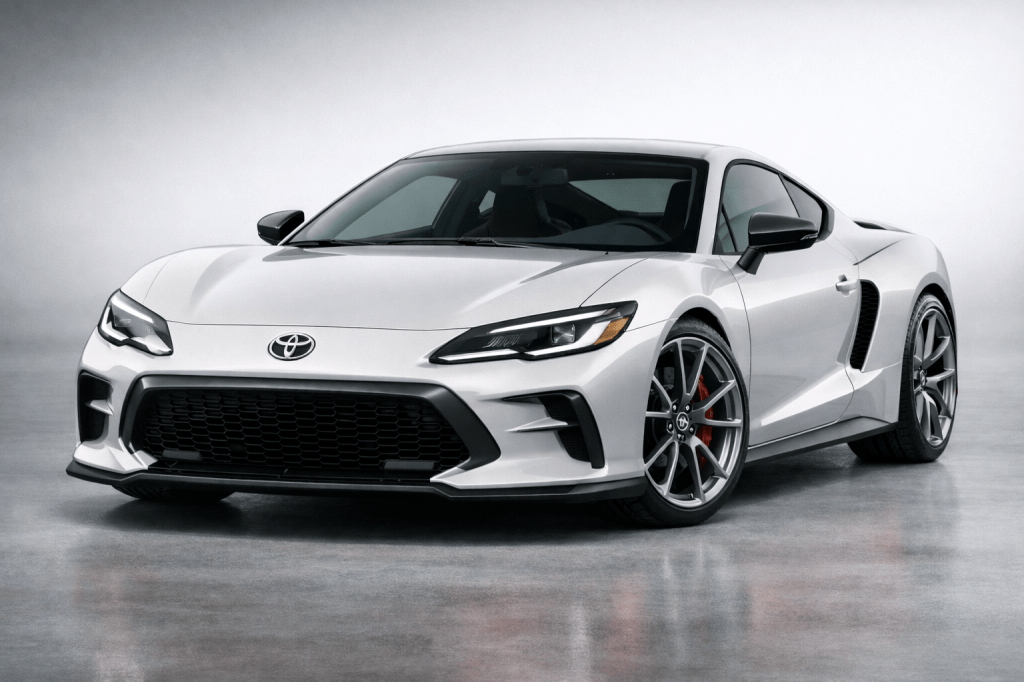
An electric MR2, even as a concept, fits Toyota’s actual DNA far better. Compact dimensions. Intelligent packaging. Focus on balance rather than brute force. Toyota has always been at its best when it builds cars that make sense and make you smile. The MR2 name alone does half the emotional heavy lifting.
This is not about reviving the past. It’s about remembering what worked.
Design Implications: Why Small Is the Point
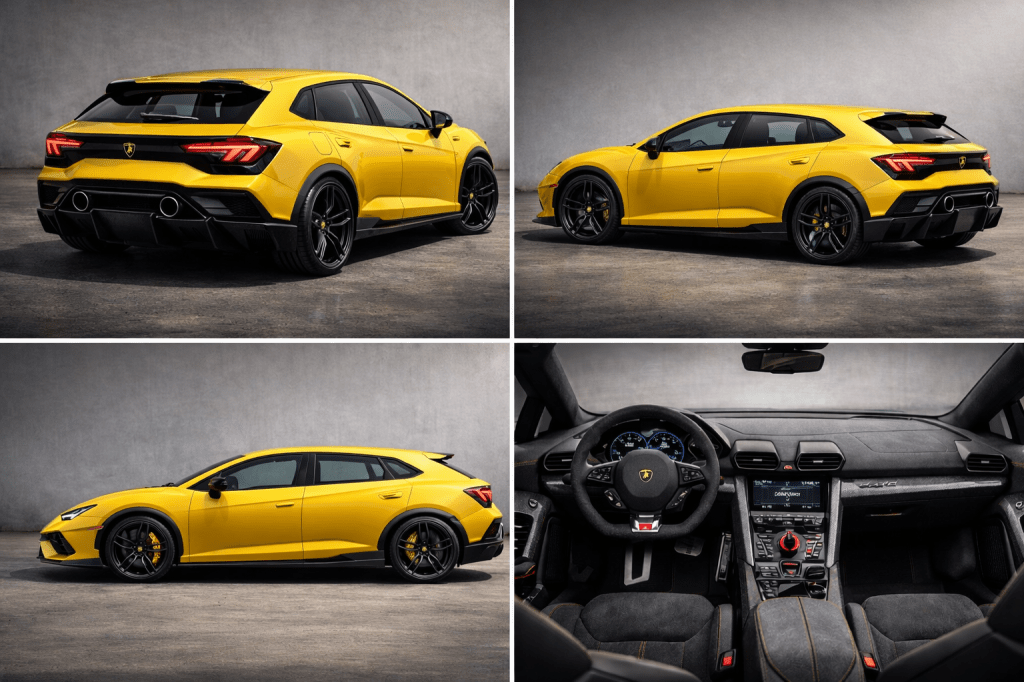
The online concept images all tend to get one thing right: restraint. The electric MR2 is almost always shown as low, compact, and clean. No oversized grilles pretending to be air intakes. No aggressive creases shouting about performance it doesn’t need to prove.
And that matters.
Electric cars are naturally heavier. The instinct, especially among large manufacturers, is to hide that weight by going bigger. Taller. Wider. Safer-looking. Toyota has followed that instinct so far, and the results are predictably dull.
A £25,000 electric MR2 would do the opposite. It would embrace small proportions and use the battery pack as a structural advantage. A skateboard platform doesn’t have to mean SUV-scale. It can mean a low centre of gravity and excellent balance, exactly the things the MR2 was known for.
The best renders show a short wheelbase, minimal overhangs, and simple surfacing. Nothing dramatic. Nothing theatrical. Just a car that looks like it was designed to be driven rather than leased.
And frankly, it’s refreshing.
Interior Philosophy: Less Tech, More Focus
Here’s where Toyota often gets this right when others don’t. Interiors do not need to look like an electronics store exploded.
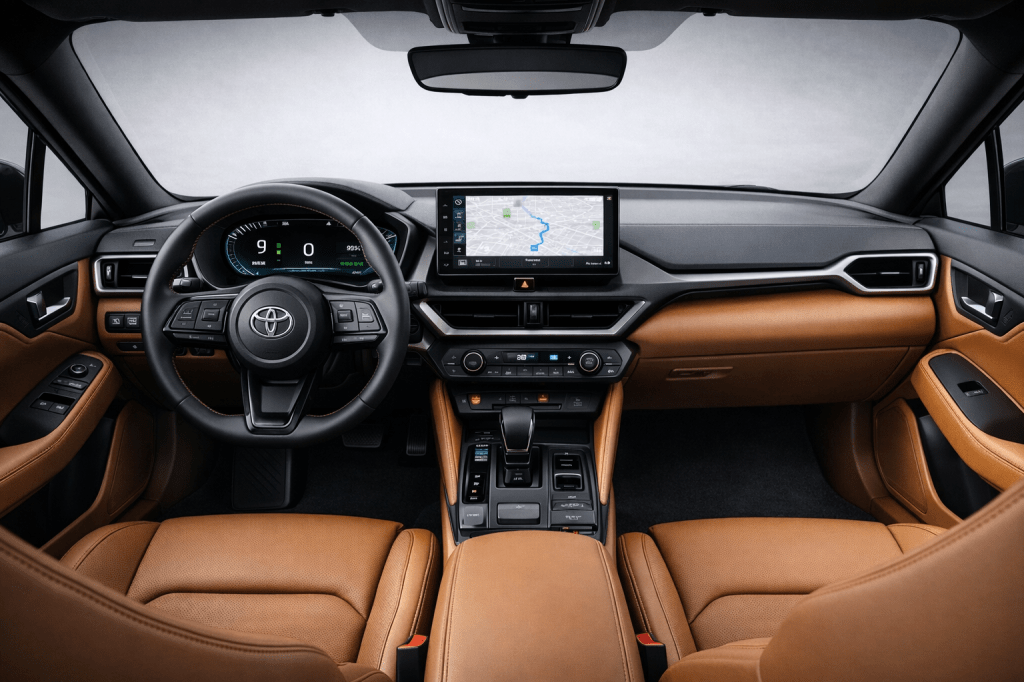
An electric MR2 interior should be simple, driver-centric, and intentionally modest. A proper driving position. Physical controls where they matter. A small, clear screen for navigation and basic vehicle data. No augmented-reality gimmicks. No mood lighting presets named after emotions.
This isn’t a car for watching Netflix while charging. It’s a car for enjoying a B-road on the way to work.
Toyota already understands this balance. The GR86 proves it. The problem is that Toyota seems reluctant to apply the same thinking to EVs, as if electric propulsion automatically requires a different philosophy.
It doesn’t. If anything, a focused interior would differentiate the electric MR2 immediately from the sea of identically over-specified EV cabins.
Market Positioning: The Gap Everyone Else Is Ignoring
Here is the crucial point. There is a massive hole in the EV market where affordable, genuinely engaging driver’s cars should be.
At one end, you have expensive electric performance cars chasing numbers and Nürburgring laps. At the other, you have sensible electric appliances designed to offend nobody and excite nobody.
A £25,000 electric MR2 sits squarely in the middle. It wouldn’t be fast by headline standards. It wouldn’t need to be. It would be light for an EV, balanced, and enjoyable at legal speeds.
More importantly, it would be attainable.
Toyota has always excelled at scale. It knows how to build millions of cars profitably. The idea that Toyota cannot produce a small electric sports car at this price point is not convincing. The truth is more uncomfortable: it simply hasn’t prioritised it.
And yet, this is exactly the sort of car that could bring younger buyers into the brand—buyers who currently see Toyota as competent but dull.
Why a £25,000 Electric MR2 Makes More Sense Than Toyota’s EV Strategy So Far
Toyota’s current EV strategy feels defensive. Cautious. Slightly apologetic.
The electric MR2 concept flips that entirely. It says: we know electric cars are heavy and quiet, so we’ve designed one where that actually works. Instant torque in a small chassis. Weight concentrated low and centrally. No need for artificial engine sounds or performance theatre.
It also sidesteps range anxiety hysteria. A small sports car does not need 400 miles of range. It needs enough for daily use and weekend enjoyment. Chasing long-range figures only adds weight and cost.
In other words, the electric MR2 is honest about what it is. That honesty alone makes it more compelling than a crossover pretending to be adventurous.
Potential Specifications
To be viable—not impressive on paper, but genuinely viable—a £25,000 electric MR2 would require the following:
- Powertrain
– Single rear-mounted electric motor. This preserves the mid-engine philosophy in spirit while keeping complexity and cost under control. - Power Output
– Around 180–220 bhp. Enough to feel lively in a lightweight chassis without overwhelming the tyres or inflating the price. - Drivetrain
– Rear-wheel drive only. Adding front motors would dilute the car’s character and push it out of its intended price bracket. - Platform
– A shortened version of Toyota’s existing EV architecture, adapted for compact dimensions rather than SUVs. - Battery Capacity
– Approximately 45–50 kWh. This balances weight, cost, and usable range without unnecessary excess. - Performance Estimates
– 0–60 mph in around 6 seconds. Not headline-grabbing, but entirely appropriate for the concept. - Estimated Price Range
– £23,000–£26,000 before incentives. Anything higher undermines the entire point of the car.
These figures are not predictions. They are the minimum requirements to make the concept coherent.
Reality Check
- Could this be built?
– Yes. Toyota has the engineering capability, manufacturing scale, and EV technology to build this without difficulty.
- Would it make financial sense?
– At sufficient volume, yes. Especially as a global model positioned as a halo for Toyota’s EV credibility rather than a niche indulgence.
- Is there a realistic customer for it?
– Absolutely. Drivers priced out of traditional sports cars and bored of electric crossovers would respond immediately.
Final Verdict
A £25,000 electric MR2 isn’t a fantasy born of nostalgia. It’s a rational response to a market flooded with cars that forgot why people like driving in the first place.
Toyota doesn’t need another sensible electric crossover. It needs a statement that electric cars can still be light, engaging, and affordable.
The irony is that Toyota already knows how to do this.
It just needs the courage to stop overthinking it.

 UNBUILT GARAGE
Leave a comment